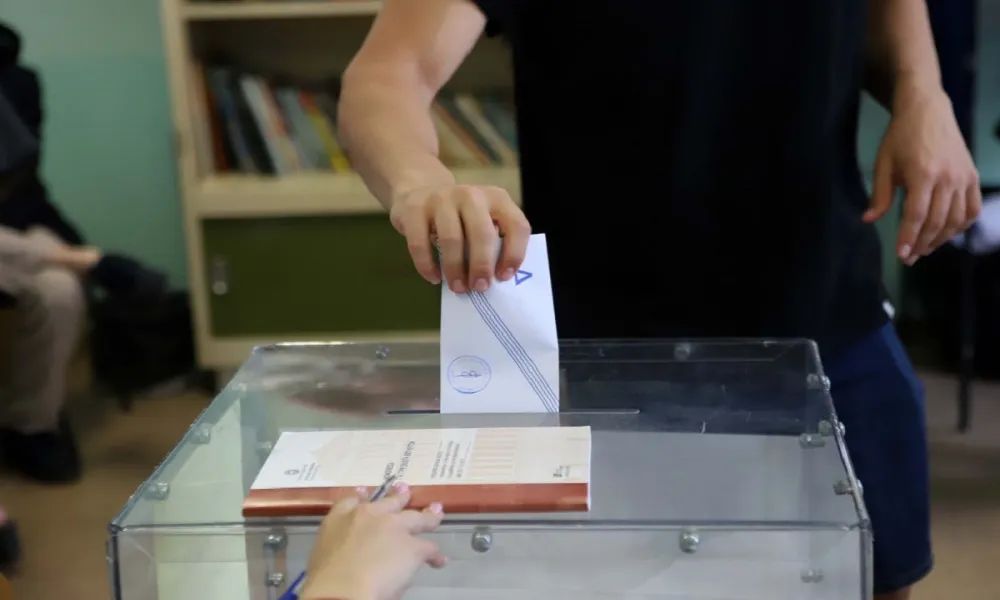
Three months before the parliamentary elections scheduled for 24 May 2026, the legal framework governing campaign spending is now in effect. The Director General of the Ministry of Interior, Elikkos Elia, told the Cyprus News Agency that strict limits apply to individual candidates, with financial penalties foreseen for breaches.
He also clarified that there is no spending ceiling for political parties, although they are subject to specific reporting obligations.
Legal limit for candidates
According to Mr Elia, legislation sets the spending cap for each candidate seeking election to the House of Representatives at €25,000, plus an additional €5,000 for personal expenses.
“Exceeding the amounts determined by law results in a fine equal to the amount of the excess,” he underlined.
Mr Elia explained that, under the law, candidates’ obligations commence three months before the date of the elections.
Each candidate is required to appoint an election agent, who may be the candidate themselves, and to submit a declaration of election expenses covering the pre-election period. This period begins three months prior to the set election date and ends on election day, inclusive.
Candidates are also required to publish the report in two daily newspapers or on their website.
The Director General noted that the Ministry of Interior informed political parties of these obligations on 12 December 2025, and that parties are responsible for informing their candidates. Newly registered political parties are also briefed immediately after registration in the register of political parties.
Obligations of political parties
With regard to political parties, Mr Elia stated that there is no overall spending limit imposed on the parties themselves.
However, each political party participating in an election campaign is required to submit to the Registrar of the Register of Political Parties, and to publish on its website within four months of election day, detailed statements of income and expenditure. These must include full financial information relating to the party’s election campaign.
Upon receipt of these statements, the Registrar forwards them to the Auditor General of the Republic for a legality review.
Obligations of advertising service providers
Mr Elia further stated that all entities providing advertising services during the pre-election period to candidates or on their behalf are required to submit consolidated statements to the Auditor General of the Republic. These statements must detail the services provided to each candidate or on their behalf and must be submitted within one month of election day.
He clarified that political advertising may also take place on social media, provided that the entity or person implementing the advertisement is paid.
In such cases, both the service provider and the candidate being advertised have legal obligations.
“The objective of all the above is to safeguard transparency and accountability in the financing and expenditure of election campaigns, both for parliamentary candidates and for political parties,” Mr Elia concluded.