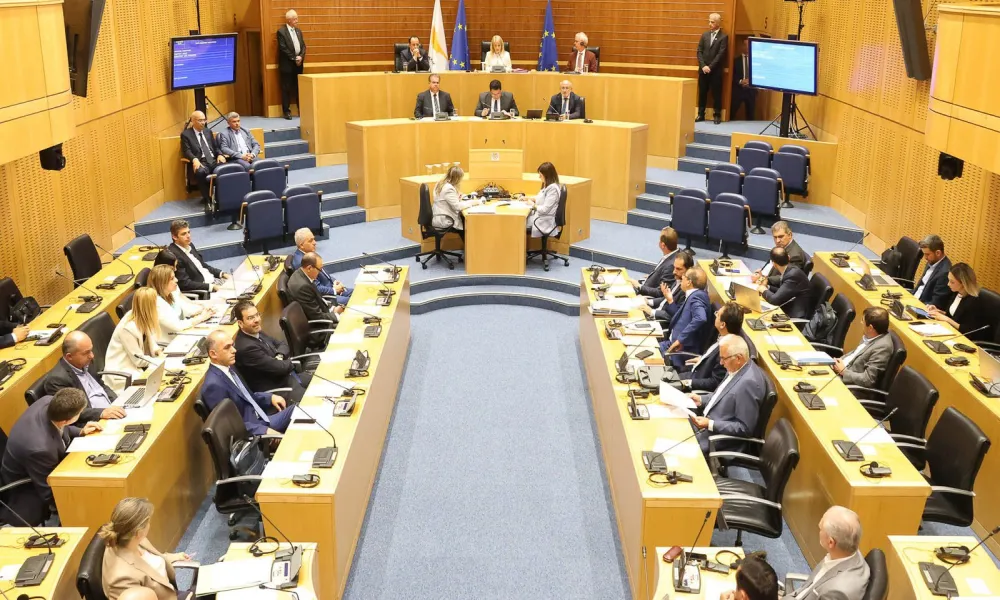
The Plenary on Thursday approved legislation aimed at promoting “brain gain” by introducing enhanced tax incentives to attract Cypriot and foreign scientists and skilled professionals to the labour market.
The bill amends the Income Tax Law to provide tax breaks and other facilitation measures designed to encourage the relocation of highly skilled workers to the Republic and the repatriation of Cypriot citizens.
The legislation forms part of the government’s Talent Repatriation Action Plan and is intended to make the existing tax framework more attractive, flexible and accessible, as discussed in the House finance committee.
Key changes to tax exemptions
Under current legislation, valid until 2027, 20% of remuneration from first employment in the Republic — or €8,550, whichever is lower — is exempt from income tax. The exemption applies to individuals who, for three consecutive years immediately prior to taking up employment in Cyprus, were employed abroad by a non-resident employer and whose employment in Cyprus began after 26 July 2022.
The exemption is granted for seven tax years, starting from the year following the year of employment in the Republic.
The new law increases the tax-free portion of remuneration from 20% to 25%, raises the maximum annual exemption from €8,550 to €25,000, and reduces the required period spent abroad in order to qualify — from 15 years after completion of studies to seven years.
It also amends the employment criterion, requiring 36 months of work abroad within the previous five years, rather than three consecutive years as currently provided.
The measure will be reviewed every five years, taking into account socio-economic developments, with a view to improving its effectiveness.
Broader eligibility and platform interest
During the parliamentary debate it was clarified that nationals of third countries cannot be excluded from the scheme, as this would conflict with the Republic’s obligations under double taxation treaties.
Since the government announced its intention to introduce the measure, 600 applications have been submitted via the “Minds in Cyprus” online platform, which serves as the central information hub for those interested.
Following proposals by MPs, the Ministry of Finance tabled two revised versions of the bill broadening the scope of the scheme and redefining eligibility criteria.
The changes extend eligibility beyond salaried employees to include self-employed individuals and clarify that the tax exemption applies to income from salaried services or profits from business activity in the Republic, provided annual earnings amount to at least €30,000.
An additional condition requires that beneficiaries must not have been tax residents of the Republic during any year within the seven-year period prior to their return.
The framework also allows individuals to qualify if they worked abroad on a full-time basis for at least 84 months before taking up employment in Cyprus, without requiring a university degree, or for at least 36 months if they hold a university qualification recognised by Cyprus Council for the Recognition of Higher Education Qualifications (KYSATS).
The new provisions will enter into force on 1 January 2025 for practical implementation purposes.
A clause that would have terminated the existing tax framework upon the introduction of the new regime has been removed, meaning the current scheme will remain in force until its scheduled expiry in 2027.