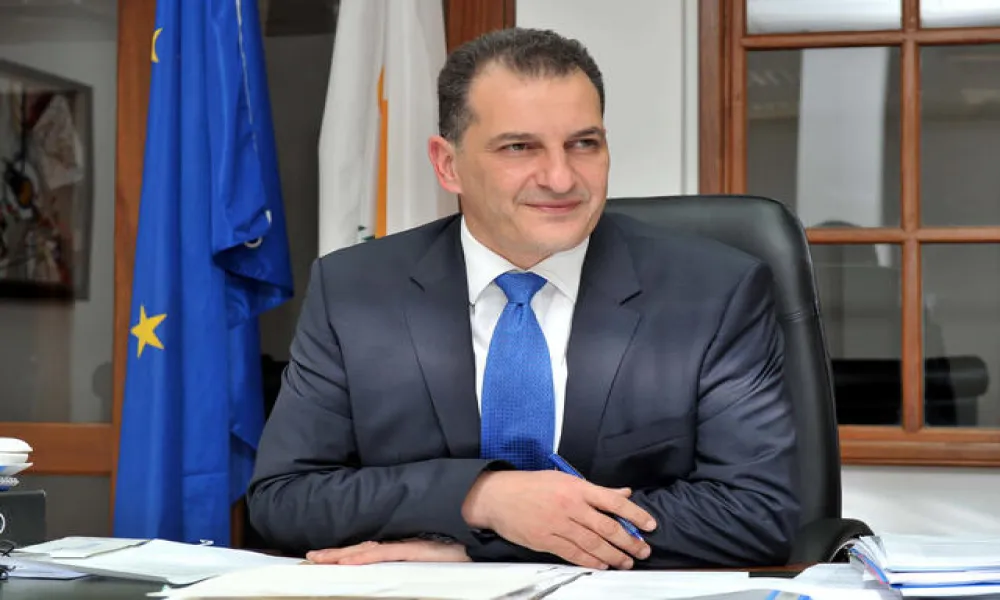

Former energy minister George Lakkotrypis is under close scrutiny by the Tax Department following revelations linked to the so-called videogate affair, in which he appears alongside close associates of President Nikos Christodoulides.
According to information obtained by Politis, tax authorities moved swiftly after Lakkotrypis acknowledged receiving €15,000 for energy consultancy services provided to individuals who later exposed him through the video. References in the footage to payments made exclusively in cash also raised red flags, prompting an in-depth review of his financial activities.
Consultancy income and VAT compliance
Lakkotrypis is expected, if he has not already done so, to submit to tax authorities the consultancy agreements he signed, along with the invoices issued for those services. The review aims to determine whether the income was properly declared and whether the applicable VAT was paid.
Under Cyprus VAT legislation, fraudulent avoidance of VAT constitutes a criminal offence, punishable by a fine of up to three times the amount owed, imprisonment of up to three years, or both.
According to the same sources, the tax audit extends several years back and may be expanded, if deemed necessary, to include members of his family.
Tax Commissioner’s response
Asked to comment, Tax Commissioner Sotiris Markides declined to address the specifics, stating only that any matter brought to public attention and falling within the department’s remit is examined.
Post-ministerial employment permits
Lakkotrypis was appointed energy minister in March 2013 by former president Nikos Anastasiades and resigned in July 2020 to enter the private sector.
Under the law governing post-ministerial employment, he was required, until July 10, 2022, to seek approval from an independent three-member committee before taking up any private-sector role, following written disclosure of prospective employers. The legislation aims to protect the public interest, prevent conflicts of interest, and curb corruption by restricting the use of privileged information gained in office.
The committee is chaired by a state prosecutor, with members drawn from the Audit Office and the General Accounting Office.
As part of the ongoing criminal investigation, authorities are examining whether Lakkotrypis applied for the required approvals and, if so, the scope and content of his application. In the video, he appears acting as an energy consultant, a role he was legally prohibited from undertaking during the two-year cooling-off period after leaving office.
The law provides for penalties including fines of up to €30,000 and prison sentences of up to three years for breaches, depending on the nature of the violation.
Potential conflict of interest
Media reports, which have not been denied, indicate that in 2021 Lakkotrypis served on the board of a company active in the copper and aluminium sector, part of a group with interests in energy. Investigators are assessing whether this activity conflicts with legislation barring former ministers, until July 2022, from engaging in professional activities directly or indirectly linked to their former portfolio.
Lobbying activities under review
The investigation is also examining whether Lakkotrypis engaged in lobbying without proper registration. In the video, he meets the purported investors as an energy consultant. Authorities are assessing whether this conduct falls under Cyprus lobbying legislation and, if so, whether it was lawful.
What has been confirmed so far is that Lakkotrypis is not registered as a lobbyist in the official registry maintained by the Cyprus Anti-Corruption Authority.
Under the lobbying transparency law, engaging in decision-making processes without registration constitutes a criminal offence, punishable by up to one year in prison, a fine of up to €10,000, or both.
Parliament reviews oversight framework
In parallel, the House of Representatives’ Institutions Committee is examining the legal framework governing the post-service business activities of former officials and senior public servants. The review seeks to assess both the effectiveness of existing legislation and whether adequate checks are carried out before and after approvals are granted.
The issue was placed on the committee’s agenda by MPs Irene Charalambidou and Alexandra Attalidou.
This article was first published on Politis' paper