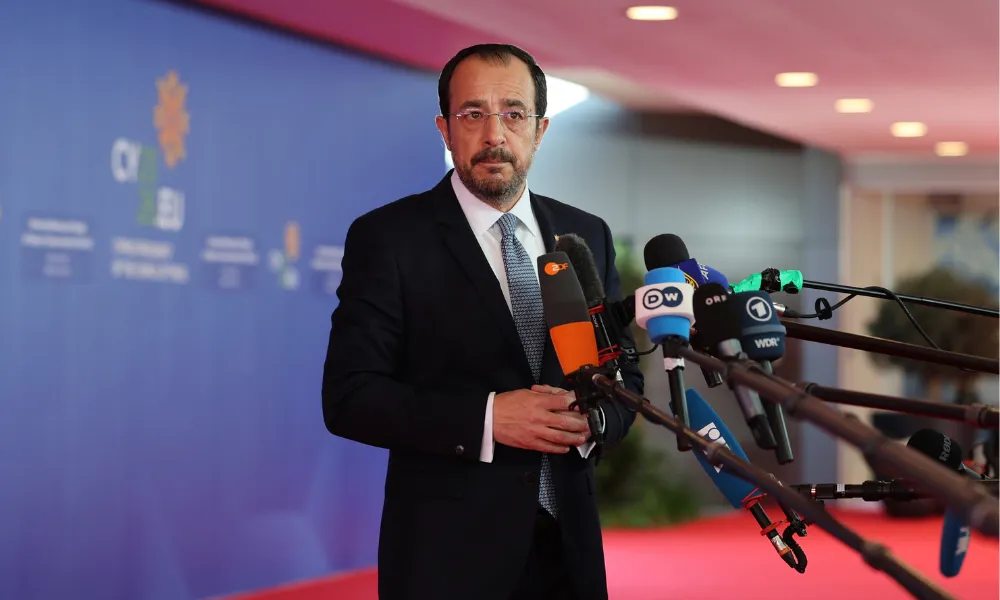

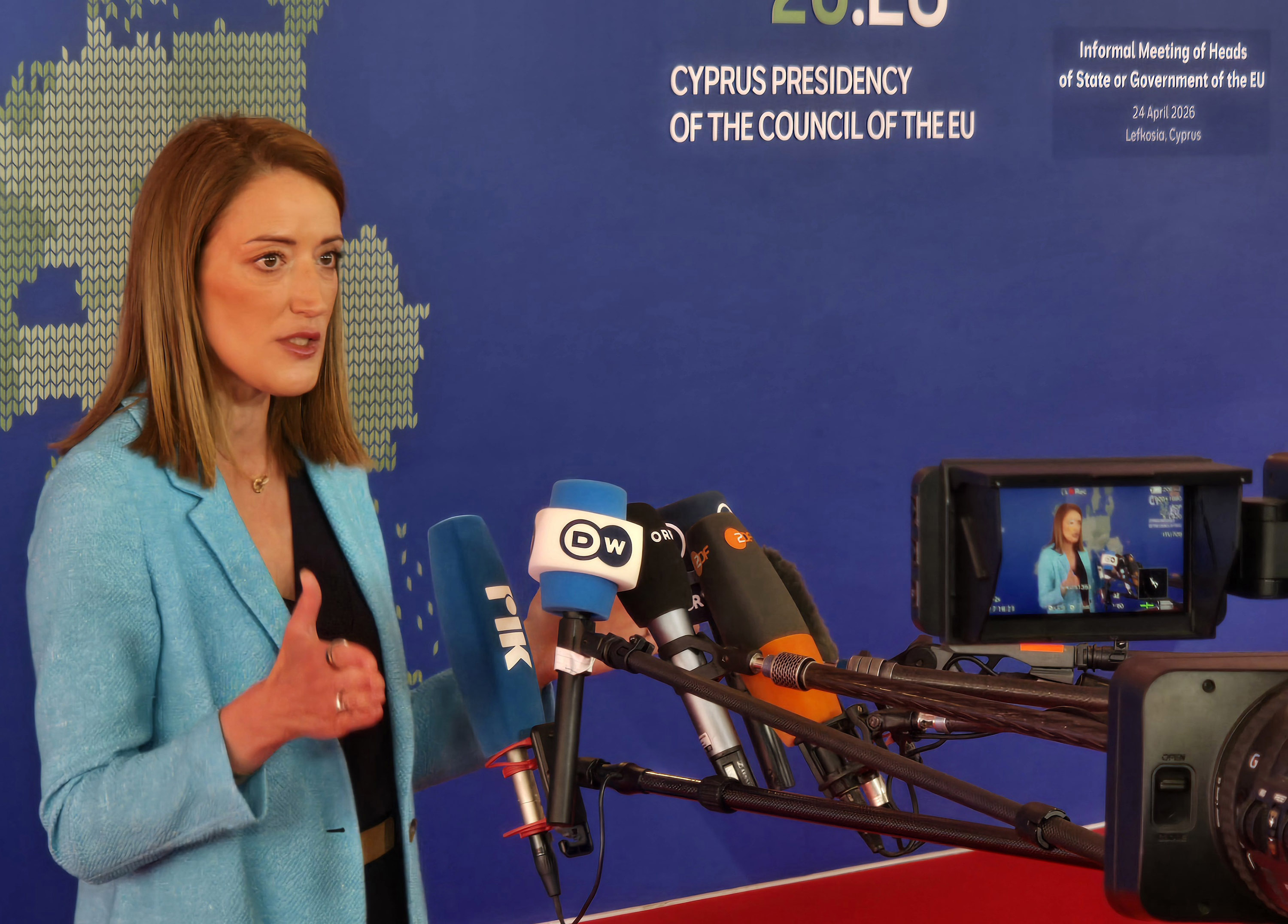
Roberta Metsola and Nikos Christodoulides set out overlapping but distinct priorities on funding, energy and strategic autonomy, as EU leaders gathered in Nicosia for an informal summit on Friday.
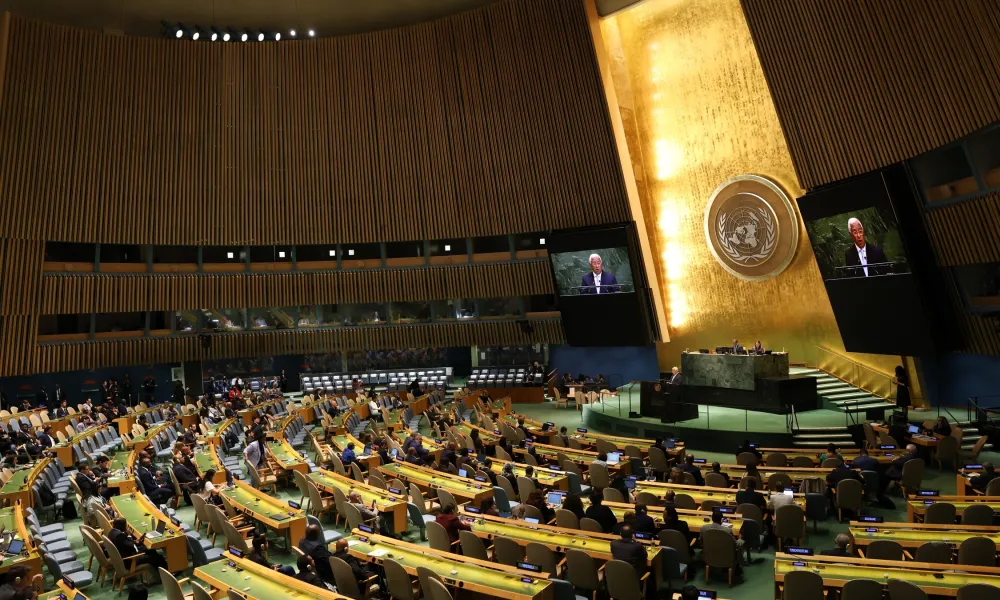
Metsola urged leaders to explore new sources of financing to respond to a growing range of crises, warning that “new money” will be required even to service existing EU debt. She said the European Parliament will adopt its position next week on the EU’s Multiannual Financial Framework (MFF) and is ready to enter negotiations with member states, calling on leaders to “rethink own resources” as the current budget falls short of needs.
On Ukraine, she welcomed the approval of a €90 billion loan, the latest sanctions package and broader EU measures, saying they provide both financial support and political momentum. She also welcomed the extended ceasefire in Iran.
“Ukraine needs financial help and it needs momentum, and Europe is providing both,” she said.
Energy and single market priorities
Metsola outlined three key priorities, starting with the “One Europe – One Market” roadmap, aimed at improving decision-making and reducing fragmentation within the single market.
On energy, she acknowledged short-term measures to ease pressure on households but stressed the need to move beyond temporary solutions. She called for investment in infrastructure and networks, ensuring security of supply and adopting a more strategic approach to achieve Europe’s long-term autonomy.
“Now is the time to secure the strategic autonomy we have been discussing for decades,” she said.
Christodoulides, speaking separately on arrival, also pointed to the need for a longer-term approach to energy, alongside continued work on short-term measures. He said finance ministers will take forward discussions, with meetings scheduled in May, while leaders focus on broader objectives such as strengthening competitiveness and advancing an energy union.
He added that Cyprus, holding the EU Council Presidency, aims to present a mature negotiating framework on the MFF by June, with clear figures and political direction.
Strategic autonomy and regional engagement
Christodoulides stressed that strategic autonomy requires adequate resources, aligning in part with Metsola’s call for increased funding.
“If the EU wants to become strategically autonomous, it must have the necessary resources,” he said, expressing hope for a political rather than purely technical discussion on the EU’s long-term budget.
He also underlined the importance of strengthening cooperation with countries in the region, noting the presence in Cyprus of leaders from Egypt, Jordan, Lebanon and Syria, as well as the Secretary-General of the Gulf Cooperation Council.
According to Christodoulides, the EU should deepen engagement with regional partners to support stability and de-escalation, including exploring a comprehensive agreement with Lebanon and a gradual approach to cooperation with Syria, linked to potential easing of sanctions.
He added that he plans to visit Gulf countries next week to follow up on discussions and explore further cooperation.
Security and coordinated EU response
Both leaders pointed to the need for a coherent European response to geopolitical instability, particularly in the Middle East.
Metsola said citizens should not bear the cost of crises they did not create, calling for a message of security, stability and confidence across the EU.
Christodoulides referred to discussions on strengthening the EU’s security framework, including preparations for a coordinated response in case a member state activates Article 42.7 of the EU Treaty.
He said the European Commission is expected to prepare a plan outlining how member states would respond operationally if the clause is triggered, addressing key questions on coordination and support.
Expressing satisfaction with the discussions, Christodoulides said there is broad recognition among member states of the need for a clear operational plan, as the EU seeks to strengthen its resilience and strategic autonomy.
Source: CNA