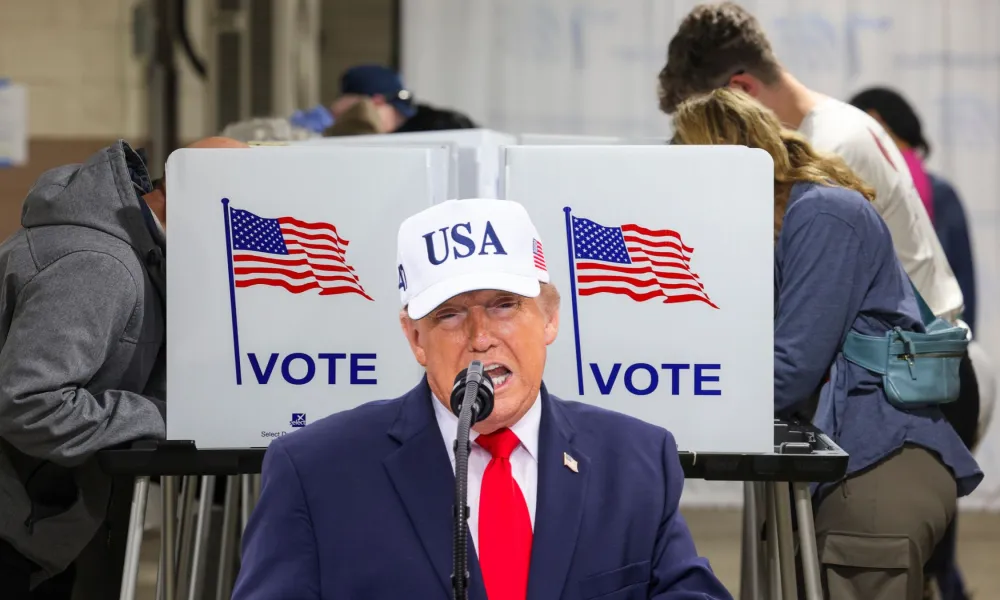

Following the electoral tsunami that swept across the United States on Tuesday, one question hanging over both the US and the wider world is whether the resounding blow delivered to Donald Trump in the midterm elections will lead him to change his policies and practices, both in governing the country and in matters of foreign policy.
In most cases, the answer would be "of course". A political leader receiving such a broad expression of public disapproval would normally be expected to make adjustments.
With Trump, however, described by his critics as arrogant, egotistical and politically insensitive, such a scenario appears unlikely.
What is more likely is that the electoral setback will make him even more ruthless, more authoritarian, harsher and more reckless in his rhetoric, to the point where everything witnessed so far will appear relatively mild.
The reason, according to this view, is that Trump is not a politician in the conventional sense. He did not reach the presidency for political, ideological or national reasons, nor because he holds a particular vision for the country. Nor, the argument goes, does he care greatly about the fortunes of the Republican Party or feel compelled to help it retain power in the 2028 presidential election.
Trump became president, according to this interpretation, to satisfy his own ambition and self-image, and above all to advance his personal business and financial interests, as well as those of a small circle of associates.
His first four years in office and the first two years of his current second term are cited as evidence of that claim.
As Trump is not eligible for a third term, the remaining two years of his presidency are expected to be used to pursue those objectives as extensively as possible.
From this perspective, improving the economic situation and living standards of Americans, whom critics argue have suffered under his policies, is unlikely to become a priority. Nor, they contend, will he focus on strengthening democratic institutions or combating corruption, which they believe has worsened during his time in office.
Similarly, critics argue that improving the international image of the United States, repairing relations with traditional allies or restoring international peace and respect for international law are unlikely to feature prominently on his agenda.
Those who expect to see a changed and improved version of Trump over the next two years, according to this opinion, are likely to be disappointed.
The way he reacted to Tuesday's defeat is seen as evidence enough.
He simply does not seem to get the message.