
Imagine that tomorrow morning the Ministry of Education decided to open a school. Not as the state, but as any ordinary applicant seeking approval to operate an educational institution.
The questions would be straightforward:
- Do you have planning permission?
- Do you have fire-safety certification?
- Are the classrooms suitable?
And the answers might raise concerns.
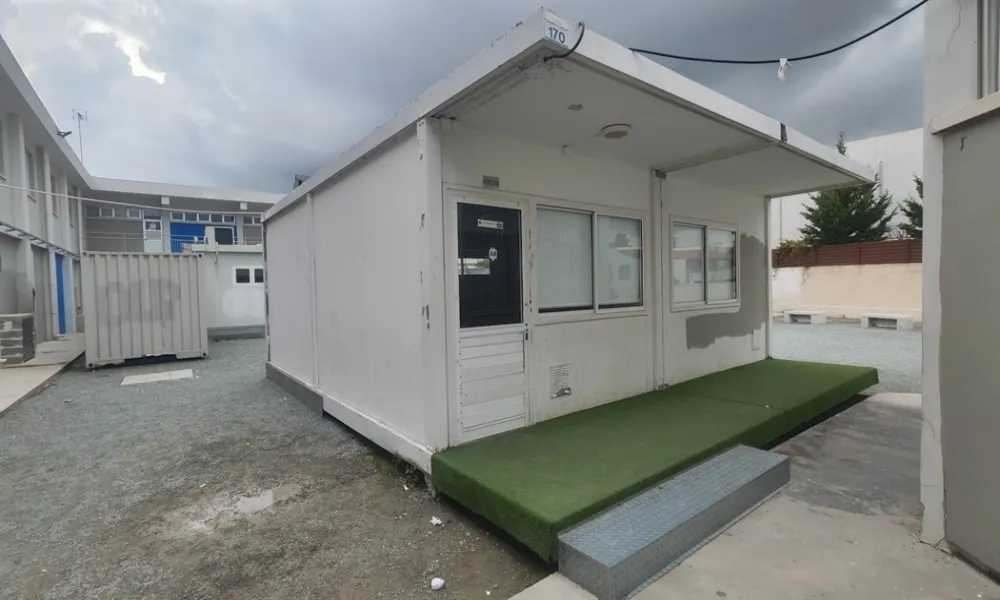
For some facilities, permits remain outstanding. For some schools, fire-safety observations have yet to be fully addressed. Many classrooms are ageing prefabricated structures, some without air conditioning, yet they continue to be used year after year.
In such circumstances, any private applicant could expect closer scrutiny from the authorities, and perhaps even rejection.
The scenario is hypothetical. The outstanding issues are not.
Different standards?
Recent discussions have highlighted the existence of nearly 500 prefabricated classrooms, planning permits that remain pending and schools where fire-safety concerns persist.
By contrast, any individual seeking to establish a private school must provide extensive documentation, obtain the necessary certificates and demonstrate that facilities meet all required standards.
That is entirely appropriate. There is no reason to lower such requirements. Children spend a significant part of their lives in schools, and safety standards should be non-negotiable.
The real question is not why the state imposes strict requirements on private operators. It is why so many outstanding issues remain in schools operated by the state itself.
The need for safe and suitable educational facilities does not change depending on who is responsible for running them.
A greater obligation
Public education is not a business that can wait for procedures to be completed.
It is a daily obligation of the state towards thousands of children.
For that reason, expectations of the state should arguably be even higher than those imposed on private applicants.
The missing element: Long-term planning
Beyond permits and certificates lies another issue: long-term planning.
The pressures that led to the installation of hundreds of prefabricated classrooms did not emerge overnight. Nor is there any reason to believe infrastructure needs will suddenly disappear.
What is required is a comprehensive assessment across all levels of education to identify:
- Where new schools are needed.
- Where existing schools require expansion.
- Where facilities require upgrades and modernisation.
The allocation of substantial funding for school infrastructure in the 2027 education budget is a positive development. However, funding alone is not enough.
The challenge is knowing where, when and why those resources should be invested in order to address shortcomings that have accumulated over many years.
Technical education remains overlooked
The issue is particularly visible in technical education, often regarded as the overlooked branch of the education system.
Considerable efforts have been made in recent years to improve perceptions among students and parents about technical schools.
But what happens when students are convinced to pursue technical education only to discover there is no place available because existing facilities lack capacity?
Unlike other sectors of education, there is no comparable network of private technical schools capable of absorbing excess demand.
This is not simply a matter of another building that was never constructed.
It is about educational opportunities becoming restricted and young people losing the chance to follow their interests and talents.
Ultimately, what is the point of encouraging students to explore new pathways if the schools needed to support those pathways have not been built?