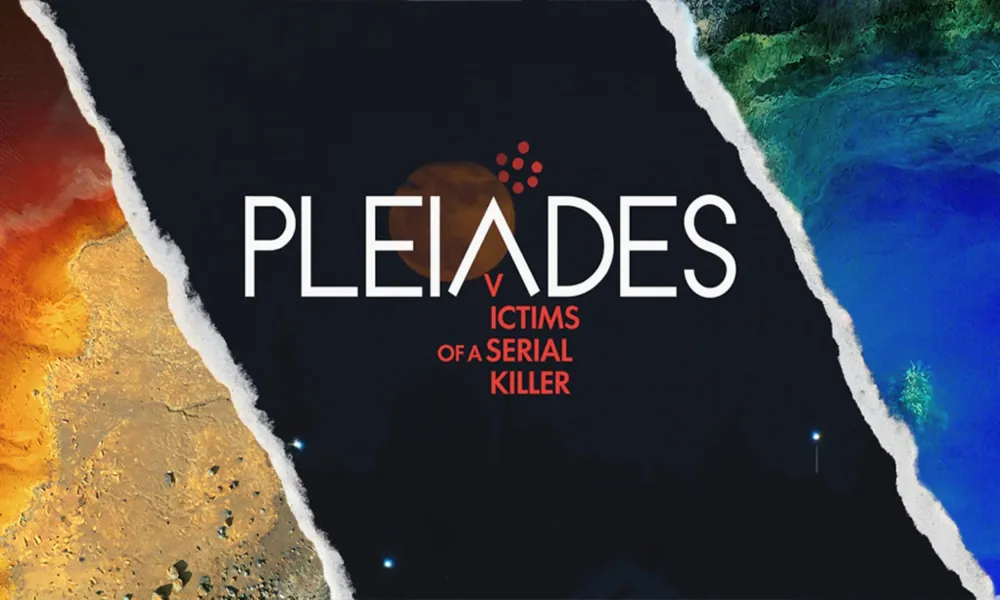

I just finished watching Pleiades: The Victims of a Serial Killer, a documentary series created by Paris Prokopiou and directed by Andreas Sheittanis, about the murders committed by Nicos Metaxas, the first known serial killer in Cyprus. The case shocked the country in 2019, exposing not only the horror of the crimes themselves but also serious questions about how reports of missing migrant women had been handled by authorities. Yet what makes Pleiades remarkable is that it is not primarily interested in the man who committed the murders. Instead, it turns its attention to the people whose lives were taken, the families they left behind, and the society in which those lives were too easily overlooked.
By the end of the documentary, I found myself thinking very little about Metaxas. Instead, I was thinking about the women who disappeared, the relatives who searched for them, and the lives that existed long before they became the subjects of headlines. I was thinking about mothers, daughters, partners and friends. I was thinking about migrant workers who came to Cyprus in search of opportunities and stability. Most of all, I was thinking about how some people can remain invisible until something terrible happens to them.
Rather than inviting viewers to become fascinated by a serial killer, Pleiades insists on looking elsewhere. It asks us to sit with grief rather than spectacle. To focus on those who were lost, rather than the person responsible for their deaths. It treats the victims not as supporting characters in somebody else's story, but as people whose lives mattered long before tragedy brought public attention to them.
For me, some of the most compelling parts of the documentary were those exploring the experiences of migrant women in Cyprus, particularly domestic workers. They occupied positions that many Cypriots depend upon every day, caring for children, supporting people with disabilities and looking after elderly relatives. Their labour was visible. Their lives, too often, were not.
One of the most disturbing themes explored in Pleiades is the response to the women's disappearances. Again and again, concerns appear to have been dismissed. Families searching for answers encountered assumptions that the women had simply left, moved on, or crossed to the north. The urgency that should accompany the disappearance of any human being seemed absent for far too long.
The documentary never has to state the obvious question outright. It hangs in the air regardless. It is an uncomfortable question because there is no way of asking it without also asking what kind of value society attaches to different lives. The documentary forces viewers to confront the possibility that race, nationality, class and gender shaped how seriously these disappearances were taken.
That discomfort deepened when I heard a remark by Miranda Christou, an associate professor at the University of Cyprus and co-chair of the UNESCO Chair on Gender Equality:
"The problem of the occupation in Cyprus is used as a way for us not to care about other issues. Let's not talk about problems of inequality when our island is divided."
The more I thought about it, the more it felt like one of the documentary's central observations.
The Cyprus problem remains the defining issue facing the island. Nobody would dispute that. But there is a danger in allowing one issue to consume every conversation. There is a danger in treating questions of racism, labour exploitation, violence against women and social inequality as matters that can wait until later. Later rarely comes.
The women whose stories are told in Pleiades could not wait until the Cyprus problem was solved. The inequalities that shaped their lives existed at the same time as the island's division. The vulnerabilities they faced did not become less real because there was a larger political issue competing for attention.
Perhaps that is what angered me most. Not the revelation that one man committed terrible crimes. Every society has individuals capable of terrible acts. What angered me was the sense that these women were failed long before they encountered their killer. They were failed by assumptions. Failed by indifference. Failed by a system that did not appear to react with sufficient urgency when they disappeared.
And then there is another question.
Why was Pleiades never broadcast on Cypriot television?
Here is a documentary examining one of the most significant criminal cases in modern Cypriot history. It asks difficult questions about how migrant women are treated, about institutional accountability and about the inequalities that exist on the island. It scrutinises Cyprus because it takes Cyprus seriously. Yet many people here will never see it. Frankly, that is difficult to understand.
If we genuinely want to learn from what happened, then surely we should be willing to engage with work that challenges us. Surely a documentary that asks such important questions about our society deserves a wider audience in the country where those questions matter most.
Because Pleiades is not ultimately about a serial killer. It is about who gets noticed. Who gets listened to. Who gets searched for. Who gets believed. And who is expected to quietly disappear.
What stayed with me after the final episode was not the face of a murderer. It was the uncomfortable feeling that it took a serial killer to force a conversation many should have been having already.
The women whose stories are told in Pleiades should not have needed a national tragedy for people to recognise their humanity. They should not have become visible only after becoming victims. The documentary understands that. It places their lives, their families and their dignity at the centre of the story, where they should have been from the beginning.
And in doing so, it asks a question that extends far beyond this case: how many people do we learn to ignore before we are finally forced to see them?