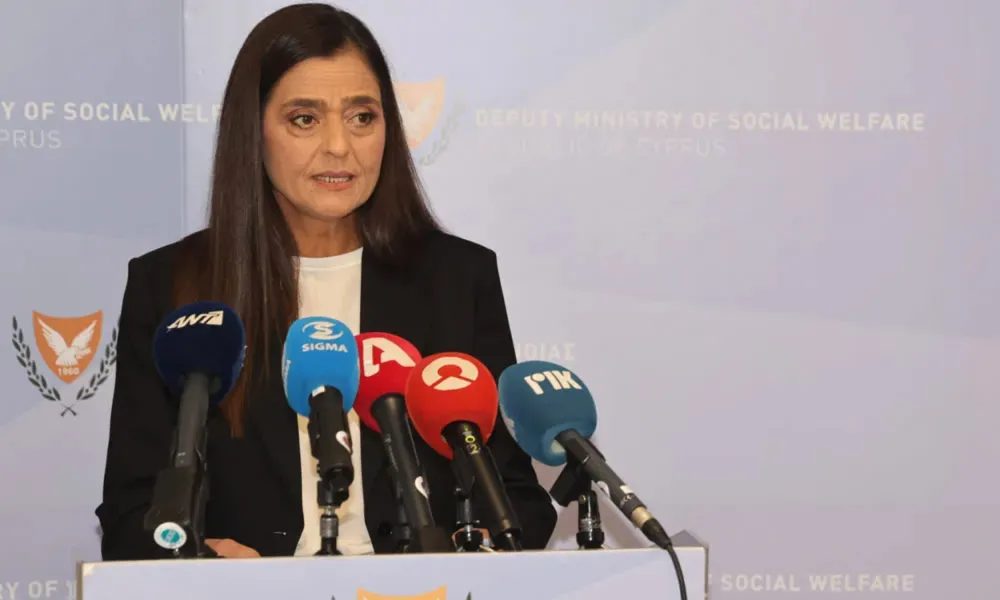

Eight months ago, the helm of the Deputy Ministry of Social Welfare, one of the most sensitive government portfolios given its responsibility for vulnerable groups and people who depend directly on the effectiveness of the state, passed to Clea Papaellina.
Earlier this week, following a decision by the President of the Republic, Papaellina was transferred to the Deputy Ministry of Culture, which she assumes responsibility for today.
A change of minister or deputy minister can, of course, form part of the normal functioning of government. However, when such a critical portfolio passes through the hands of three different officeholders within a relatively short period, questions naturally arise.
To begin with, every change in political leadership, regardless of the position involved, inevitably creates a period of adjustment and may affect the implementation of policies and planning.
Beyond that, what was the outgoing deputy minister able to learn, understand, correct and implement in just eight months? Was she able to advance her plans? Did directors and, most importantly, employees have enough time to place before her the numerous institutional, systemic and operational problems that continue to affect the deputy ministry's services and hinder their work?
This is particularly relevant given the demanding nature of social welfare work, especially for frontline officers. It is a role that goes beyond processing paperwork. It is centred on people and, for that reason, is often regarded as a public calling.
When she assumed office last December, Papaellina declared that the restructuring of the Social Welfare Services would be a priority.
It remains unclear how far that effort progressed. What is clear, however, is that eight months is a very short period in which to lay solid foundations for a sustainable and effective social welfare system.
It is certainly insufficient time to address the longstanding shortcomings of an ageing system that has repeatedly struggled to provide timely prevention and protection for vulnerable members of society.
It is also a system that, in many respects, exhausts its own workforce. Employees face not only the difficult cases they manage daily, but also a bureaucracy that places additional burdens on them, creating obstacles to delivering the standard of service they seek to provide and that citizens deserve.
The baton now passes to Tina Pavlou.
The expectation is that the new deputy minister will move quickly and that her appointment will not result in another restart from scratch.
Social welfare may experience changes in political leadership, but the people who rely on these services cannot be expected to wait every few months for yet another "fresh start."
The welfare state cannot afford to wait.