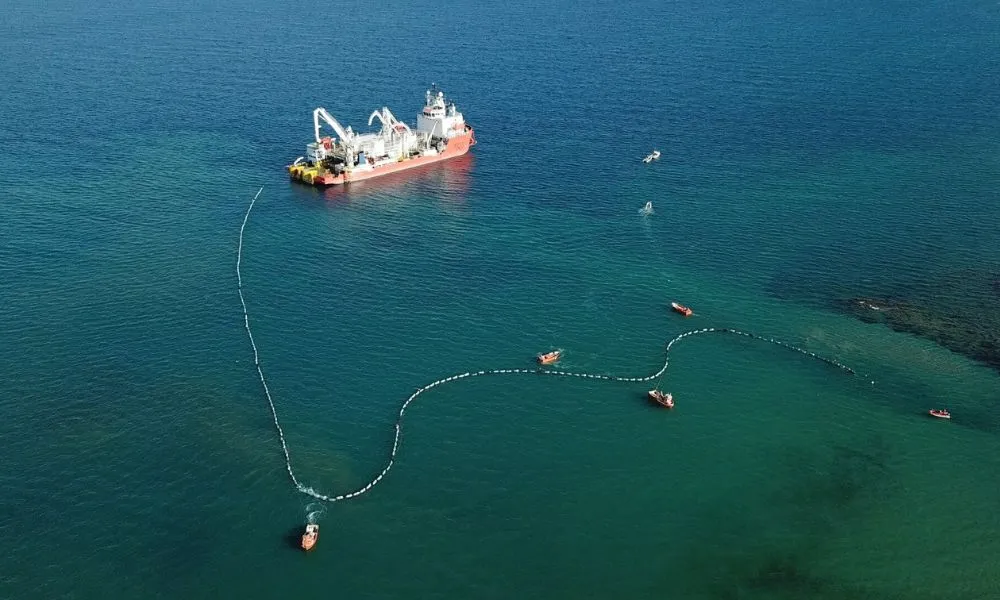



ADMIE has signed a contract with Hellenic Cables for the submarine and underground power cables of the Corinth–Kos interconnection, marking the start of construction. The relevant seabed surveys are expected to begin shortly.
The project has a total budget of €1.48 billion and includes the engineering, procurement, construction and installation (EPCI) of a 320 kV high-voltage direct-current (HVDC) interconnection, with a transmission capacity of 1,000 MW. The cable system to be installed will have a total length of approximately 1,290 km.
The Corinth–Kos interconnection is considered strategically important, as it is the essential first step towards connecting the Dodecanese to the mainland electricity system and ending the islands’ electricity isolation. According to ADMIE’s investment plan, Rhodes and Karpathos will subsequently be connected directly to the high-voltage network via Kos.
As part of the Dodecanese interconnection, the autonomous electricity systems of the smaller islands in the area will also be connected indirectly: Kasos, Chalki, Symi, Kalymnos, Pserimos, Telendos, Nisyros, Tilos, Leros, Lipsi, Gyali, Patmos and Arki (Marathi).
The new energy corridor is expected to end Kos’s reliance on local fossil-fuel units, strengthen the island’s energy security and contribute to greener electricity supply, with environmental benefits for the local ecosystem. The interconnection will also allow electricity generation costs to fall and, consequently, reduce the Public Service Obligations charges allocated to consumers throughout the country.
Environment and Energy Minister Stavros Papastavrou said: “With the signing of the contract, the Corinth–Kos electricity interconnection moves from planning to implementation. This is an investment of €1.5 billion and the first decisive step towards connecting the Dodecanese to the mainland electricity system and ending their energy isolation.
'Landmark interconnection'
Kos and, subsequently, Rhodes, Karpathos and the smaller islands in the area will have a more stable, clean and affordable electricity supply, reducing their dependence on expensive oil-fired units. Reliable energy supply also strengthens the local economy, supports tourism businesses and upgrades the quality and competitiveness of the Dodecanese tourism product. The benefits extend to all consumers, as the interconnection will help reduce Public Service Obligations charges added to every electricity bill. With projects of this scale, we are connecting Greece’s energy system and ensuring better and more affordable electricity for every citizen, in every corner of our homeland.”
ADMIE chairman and CEO Manos Manousakis said: “ADMIE is launching another landmark interconnection for the country’s electricity system. The Corinth–Kos interconnection is the second electricity transmission project using direct-current technology that ADMIE has implemented in recent years, following the Crete–Attica interconnection. Our people’s expertise and advanced scientific training, combined with Hellenic Cables’ experience—we have a record of successful cooperation on complex projects—guarantee the technical excellence and smooth construction of the interconnection, which will enable the Dodecanese to be integrated into the high-voltage network.”
Cenergy Holdings CEO and Hellenic Cables Group General Manager Alexis Alexiou said: “We are particularly pleased to be working with ADMIE on the Corinth–Kos interconnection, to which we are contributing our specialised expertise in HVDC cable systems and our experience in the turnkey delivery of complex projects. This is a project of strategic importance that will connect the Dodecanese to the mainland electricity grid, and we look forward to its safe and reliable implementation.”
The overall interconnection project is co-financed through a loan from the European Investment Bank and has received a positive evaluation for a grant from the Islands Decarbonisation Fund and the Just Transition Mechanism.
Source: CNA