In the basement of London's old Smithfield Market, a six-metre-wide window will separate museum display cases from an active railway line. After remaining closed to the public for 30 years, the Victorian market will reopen on 28 November 2026 as the new home of the London Museum.
With free admission to its permanent galleries, the museum will tell the story of London through objects including Roman writing tablets, jewellery discovered in a Cheapside cellar and a coffee stall that served residents of Shoreditch for a century.
A train will pass directly beside the displays of the new London Museum. Through a six-metre window, visitors will be able to watch Thameslink trains pass, while passengers on board will be able to look into the underground exhibition halls.
The museum is preparing to present the history of London in what was once a railway goods warehouse, beside a railway line that continues to serve the city today.
The permanent galleries open on 28 November in Smithfield's Victorian General Market. According to the museum, the building is returning to public use after more than three decades.
Beneath the market
The first written reference to Smithfield dates back to the 1170s, when, according to the London Museum's historical account, the area was already operating as a livestock market.
In the mid-19th century, the livestock market was relocated to Islington. Smithfield remained associated with the meat trade, now on a wholesale basis.
The museum also records the schedule of that economy. The market opened during the night so customers could prepare meat for sale later the same day. When workers finished their shifts in the early morning, they could visit pubs that opened specifically for them.
The conversion of the buildings was undertaken by architectural practice Stanton Williams and architect Asif Khan, working together with Julian Harrap Architects, a firm specialising in the restoration of historic buildings.
According to the museum, work at the General Market included cleaning approximately 10,000 square metres of brickwork, strengthening the roofs and excavating a network of vaulted underground spaces that were rediscovered during the project.
In a photographic essay published by Stanton Williams, Harshal Gulabchandre documents the transition from the grid of metal columns at ground level to the brick vaults below. Above them, the market's central dome has been preserved and restored.
Access to the museum will be through a covered former street that forms part of the visitor route known as "Real Time".
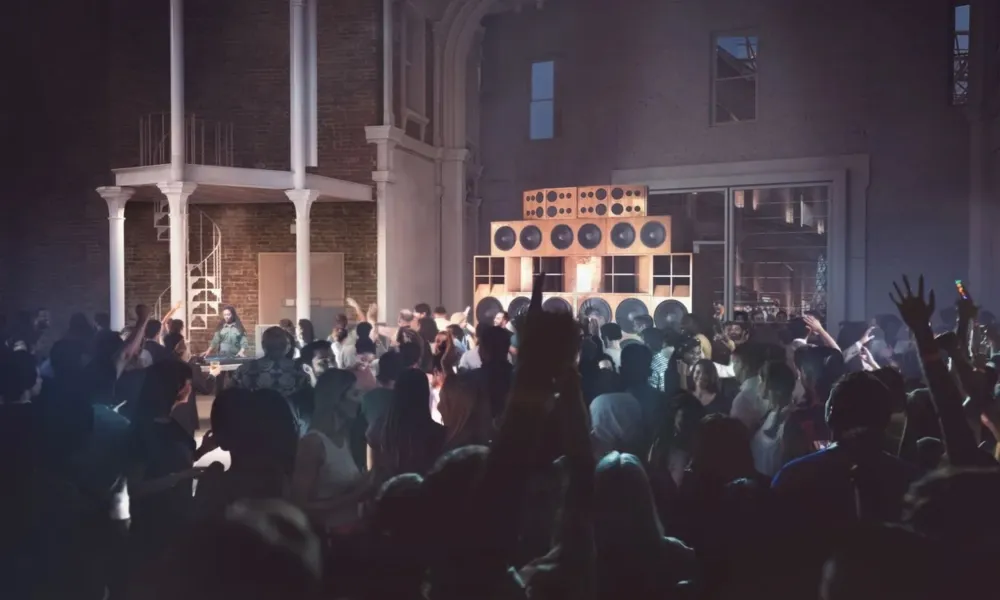
From there, visitors will enter the central Linbury Hall beneath the dome, where "Our Time" will host events and objects linked to the city's more recent history.
The permanent "Past Time" collections will be located underground, where the window overlooking the railway line has also been installed.
Part of the vaulted underground network will open later.
According to the museum, in 2019 workers opened a passage through a wall and discovered approximately 800 square metres of underground spaces behind it. The rooms are believed to have served as storage facilities for both the market and the railway.
The public will enter these spaces for the first time in spring 2027 as part of the free exhibition "Londinium: The Making of a Roman City".
Among the artefacts to be displayed are a feeding vessel for infants, a coin dating from the reign of Nero and cockroach eggs recovered from a Roman oven.
Curator Jackie Keily attributes the preservation of many of the finds to the waterlogged conditions of the excavation site.
The exhibits
From the museum's collection of around seven million objects, the underground galleries will display Roman writing tablets from the Bloomberg Collection, which the London Museum identifies as some of the oldest surviving written records of the city.
In the Goldsmiths' Gallery, the museum plans the most extensive display ever mounted of the Cheapside Hoard.
The treasure was discovered by workers in 1912 during the demolition of a timber-framed building near St Paul's Cathedral.
According to the museum catalogue, the collection contains approximately 500 objects, including a gold watch set inside an emerald, an amethyst pendant shaped like a bunch of grapes and a salamander-shaped brooch made of gold, enamel and diamonds.
The museum links the discovery to the international trade in precious stones and to Cheapside's historical role as the centre of London's goldsmithing industry.
The permanent galleries will also include a section of the Whitechapel Fatberg, the mass of fats, wet wipes and other waste discovered in an east London sewer in 2017.
The museum states that the fatberg measured more than 250 metres in length and that it requested a sample after the discovery was announced.
Other confirmed exhibits include the hunger strike medal of suffragette Emmeline Pankhurst and the costume worn by Anna Pavlova in The Dying Swan.
A street coffee stall beneath the dome
On the ground floor, Syd's Coffee Stall will be installed in the central hall among the objects featured in the "Our Time" section.
According to the London Museum archives, three generations of the Tothill family served hot drinks and food from the stall, which operated for a century on Calvert Avenue in Shoreditch.
When it closed in 2019, it was donated to the museum.
At Smithfield, it will be used once again to offer free hot drinks on Tuesdays as part of a programme featuring workshops and live performances.
The first themed programme, "London Tastes", will run from November 2026 until August 2027.
It is curated by writer Ruby Tandoh and Jonathan Nunn, founder of Vittles.
According to the museum, the programme's exhibitions will draw stories from the markets of Covent Garden, the shops of Brick Lane and food businesses across different neighbourhoods of the city.
Museum director Sharon Ament said more than 100,000 people contributed in various ways to the creation of the new museum.
She added that she wants the venue to serve as a meeting place for Londoners.
Cost and next steps
The London Museum estimates the total cost of the project at £437 million.
According to its published funding figures, the City of London Corporation is providing the buildings and investing at least £222 million, while London Mayor Sadiq Khan has committed £95 million.
The museum is seeking to raise £100 million through private donations and lists Bloomberg Philanthropies and the National Lottery Heritage Fund among the organisations that have pledged support.
The November opening covers the General Market.
The neighbouring Poultry Market building was constructed between 1961 and 1963 and is listed by Historic England.
The London Museum plans to open that building in 2028, housing two temporary exhibition spaces, an education centre and collection storage facilities.