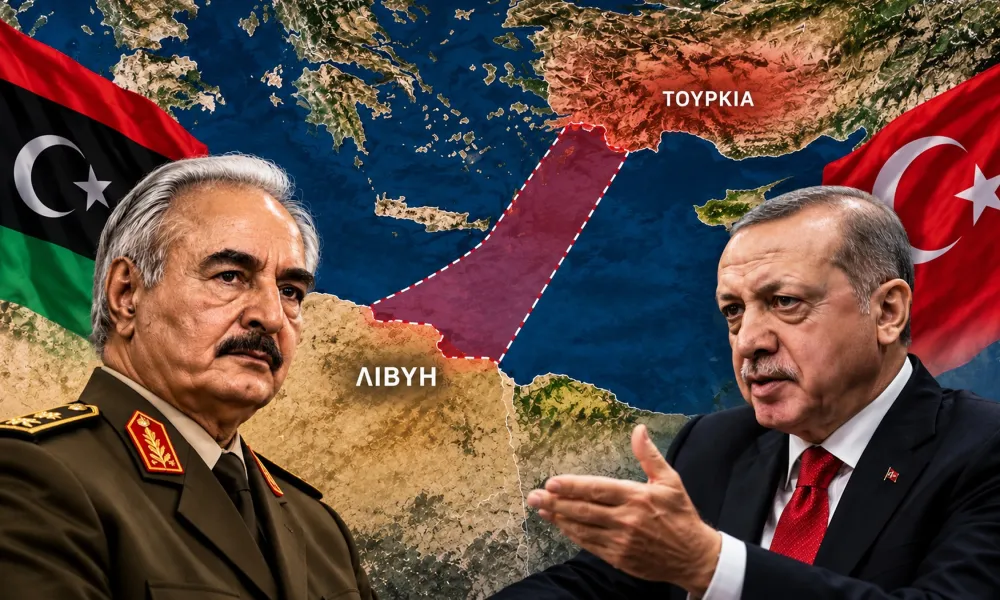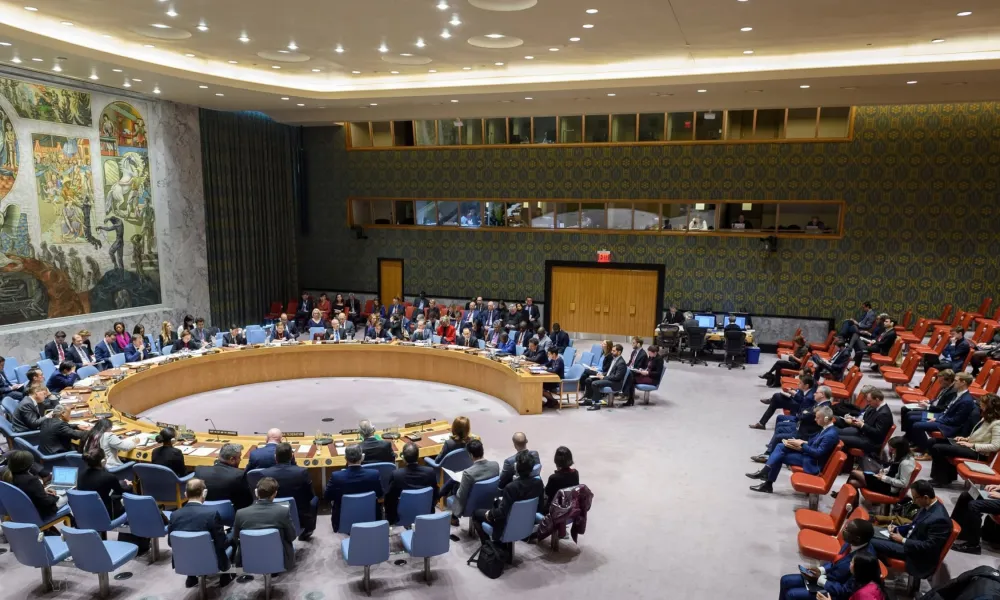

Greece has, for the first time, raised the issue of the 2019 Turkey-Libya maritime memorandum before the United Nations Security Council, following its ratification by the parliament in eastern Libya.
According to the report, Greece's Permanent Representative to the UN, Ambassador Aglaia Balta, raised the matter during closed-door consultations, acting on instructions from Foreign Minister George Gerapetritis.
Balta intervened in her national capacity, as Greece is serving as president of the Security Council this month.
Concerns over regional stability
The Greek envoy warned Security Council members about the risks the ratification could pose to stability and security in the Eastern Mediterranean.
The discussion marks the first time the issue has been formally addressed at the Security Council. Until now, the positions of the parties involved had been communicated to the UN through official letters and maps.
Correspondence and objections have also previously been submitted by regional countries including Cyprus, Egypt and Italy.
The report notes that France, a permanent member of the Security Council, has considered the memorandum invalid since 2020.
'Geography does not change'
According to information cited in the report, Balta stressed that geography cannot be altered and that the UN Convention on the Law of the Sea cannot be redefined through unilateral decisions.
Greece also underlined that it has engaged with Libyan authorities in good faith and participated in discussions concerning the delimitation of maritime zones.
Support for Libya's political process
Balta reiterated Greece's longstanding position, including during its current two-year term on the Security Council, in favour of ending foreign interference in Libya.
She stressed that Libya should not become an arena for geopolitical rivalry.
Greece also reaffirmed its support for the unification of Libyan institutions and efforts aimed at advancing the political process.
At the same time, the Greek envoy argued that such objectives cannot be pursued at the expense of the sovereignty and sovereign rights of third countries, nor should stability inside Libya be achieved by creating instability beyond its borders.
Source: ANA-MPA