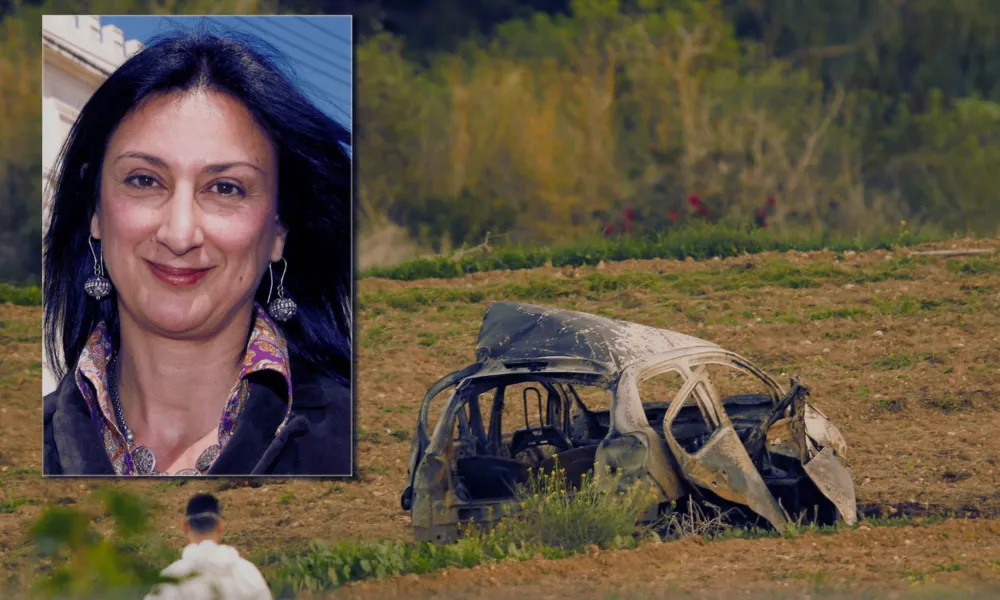



Maltese businessman Yorgen Fenech was acquitted on Wednesday of ordering the 2017 murder of investigative journalist Daphne Caruana Galizia, a verdict that has reopened political and public wounds nearly nine years after her death. A jury cleared Fenech, 44, by an 8-1 vote on both the charge of complicity in her murder and the lesser charge of criminal association, according to Reuters. The Guardian reported that the trial ran for 55 days, making it the longest-running murder trial in Maltese history, and that the verdict was delivered at 7.30pm on Wednesday.
A verdict nine years in the making
Caruana Galizia, an anti-corruption journalist who was 53 when she died, was killed by a car bomb outside her home in Bidnija in October 2017. The device had been placed under the driver's seat of her car and detonated by remote control from an offshore yacht. The killing triggered years of investigation and prosecution. Three men have been convicted of carrying out the assassination and two others of supplying the bomb used, all now serving lengthy sentences, according to Reuters. Fenech was arrested in November 2019 while attempting to leave Malta aboard his yacht, and prosecutors alleged he paid €150,000 through a middleman, Melvin Theuma, to have Caruana Galizia killed.
Anger from family and press freedom groups
The verdict was met with fury from Caruana Galizia's family. Her son, Matthew Caruana Galizia, wrote on Facebook that it was a "terrible decision" and accused jurors of having "washed their hands" of their responsibility, the Guardian reported. Her sister, Corinne Vella, told reporters outside court that the verdict "signals you can kill journalists with impunity," as Fenech reportedly exited to chants of "mafia." Press freedom organisation Reporters Without Borders said it was "beyond outraged" by the acquittal.
Political fallout in Malta
Malta's government, led by Prime Minister Robert Abela, did not comment directly on the verdict but urged "prudence in public comments that could do more harm than good". The opposition Nationalist Party held a "silent demonstration" outside the prime minister's office, with leader Alex Borg calling for parliament to be recalled from its summer break, Reuters reported. European Parliament president Roberta Metsola, a former Maltese politician, wrote on Facebook that she would continue "the fight for justice," addressing the post directly to Caruana Galizia. "That promise holds today. We will not give up and we will not give in," she wrote.
During the trial, Fenech's defence pointed to Keith Schembri, former chief of staff to then prime minister Joseph Muscat, as having been behind the murder plot, an allegation Schembri denies. Police told the court Schembri had never been treated as a suspect. Muscat, who was never linked to the murder, resigned in January 2020 amid the political crisis that followed the assassination.
Judge Edwina Grima, who presided over the trial, has ordered that evidence be sent to the Police Commissioner to determine whether third parties should face criminal proceedings, Reuters reported.
A wider fight for press freedom
Caruana Galizia's death prompted a cross-European collective of journalists, known as the Daphne Project, to continue her investigations, according to the Guardian. A 2021 public inquiry into her killing recommended EU-wide legislation to protect journalists from strategic lawsuits against public participation, a practice increasingly used to silence reporters and whistleblowers. Caruana Galizia had been facing 47 such lawsuits when she died. Although the European Parliament has voted the measure through, no member state has yet implemented it. The Guardian also noted that an unsuccessful car bomb attack on Italian investigative reporter Sigfrido Rannucci, timed near the eighth anniversary of Caruana Galizia's assassination, has intensified European Commission concern over the intimidation of journalists.
Sources: Reuters, the Guardian