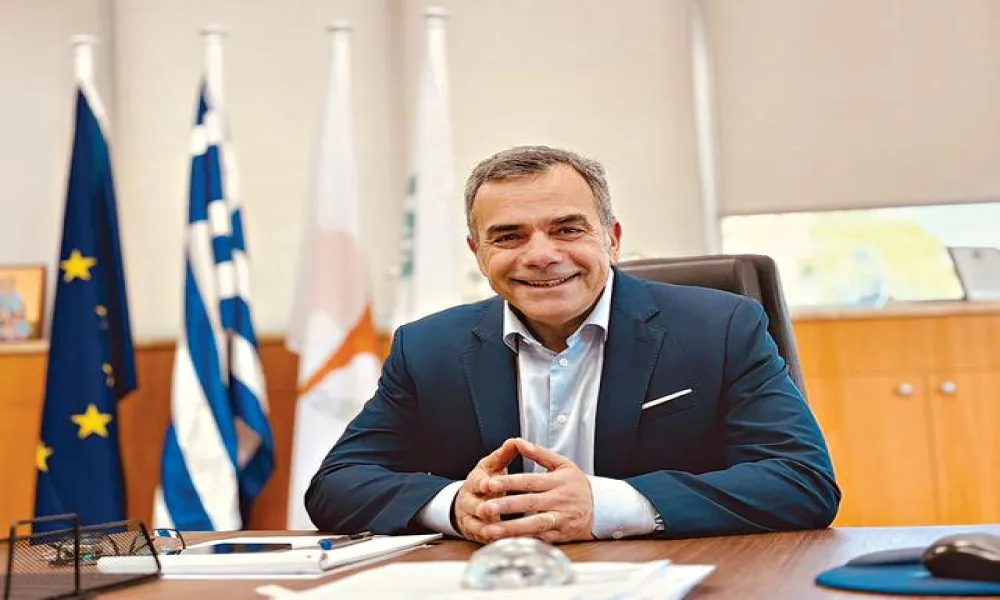

The president of the Nicosia District Local Government Organisation (EOA), Konstantinos Yiorkadjis, has strongly condemned death threats and acts of intimidation targeting Lympia Deputy Mayor Pantelis Xynisteris, following the appearance of hate-filled and divisive slogans in the community.
In a social media post, Yiorkadjis denounced the incidents in the strongest terms, stressing that disagreements in a democratic society must be expressed through dialogue and the exchange of arguments, rather than threats, vandalism and the targeting of elected representatives and their families.
“In a democracy, dialogue takes place through arguments, not through night-time vandalism and the targeting of elected representatives and their families,” he said.
Checkpoint decisions do not rest with local authorities
Yiorkadjis also addressed the debate surrounding the possible opening of a crossing point between Lympia and Louroujina, making clear that the matter falls within the remit of the central political leadership.
He pointed out that decisions on opening new crossing points are taken at the highest political level, by the President of the Republic and the Turkish Cypriot leader, rather than by local authorities.
Against this backdrop, he described the targeting of local government representatives over decisions outside their jurisdiction as both unfair and dangerous.
Calls for road infrastructure and a perimeter road
Yiorkadjis also expressed support for the position taken by the deputy mayor and the local authority regarding the need for adequate road infrastructure should the crossing point open.
He highlighted, in particular, the demand for a perimeter road to protect the village centre and ensure the safety of schoolchildren.
He said local authorities have a responsibility to safeguard residents’ quality of life, security and everyday well-being, adding that the concerns raised by the Lympia local authority regarding the necessary infrastructure were reasonable.
Concluding his statement, the Nicosia EOA president stressed that freedom of expression and the right to disagree are fundamental democratic rights, but must never be used as a pretext for threats or intimidation.