
A new escalation unfolded yesterday in the Black Sea, with reciprocal strikes by Russia and Ukraine confirming that the maritime corridor remains one of the most dangerous fronts of the war.
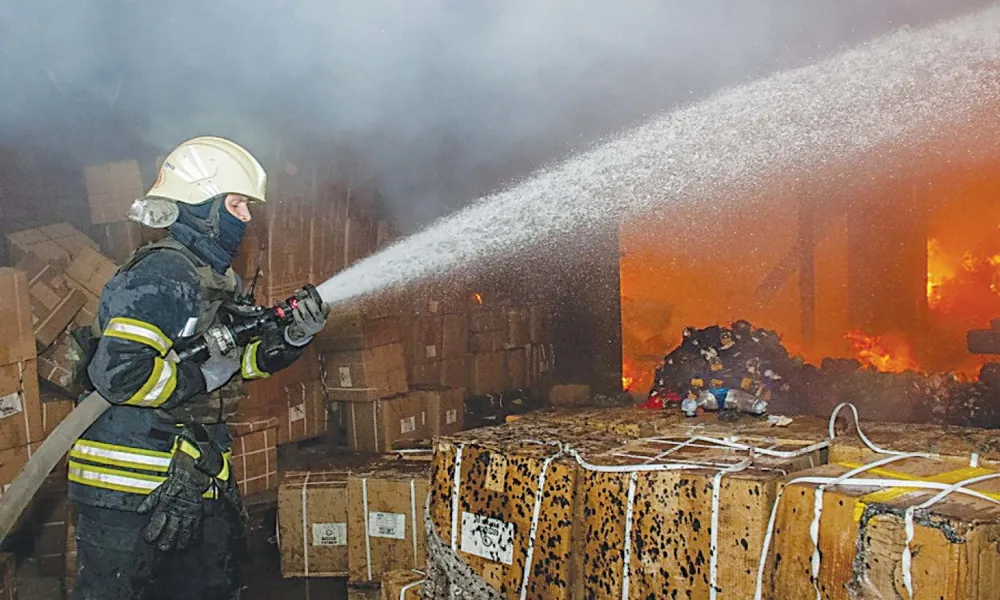
Russian drones struck two commercial dry cargo vessels as they sailed from Chornomorsk towards Odesa. On board the Tanzanian-flagged bulk carrier MV Atlas Bey, which caught fire following the attack, the Azerbaijani captain was killed, while the remaining eleven crew members were rescued.
A second vessel sailing under the Liberian flag was also hit, although the extent of the damage has not yet been clarified.
Ukrainian Strikes on Vessels
The attack came just hours after a Ukrainian strike against 20 Russian vessels in the Black Sea, 17 of them oil tankers.
The commander of Ukraine's Unmanned Systems Forces, Robert Brovdi, announced via Telegram that the targets also included two gas tankers and a tugboat.
In response, the Russian Defence Ministry announced strikes against port infrastructure in Odesa and Chornomorsk, hitting four vessels carrying cargo intended for the Ukrainian military.
Against this backdrop, European Commission President Ursula von der Leyen arrived in Kyiv and announced new initiatives aimed at strengthening defence industrial cooperation.
At the same time, a report by the Financial Times stated that Ukraine will be allowed to use part of a €6 billion European loan to purchase Chinese drone components.
Amid the escalation, US President Donald Trump reiterated in an interview with Fox News that he believes Vladimir Putin is ready to reach an agreement to end the war.
Three sources close to the Kremlin, however, told Reuters that the Russian president is rejecting calls for negotiations and may instead seek a further escalation of hostilities.
Inside Russia
Behind the rhetoric, however, the situation inside Russia appears considerably more troubling for the Kremlin.
According to a recent analysis by Forbes, continuing Ukrainian attacks hit 11 Russian oil refineries in June alone, creating serious fuel shortages that reportedly forced Putin to publicly acknowledge the problem and consider export restrictions, while Moscow has even been seeking fuel supplies from India.
In Crimea, access to fuel has effectively been disrupted, with queues stretching for kilometres across the peninsula.
At the same time, the case of military blogger Alexander Lunin, a veteran who publicly requested a meeting with Putin while warning about conditions within the armed forces, has reignited discussions about cracks within the Russian power structure, drawing comparisons among analysts with the Wagner mutiny led by Yevgeny Prigozhin.
According to analyst Melik Kaylan, the gradual erosion of Putin's credibility could eventually undermine his political legitimacy, with some analysts not ruling out the possibility of an internal political crisis within the Russian leadership over the next three years.
The human cost of the war remains enormous for both sides.
According to estimates by the Center for Strategic and International Studies (CSIS), Russian losses are estimated at between 400,000 and 450,000 soldiers killed, while casualty ratios during the first half of 2026 are estimated at eight to one in Ukraine's favour, increasing pressure on Russia's military leadership to produce results on the battlefield.