The announcement of a decision by Mojtaba Khamenei appears to be the final step needed – at least at this stage – to conclude the agreement reached by US and Iranian negotiators earlier this week. However, delays on the part of Iran’s new supreme leader have reportedly angered Donald Trump, who on Friday ordered that Tehran be informed he was introducing “corrections” to the draft memorandum of understanding.
The draft includes a cessation of hostilities, extending even to Lebanon, and a two‑month negotiation period, but does not contain a detailed and binding framework for Iran’s nuclear programme. These are the agreement’s main weaknesses – and the consequences of the delay.
After days of silence from Iran’s supreme leader – silence that effectively meant no approval of the agreed draft for a ceasefire and the launch of a new phase of US–Iran negotiations – the US president responded by tightening the proposed terms.
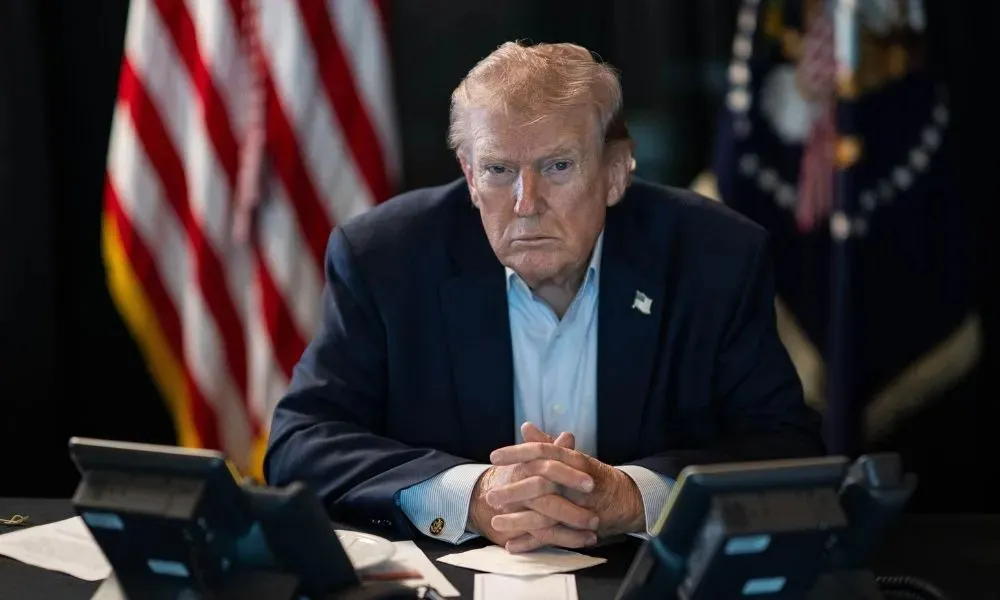
Trump angered by delay
According to an official familiar with the developments, cited by Axios, Trump was furious that he, the United States and the wider international community were waiting for a decision from Iran’s leader, who succeeded his father after his assassination at the outset of the war in late February, despite the draft already having been agreed by negotiators on both sides.
On Friday, the Republican president ordered that Iranian officials be informed he was making changes to the draft, effectively hardening the terms previously agreed by his envoys, Steve Witkoff and Jared Kushner.
Trump reiterated that Iran must commit that it will “never possess a nuclear weapon or bomb” and that its stockpiles of highly enriched uranium – which he described as “nuclear dust” – would be removed and destroyed by the United States, in close cooperation with Tehran and the UN’s International Atomic Energy Agency.
He also signalled that “no money will be exchanged, until further notice”, indicating opposition to lifting sanctions that Iran was meant to receive under the memorandum’s original terms, adding that “other issues of far lesser importance have been agreed”.
The tightening of terms further complicates negotiations that have been uncertain almost from the outset. According to three sources who have seen the draft, the delay so far is not due to wording issues, but to the absence of final approval from Mojtaba Khamenei.
Agreement reached by negotiators, approval still pending
The same sources said the four main negotiators – Abbas Araghchi and Mohammad Bagher Ghalibaf for Iran, and Witkoff and Kushner for the US – had agreed on the memorandum of understanding.
They stressed that the document is not a final, detailed agreement, but rather a principles‑based text aimed at stopping the war and opening a new phase of talks towards a broader, permanent settlement.
This distinction is crucial, as some US media reports presented the draft as containing a binding and detailed settlement on Iran’s nuclear programme. According to the three sources, this is not the case at this stage – and, in any event, Trump is unlikely to persuade Iran to accept the changes he introduced.
“In my view, he understands this himself,” one source said, “and introduced these changes out of frustration at being kept waiting, and as a way to pressure Mojtaba to respond to the original draft.”
Despite US insistence that Trump’s approval would still be required after Khamenei’s sign‑off, the source added: “I find it hard to believe the president would reject something agreed by Witkoff and Kushner, who are his most loyal, closest and best‑aligned envoys.”
Khamenei in hiding, messages via couriers
The delay is compounded by the extraordinary circumstances surrounding Iran’s new supreme leader. Mojtaba Khamenei has reportedly been in hiding for nearly three months as tensions with the US escalated.
He effectively disappeared after the US‑Israeli strike on Tehran on 28 February that killed his father, amid reports that he himself was seriously wounded. US Secretary of Defense Pete Hegseth described him as “injured and possibly disfigured”. His spouse and child were also killed in the same attack.
According to reports, messages between Khamenei and the negotiators are being relayed via couriers, with responses taking several days to arrive.
It appears unlikely that Trump will sign any agreement before receiving definitive confirmation that Khamenei has personally approved the document.
What the memorandum includes
The memorandum of understanding reportedly contains six core elements:
- An end to the war, not only between the US and Iran but “including Lebanon”. This clause could be highly significant for Israel, potentially limiting its freedom of action against Hezbollah.
- A 60‑day period for negotiating a final agreement, with the option of extension. Even if approved, the memorandum does not resolve deep disagreements, but defers them to the next stage, covering the nuclear programme, sanctions, frozen Iranian assets and possibly broader regional arrangements.
- Restoration of free navigation through the Strait of Hormuz and the lifting of the US blockade on Iranian ports, with reference to a specific number of ships per day, as before the war.
- On Iran’s nuclear programme, the draft is general and vague, lacking a clear mechanism for removing enriched uranium or binding commitments on weapons production, which would be addressed in a final agreement.
- Gradual release of frozen Iranian assets, depending on progress in negotiations.
- Lifting of sanctions – a final agreement, if reached, would include the removal of both primary and secondary sanctions.
There is also reference to the creation of an international investment fund for post‑war reconstruction, without clear commitments on amounts or US participation.
Risks of continued delay
The main obstacle remains the absence of approval from Mojtaba Khamenei, leaving Washington, Tehran and mediating states waiting.
The delay carries multiple risks: it may be interpreted by Trump as Iranian stalling or manipulation; it strengthens opponents of the deal on both sides; and it increases the risk of limited military escalation, particularly in Lebanon and the Strait of Hormuz.
Finally, deferring substantive handling of the nuclear issue to a later stage raises the danger that, even if the memorandum is approved, the core nuclear threat remains vague and non‑binding.
Source: protothema.gr