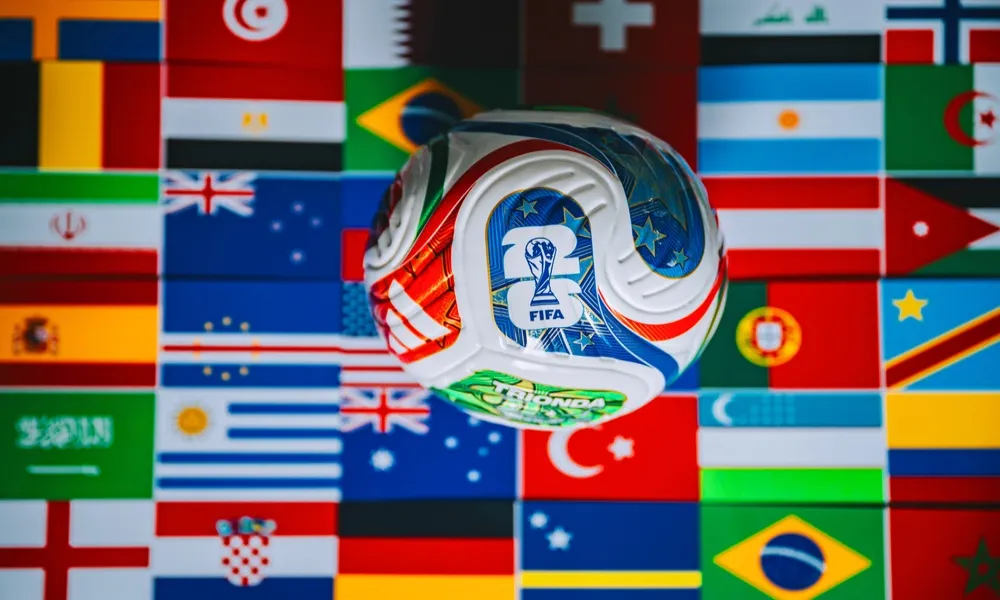
Before every World Cup match, the ritual is familiar. Players line up, cameras move across their faces and national anthems fill the stadium before the first whistle. For many supporters, it is a moment of emotion, tension or patriotic pride. Yet behind the ceremony, many of the songs carry a much harsher inheritance.
An analysis by The Economist of the national anthems of countries taking part in the 2026 World Cup found that many are shaped by the language of war, liberation, resistance and sacrifice. These are not simply songs about flags and homeland. In several cases, they are compressed histories of empire, invasion, rebellion and national survival.
The analysis examined translated lyrics from the anthems of the 48 participating countries, excluding those without official words, such as Spain and Bosnia and Herzegovina. The result is a striking reminder that the music heard before football matches often comes from periods when nations were defining themselves through conflict.
Old enemies in song
Spain offers one of the more curious findings. Its own anthem has no official lyrics, yet Spain appears as an enemy in the anthems of other countries more often than any other state. The reason lies largely in colonial history, especially in Latin America, where many countries won independence through struggles against Spanish rule.
According to The Economist, Spain is cast negatively in three national anthems. In some cases, the former colonial power is not named directly, but the historical references leave little doubt about the enemy being evoked.
Portugal stands out for a different reason. Its anthem, originally written in response to British pressure, is among the most martial in the tournament. Its repeated call “to arms” gives it a clear fighting tone, and The Economist found it had the highest concentration of violent references per 100 words among the World Cup anthems studied.
From revolution to sacrifice
France’s “La Marseillaise” remains one of the best-known examples of an anthem written in the language of conflict. Born during the French Revolution, it speaks of invaders, blood and the defence of the homeland. Its power comes not from gentle patriotism, but from urgency and threat.
Other anthems also connect freedom with sacrifice. Uruguay and Tunisia, for example, frame national identity through endurance, martyrdom and the willingness to die for liberty. The message is not merely that the nation should be loved, but that it had to be fought for.
The anthems of two of the 2026 World Cup host nations, the United States and Mexico, also reflect themes of resistance and survival. Both are built around freedom and national resolve, but Mexico’s is notably more combative. Written in the shadow of territorial loss and foreign intervention, it carries the tone of a country that sees defence of the nation as a permanent duty.
The quieter anthems
Not all anthems are so bloody. Britain’s “God Save the King” is essentially a prayer for the monarch. Germany’s current official version focuses on unity, justice and freedom. Japan’s anthem, one of the shortest and most poetic in the world, is a wish for the long life of the emperor, expressed through images of nature and time.
Canada also belongs to the gentler category. Its anthem centres on love of country, pride and unity, rather than enemies or battle. Its official English lyrics were changed in 2018 to make them gender-neutral, reflecting a more modern understanding of national belonging.
What these songs reveal is that national anthems are more than pre-match music. They are small historical archives, preserving the fears, wounds and ambitions of the countries that adopted them. At the World Cup, nations now meet on the pitch rather than the battlefield. But the songs played before kick-off often remind us that today’s sporting rivalry still carries echoes of much older struggles.