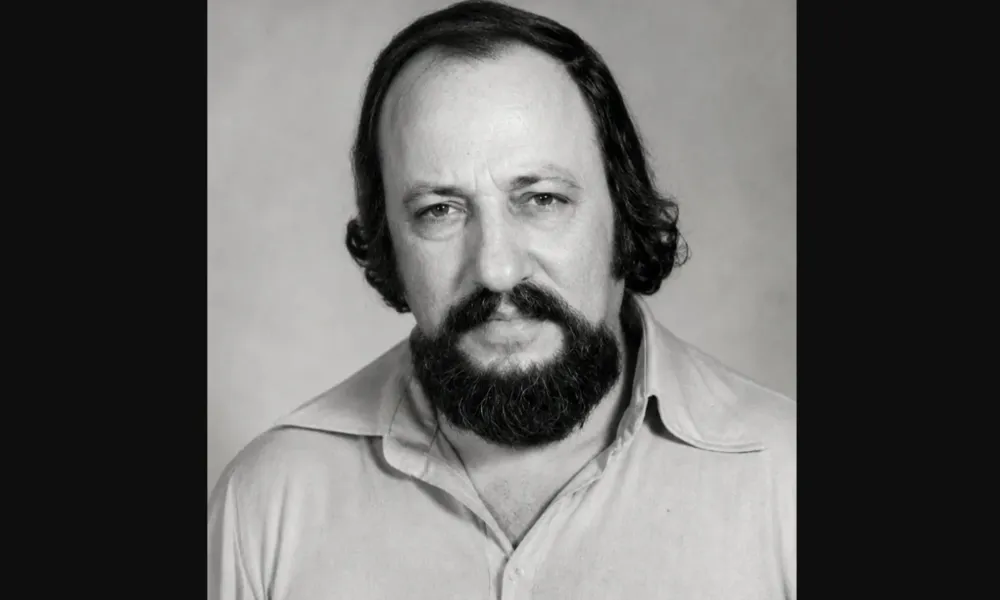

The death in London of Andreas Antoniadis, known as “Keravnos”, has once again brought to the surface a dark side of the EOKA struggle: the collaboration of some of its members with the British authorities. Hundreds of reactions on social media have also shown how alive the question of the memory of betrayal remains, 70 years later.
News of the death of Antoniadis, known as “Keravnos”, prompted dozens of posts within hours and hundreds of comments on social media, with many referring to “Keravnos” as a “traitor”, “agent” and “adventurer”.
The scale of the discussion touches on how Cypriot society continues to grapple with its own history seven decades later, and what the word “betrayal” means today for a community that is still seeking the full picture of the events of that period.
From fighter to informer
According to historical research and testimonies gathered in recent years, Antoniadis was born in the early 1930s and joined EOKA in the early stages of the struggle. Following his arrest by British troops, he is reported to have collaborated with the British authorities, providing information about fellow fighters, hideouts and the organisation’s networks.
Researchers of the period link him to the discovery of fighters Christos Kkellis and Miltiades Stylianou, who were killed in Paphos in March 1957.
In a letter he is reported to have sent in 1960 from a British prison to the former Governor of Cyprus, Lord Harding, and which has recently been made public, he admits in writing to collaborating with the security forces from early 1956, and names two other people who were working with him.
In 1958, as a political solution to the Cyprus problem was beginning to emerge, the British authorities transferred him to London, along with other former collaborators. There, according to reports, he became involved in the underworld and later worked with the British Customs Service to identify heroin trafficking networks — a story that partly inspired the character of “Mylonas” in the recent Netflix series Legends.
He died in London aged over 90.
The storm of reactions
The majority of reactions following his death were condemnatory, with terms such as “traitor” and “arch-traitor” dominating the discussion.
Historian Christos Iakovou, who has studied the case for many years, described Antoniadis in a post as a man who “acted as if there were no tomorrow”. He pointed out that, over time, Antoniadis attempted to reconstruct his image through narratives which the researcher calls “hindsight rationalisation” — the retrospective justification of his choices.
However, amid the volume of reactions, another current emerged.
In comments beneath various posts, users warned against searching for a “hidden secret” that would explain the history in one stroke, stressing that the Cypriot reality emerged through complex combinations of colonialism, nationalism and personal ambitions, rather than through a single plan or a single culprit.
Other commenters openly raised the question of motives, arguing that calling someone a “traitor” explains the act but not the reasons behind it.
The unanswered questions
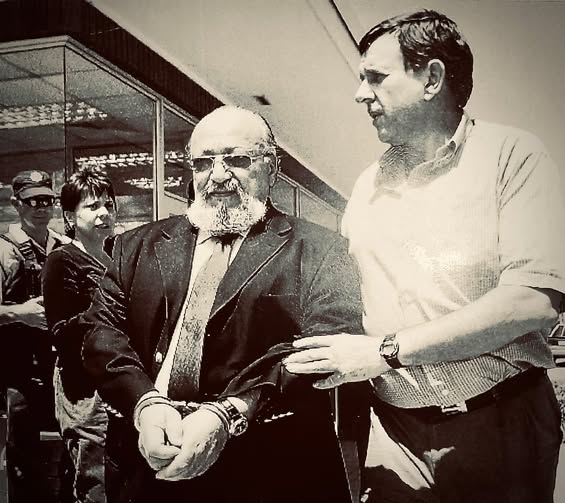
Among the issues that have returned to the public debate is why the Republic of Cyprus never officially sought the extradition of people considered proven collaborators with the British authorities.
Legal commentators pointed out that the acts in question had been committed before the establishment of the Republic of Cyprus and did not constitute offences under the colonial law in force at the time, making such a request legally unfeasible.
Others suggested that such a process would also have exposed internal conflicts within the organisation itself, which many had no intention of reopening.
At the same time, information that has circulated differs on key points, such as the amount Antoniadis is alleged to have received for his collaboration. An earlier New York Times report referred to £20,000 in 1959, while oral testimonies have cited much smaller amounts for the collaborators as a whole.
An allegation also circulated, without official confirmation, that he had given a television interview in 1994 which was never broadcast following reactions from fighters’ organisations. According to one source, the recording is still being sought.
According to a publication by the Association of EOKA Fighters 1955-59, the organisation itself has stated that it identified and executed around 80 people considered collaborators with the enemy during the struggle. The figure indicates the scale of the phenomenon beyond Antoniadis’ individual case.
His case, however, stands out because he not only survived but lived for decades under British protection — something many commentators consider indicative of a broader, lesser-known aspect of Cyprus’s decolonisation.
A list of names of people accused of collaborating with the British authorities during that period was also circulated.
The publication of such lists, as well as reliance on oral testimonies from decades ago, shows how much of this history continues to rest on accounts that have not undergone rigorous historical cross-checking — something researchers of the period themselves identify as a problem.
During the same period, a small number of voices attempted to present a less one-dimensional picture of Antoniadis, describing personal encounters with him in London decades ago. These testimonies, however, do not negate the weight of what has been recorded about his actions during the struggle.
Beyond the myth
The case of Antoniadis is not an isolated one.
In a recent academic study, historian Andrikos Varnava notes that EOKA itself maintained its own list of “traitors” to be eliminated, often based on oral accusations by its members. He argues that Cypriot society continues to reproduce, to a considerable extent, a national myth surrounding the organisation.
Similarly, British historian David French has documented, on the basis of British archives, how the colonial administration systematically recruited and protected its collaborators, transferring them to Britain when their position in Cyprus became dangerous.
The question left behind by Antoniadis’ death is no longer simply who betrayed whom.
The search for historical truth, as well as the possibility of building a peaceful future upon it, appears inevitably to lead down the more difficult path.
According to journalist and author Andreas Kaouris, some of the 1955-59 collaborators are still alive.