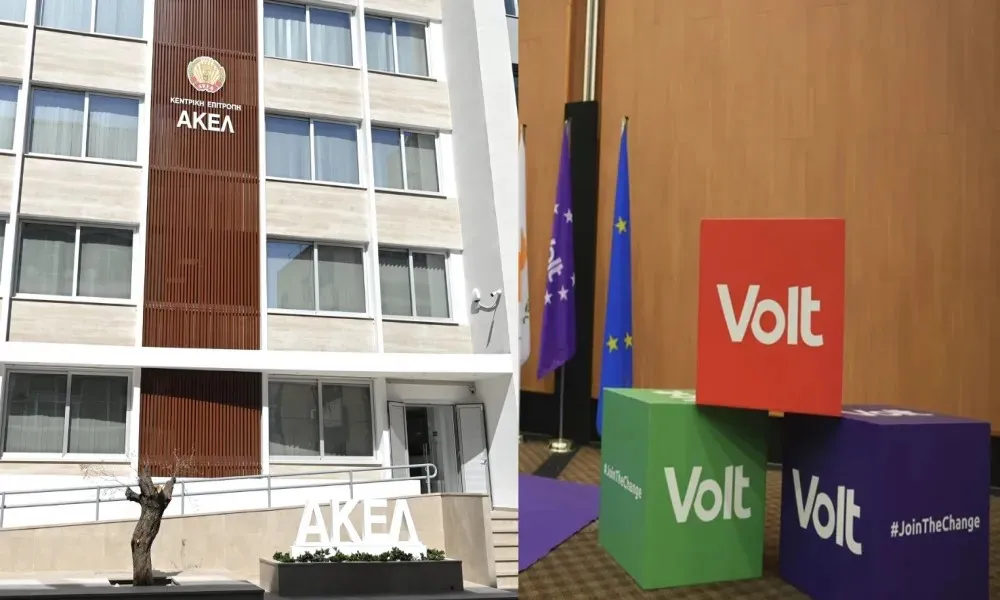
The establishment of Volt Cyprus in December 2023 was welcomed by a significant segment of the public as a fresh and promising proposal in the domestic political landscape. Expectations for upcoming elections were particularly high and centred on securing entry into the House of Representatives. The newly formed party, carrying a distinct European identity focused on human rights and the rule of law, quickly recorded positive early signs. In the European elections of 9 June 2024, it secured 10,777 votes and 2.92%, reinforcing the perception that its trajectory would be steadily upward. Combined with favourable timing and a broader demand for political renewal, the atmosphere at the start of the campaign was highly optimistic.
However, the path to the 2026 parliamentary elections shifted dramatically, turning expectations into what the results ultimately showed to be a difficult political failure. A turning point came on 30 March 2026, when a public post by candidate Makarios Drousiotis referring to “paedophilia, foreclosures, surveillance and rigged trials” triggered strong reactions. The issue extended beyond the individual, raising questions about Volt’s own political and institutional response, which appeared inconsistent with the principles it claimed to uphold.
For a party that defines itself through strict adherence to European values, transparency and the defence of citizens’ rights, the handling of what became known as 'SANDYgate' proved a critical test. The evident political inexperience of its members when confronted with the realities and pressures of the traditional political arena limited their ability to respond effectively. This left the impression that the party failed to defend its stated principles with sufficient clarity, disappointing its electorate.
Volt’s voter base, characterised by high expectations, reacted accordingly, sending a clear message. It became evident that this segment of the electorate is not easily swayed by the short-term dynamics of social media nor willing to be manipulated. Progressive voters adopted a critical stance towards the party’s choices, and it appears that part of the vote may have shifted as a form of rejection of specific individuals rather than as a lack of alignment with Volt itself.
To maintain its role as an alternative political proposition, Volt must bridge the gap between its theoretical principles and political practice, demonstrating the maturity required to withstand the pressures of the central political stage.