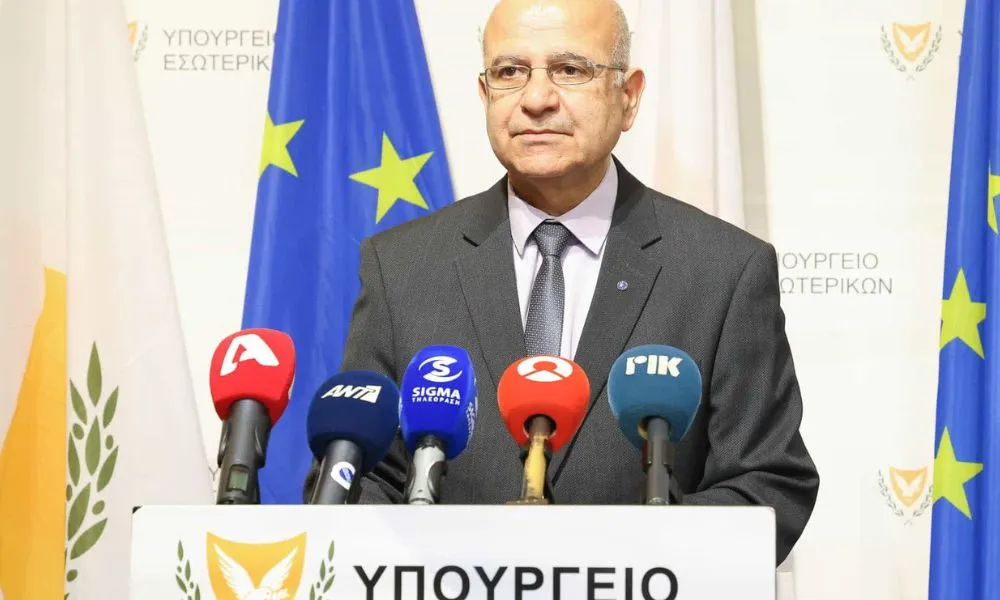
The Legal Service of the Republic gave the green light to the General Returning Officer and Permanent Secretary of the Ministry of the Interior, Elikkos Elias, for the acceptance of the submission of candidacies by 10 persons with criminal convictions. Lawyers of the Legal Service thoroughly examined their convictions in order to determine whether they fall under disgraceful offences or offences involving moral turpitude, for which the Constitution prohibits eligibility to stand for election to the office of Member of Parliament. According to information from Politis, none of the candidates was excluded, with the result that all proceeded normally with the submission of their candidacies.
Based on the timetable set by the Elections Service, the candidacies for the parliamentary elections that were submitted yesterday will be finalised no later than tomorrow, following the examination of any objections that may be lodged.
An objection may be filed against candidature documents by any voter whose name is entered in the electoral roll, for the following reasons:
- The description of the candidate is insufficient to establish their identity.
- The candidature documents do not comply with or were not submitted in accordance with the provisions of the applicable legislation.
- It is clear from the content of the documents that the proposed candidate cannot be elected.
- The candidature fee was not paid.
The objection must be submitted in writing to the relevant Returning Officer within 24 hours of the expiry of the deadline for the submission of candidacies and must specify the grounds on which it is based. The Returning Officer examines each objection immediately and informs the objector of his decision. He may declare any candidature documents invalid for the above reasons, informing the candidate accordingly. The decision of the Returning Officer may be challenged by application to the Election Court.
Based on a recent amendment to the electoral law, which came into effect last June, if the Returning Officer deems the grounds of an objection to be valid, he informs the candidate and calls on them to carry out the necessary corrective actions within 24 hours so that the process of submitting their candidacy can be completed.
Who will receive back the €500
A total of 753 candidacies were submitted. For each candidacy, a fee of €500 was paid, bringing the total amount collected to €376,500. The fee will be refunded, after the elections, to each list of candidates or independent candidate who secures at least one third of the electoral quota. Otherwise, the fee is forfeited and deposited into the Consolidated Fund of the Republic.
Key dates
- 8 May 2026: Issuance of a decree by the Minister of the Interior for the subdivision of polling districts and the designation of polling stations.
- 15 May 2026: Publication of a notice on the allocation of voters to polling stations.
- 24 May 2026: Conduct of the vote, as well as the sorting and counting of ballots.
- 25 May 2026: Proclamation of the elected Members of Parliament.
Spending cap of €30,000
The official pre-election period began on 24 February 2026 and ends on 24 May 2026, the day of the elections. Expenditure incurred by parliamentary candidates before 24 February 2026 is not taken into account and does not fall within the scope of oversight by the Audit Office.
Each candidate is legally obliged to appoint an election agent and submit a declaration of campaign expenditure incurred during the election period. The spending limit for each candidate is set by law at €25,000, plus €5,000 for personal expenses. Exceeding the prescribed amounts results in a fine equal to the amount exceeded. At the same time, it constitutes an unlawful act which, in the event of conviction, may result in a prison sentence of up to six months or a fine of up to €1,000, or both.
In addition, each candidate is required to submit an Election Expenses Report, which includes all expenditure incurred during the election campaign. This period begins three months before the scheduled election date and ends on the day the elections are held. The report must be submitted to the relevant Returning Officer within two months of the publication of the election results in the Official Gazette of the Republic and must be published in two daily newspapers or on the candidate’s website.
Oversight also extends to political parties
The electoral law also imposes obligations on political parties, the main ones being the submission of detailed statements of income and expenditure for election campaigns, the submission of annual audited financial statements, and the maintenance and submission of a special register of donations.
Each political party participating in an election campaign for public office is required to submit to the Returning Officer detailed statements of income and expenditure. Yesterday, candidacies were submitted by 19 political parties. The purpose of this obligation is to ensure transparency and accountability in the financing and spending of election campaigns.
The statements must contain complete financial information on the party’s election campaign, be submitted to the Returning Officer within four months of election day, and be published on the party’s website.
It should be noted that all entities providing advertising services during the election period to candidates or on their behalf are required to submit consolidated statements to the Auditor General of the Republic detailing the services provided to each candidate or on their behalf within one month of election day.