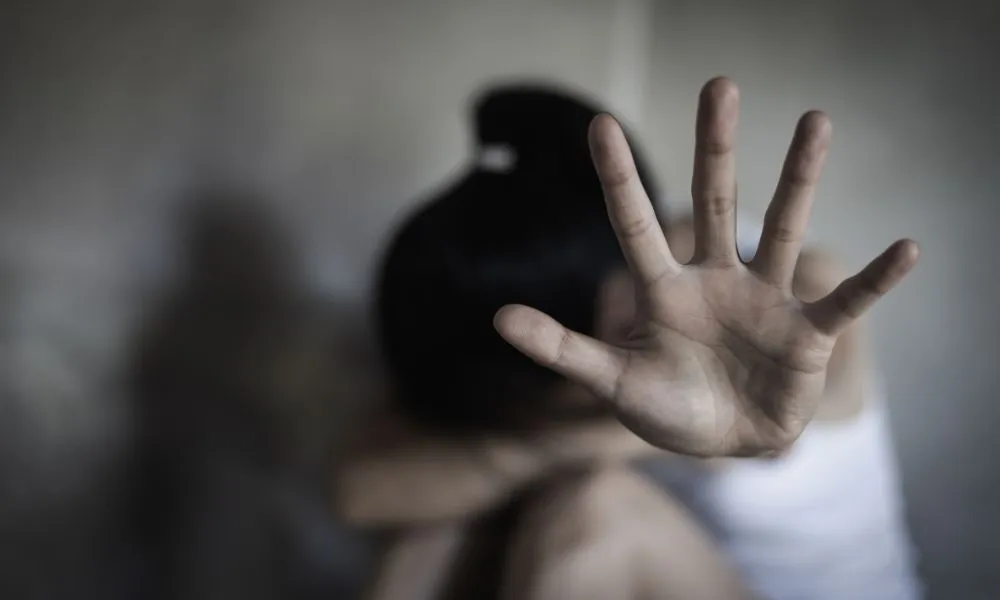

There are images that do not need many words to describe them. Because the images themselves are screaming. What was recorded in recent days in Nigeria, at the so‑called Alue‑Do festival, is not merely shocking. It is shameful. It is degrading. It is the ultimate proof that, in many parts of the world, a woman’s body is still treated not as a human body but as a field for release, power and punishment.
Men chasing women through the streets. Surrounding them. Stripping them. Beating them. Sexually abusing them. And around them, others watching, shouting, recording. As if they are not witnessing a crime. As if they are watching a spectacle. As if violence, when directed at women, can still fit under the convenient word 'tradition.' It cannot. No custom, no culture, no celebration, no social tolerance can whitewash rape.
Someone might say, “It’s Nigeria, it’s far away. It does not concern us." Someone might even dress it up with the familiar vulgarity of indifference: “Why should we care?” “They should have been more careful,” “They got what they deserved.” But violence against women is not an exotic phenomenon. It is not news from a distant, foreign world. It is here. It is in Europe. It is next to us. And many times it hides behind screens, passwords, fake profiles and a normality that rots silently.
Only recently, a CNN investigation revealed an online 'rape academy', spaces where men exchanged instructions on how to drug and sexually abuse their partners while filming the abuse. At the centre of the investigation was a website with more than 20,000 videos of such content and around 62 million visits in February alone. Users did not merely watch. They congratulated. They gave advice. They discussed substances, dosages, ways not to get caught. Disgusting? Shameful? Shocking? Yes. But not distant. Not foreign. Not unrelated to us.
And while all this is happening, the European Parliament was once again debating something that should be self‑evident: that rape must be defined by the absence of consent. That silence is not consent. That lack of resistance is not consent. That the absence of a clear "no” does not mean “yes”. That a relationship, a marriage, previous flirting, a previous sexual encounter is not a blank cheque. That only “yes” means “yes.”
And yet, we still have to say it. We still have to vote on resolutions. We still have to explain that a person’s body is not available until they say “no.” It is unavailable until they say “yes”. We still have to explain that when a victim freezes, they do not consent. When they fall silent, they do not accept. When they do not resist, it does not mean they agree. They may be afraid. They may be paralysed. They may be in shock.
This is the point that hurts the most. Not only the existence of violence, but the demand that the victim prove they did not want it. That they must convince others that they were afraid enough, resisted enough, screamed enough, suffered enough. That they must go through processes that often retraumatise them. That they are met with suspicion rather than protection. That they ultimately remain silent, knowing that if they speak, they may be the first to be judged.
Yes, every report must be investigated. Yes, no one is guilty before justice delivers its verdict. But that does not mean society has the right to destroy the victim before they are even heard. It does not mean our first reaction should be doubt. It does not mean we can continue searching for mitigating factors for perpetrators and excuses to put those who found the courage to speak against the wall.
Nigeria may be far away. But the question is here. In Europe. In Cyprus. In homes, workplaces, schools, social circles, police stations, courtrooms. How many more times will we have to say the obvious?
Only “yes” means “yes.”
Everything else is violence.