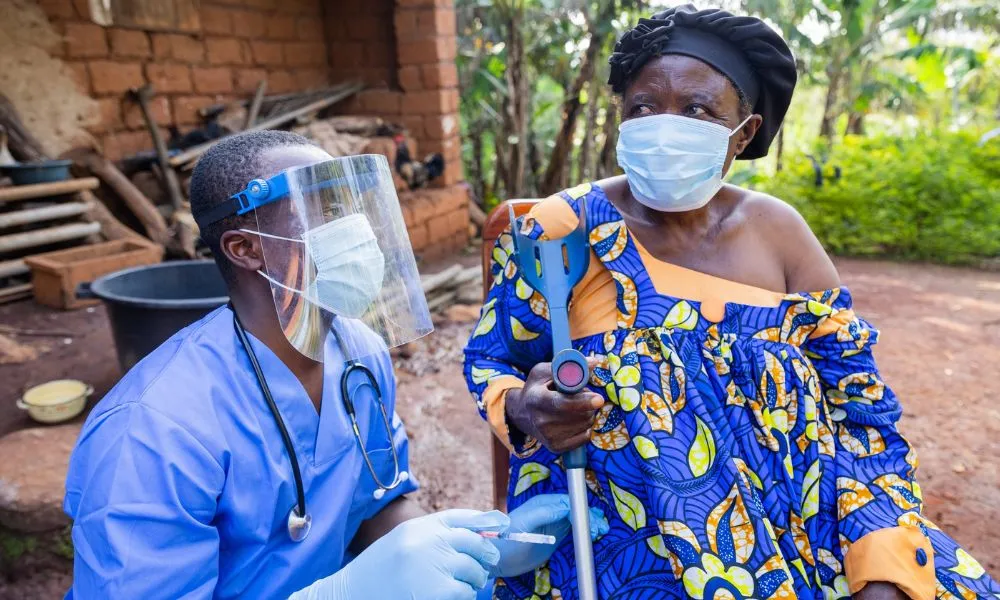

Doctors and healthcare workers on the front line of the Ebola outbreak in eastern Democratic Republic of Congo say the situation is becoming increasingly alarming, with the virus continuing to spread at a worrying pace.
“The Ebola outbreak is completely out of control,” Dr Richard Kazon, speaking from the city of Bunia in Ituri province, told ABC News. The region is currently the epicentre of the outbreak. Kazon, who has worked on previous Ebola crises in central and western Africa and heads the Alliance for International Medical Action, said deep distrust among local communities is severely hindering containment efforts.
A similar picture was described by Dr Richard Lokundi, director of the main hospital in Mongbwalu, an area health officials have described as the “most affected” by the outbreak.
Doctors and public health workers at the epicenter of the Ebola outbreak in eastern Democratic Republic of Congo told ABC News that the deadly virus is still spreading at an alarming rate. https://t.co/pmzZBPAy4l
— ABC News (@ABC) May 28, 2026
Rapid spread and growing risks
Lokundi warned that the disease is spreading “at an exponential rate”. He said seven patients showing suspected Ebola symptoms recently fled from the local hospital.
“This creates chains of transmission and makes the virus extremely difficult to control,” he said.
According to the World Health Organization, more than 1‑thousand suspected cases of a rare Ebola strain, known as Bundibugyo, have been recorded so far, along with over 230 suspected deaths. There is currently no approved vaccine for this variant.
WHO chief says Ebola testing being scaled up in Congo https://t.co/bsMqc4WX6l https://t.co/bsMqc4WX6l
— Reuters (@Reuters) May 28, 2026
Seven confirmed cases have also been detected in neighbouring Uganda. Last week, the WHO formally declared the outbreak a public health emergency of international concern.
Jeremy Konyndyk, a former USAID official and now president of Refugees International, said the spread of the virus has already reached “explosive levels”. He added that the more than 1‑thousand suspected cases likely represent only part of the true scale of the outbreak.
Detection challenges and local distrust
Health officials believe the Bundibugyo strain emerged in Ituri province and went undetected for around three months.
The unusual characteristics of the variant have made testing more difficult, while conspiracy theories and mistrust of authorities are further complicating the response.
“Many people do not even believe Ebola is real,” Kazon said. He added that there is a serious lack of laboratory capacity in the region, delaying diagnoses and contact tracing.
As a result, suspected patients often wait several days for test results, increasing the risk that they leave isolation prematurely. Both doctors said new suspected cases are reported daily at their facilities.
Tensions have also been rising among local populations frustrated by strict outbreak control measures.
The two doctors confirmed reports that isolation tents and healthcare facilities have been set on fire by angry crowds in recent days. Lokundi said police and army units are now guarding his hospital, while groups of young people continue to gather nearby in a threatening manner.
In some cases, health teams are unable to reach remote villages to investigate suspected Ebola deaths, increasing the risk of transmission as families carry out burials themselves.
Shortages and funding concerns
Doctors also reported severe shortages of masks, protective suits and specialised personnel, with cuts to US humanitarian aid further complicating the response.
Konyndyk said reductions in US funding programmes in Congo have significantly affected the ability to manage the crisis. “We are fighting this battle with our hands tied,” he said.
He noted that in previous outbreaks, coordinated efforts involved the health ministry, WHO, USAID and the US Centers for Disease Control and Prevention. “USAID has largely disappeared, the CDC has been significantly weakened, and the US withdrew from the WHO, cutting funding,” he said.
A White House official, however, dismissed claims that cuts to US aid have affected the response, calling them “ridiculous.”