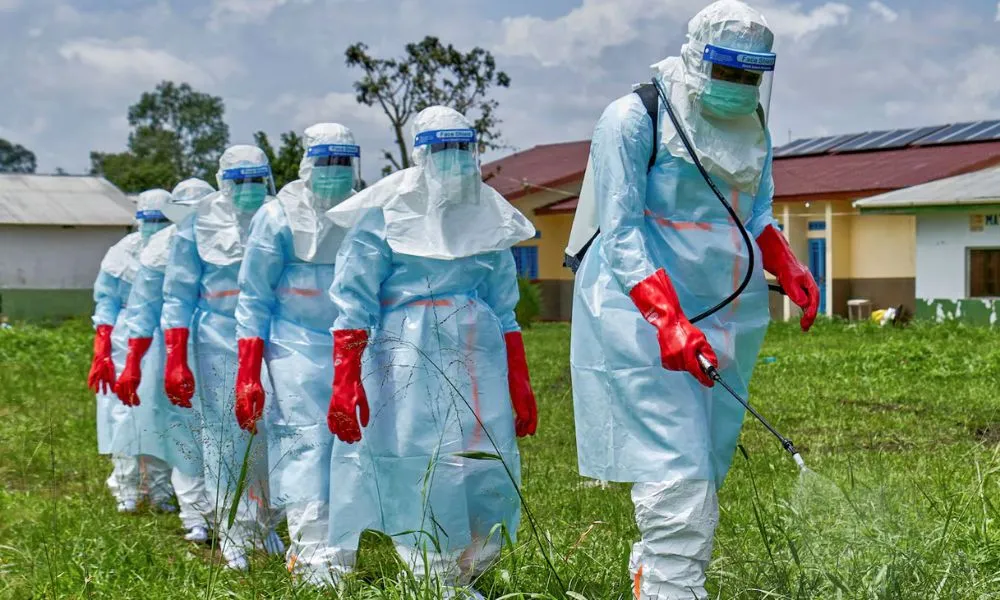

“We are facing an extremely serious and difficult outbreak. Things will get worse before they get better,” Dr Tedros told African health ministers during a meeting held via videoconference.
Every effort is being made to deliver equipment and supplies to the affected area and to implement containment measures, he added. This includes efforts to secure public trust and to isolate contacts of potential cases.
“We are urgently scaling up operations, but so far the outbreak is moving faster than we are,” he said, noting that he plans to travel to the Democratic Republic of Congo today.
According to the latest figures from the Congo Ministry of Health, more than 900 suspected Ebola cases have been recorded and more than 200 patients have died.
Around 100 cases have been confirmed through laboratory tests, as have 10 of the deaths, according to the same source.
What Ebola haemorrhagic fever is and how it is transmitted
According to the Hellenic National Public Health Organization, “Ebola haemorrhagic fever is a very rare but deadly viral infection. The incubation period ranges from 2 to 21 days. The disease manifests with sudden onset of high fever, muscle pain, diarrhoea, headache, fatigue and abdominal pain. A rash, sore throat and conjunctivitis may also occur. The patient becomes infectious once fever develops.
For this specific Bundibugyo strain (BVD), there is no approved vaccine or specific treatment. Management is based on early detection, isolation, supportive care, contact tracing and strict adherence to measures to prevent transmission.
The virus is transmitted from person to person through contact with blood, secretions, tissues and other bodily fluids of individuals infected with Ebola haemorrhagic fever, whether alive or dead, including contact with or reuse of contaminated needles. The virus can also be transmitted through contact with dead or living infected animals (such as monkeys and bats), as well as through unprotected sexual contact.”
Ebola: Updated public health guidance for travellers
In the same announcement, it is noted:
“On 16 May 2026, WHO announced that the event meets the criteria for a Public Health Emergency of International Concern (PHEIC). According to WHO guidance (International Health Regulations, Emergency Committee), there are no restrictions on travel or trade to the Democratic Republic of Congo.
The risk for a traveller of becoming infected during a visit to affected areas and developing symptoms after return is very low. In addition, the likelihood of importing cases into Europe is considered very low.
Travellers visiting affected areas are advised, in order to avoid transmission of the disease, to avoid:
- contact with live or dead animals
- participation in burial ceremonies involving contact with the body
- direct contact with patients and their bodily fluids, such as saliva, blood, vomit or urine
- contact with objects used by patients
- consumption of inadequately cooked animal products
During air travel, if they develop symptoms compatible with Ebola haemorrhagic fever, they must inform cabin crew so that the necessary preventive measures can be taken:
- assignment of a specific crew member to handle the patient
- isolation of the passenger
- provision of a mask
- provision of a bag in case of vomiting
- notification of the destination airport by the captain
Upon arrival at the destination, the patient:
- is collected by emergency medical services with strict adherence to all required protective measures
- is transferred to a designated hospital, with a specific isolation area and assigned staff
After return
Taking into account the incubation period (2–21 days), travellers returning from affected areas who have had contact with patients or suspect possible exposure to the Ebola virus should take the following precautions:
- self‑isolate and monitor their health for 21 days
- seek immediate medical care if symptoms develop, mentioning their recent travel
- immediately inform the National Public Health Operations Centre.”