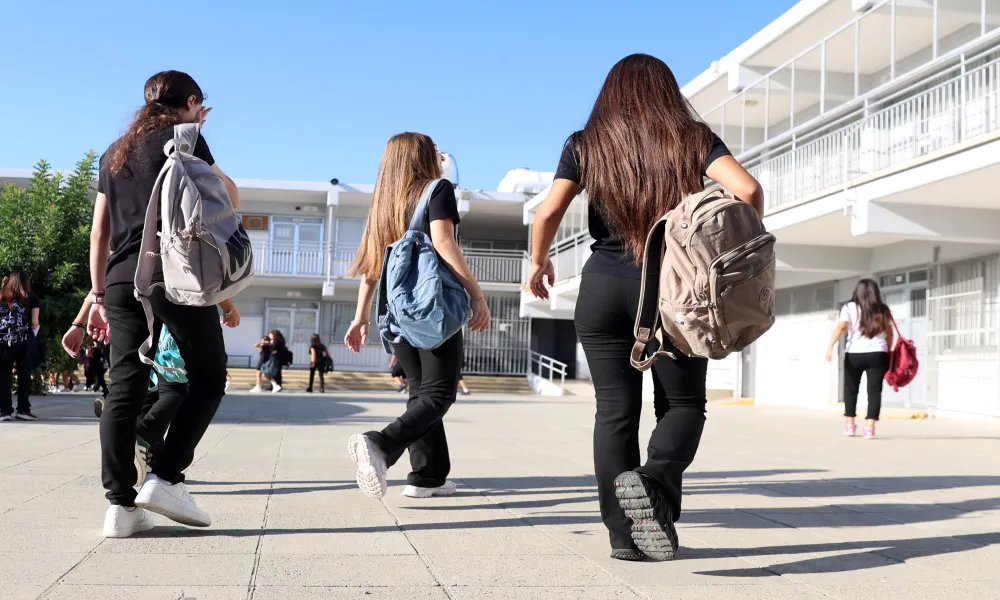

Cyprus' optional all-day school programme is "on life support", according to POED president Myria Vasileiou, who told the House Education Committee that severe staffing shortages continue despite repeated recruitment drives.
More than 100 teaching posts remained vacant in mid-October, even as the school year was already in progress. The shortages come as the programme continues to expand, with demand from parents and students increasing significantly.
Worst year for staffing
Vasileiou described the current school year as possibly the worst on record in terms of staffing.
She said the Educational Service Commission (EEC) was forced to publish provisional appointment lists to allow newly graduated teachers to enter the recruitment process and help fill vacancies.
According to POED, the root of the problem lies in part-time contracts and job insecurity, which make the positions unattractive to many teachers.
More than 12% of positions unfilled
Maria Kyprianou, representing the Educational Service Commission, said 115 out of 953 positions had not been filled, representing more than 12% of available posts.
She explained that many teachers on recruitment lists chose not to express interest in all-day school positions.
By 31 July, authorities had appointed 150 primary school teachers and 34 kindergarten teachers to full-time positions.
Growing demand, limited interest
Marios Stylianides, Director of Primary Education at the Education Ministry, said 389 all-day schools are operating this year.
Student numbers have increased dramatically over the past three years, rising from approximately 6,000-7,000 pupils to 16,000-17,000 pupils.
Responding to criticism over staffing delays, Stylianides said planning began in June and was followed by six recruitment rounds, some taking place before all-day schools began operating.
He noted that approximately 8,000 primary and kindergarten teachers are listed on recruitment registers, yet only a small number are interested in filling the 1,000-1,100 available positions in all-day schools.
Stylianides added that the programme costs approximately €35 million annually, warning that any further expansion would require careful financial planning.
Concerns extend to secondary education
In secondary education, Director of Secondary Education Giorgos Koutsidis reported that 959 students are enrolled in afternoon programmes.
Meanwhile, the OELMEK secondary teachers' union called for a comprehensive evaluation of the programmes and a more stable long-term strategy, noting that several initiatives continue to operate on a pilot basis.
Impact on private schools
Private-sector representatives warned that delayed public-sector appointments create additional problems for private schools.
They said teachers who secure public-school appointments often leave private schools in the middle of the academic year, creating sudden staffing gaps.
School boards also reported difficulties recruiting cleaners and classroom assistants, citing low wages as a significant obstacle.