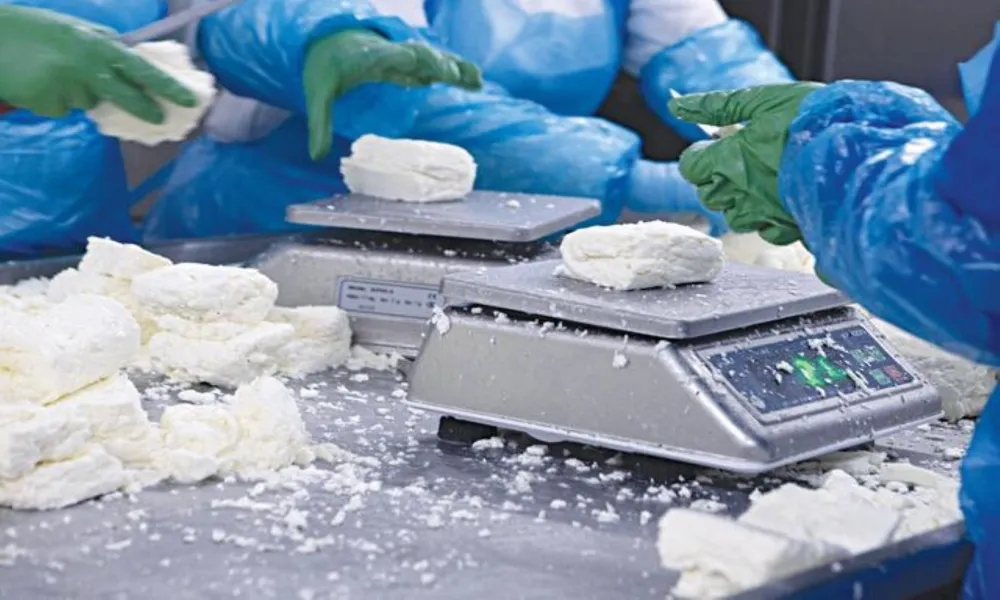

The Cyprus Cheesemakers Association plans to submit an application by the end of 2026 seeking changes to the milk quota requirements for PDO Halloumi, with the aim of safeguarding production and exports.
Speaking to the Cyprus News Agency (CNA), association spokesperson Michalis Koullouros said the request would focus on revising the current 51%-49% milk ratio specified under the Protected Designation of Origin (PDO) framework.
Producers say current target is unattainable
A decree issued on 13 May 2026 temporarily reduced the minimum proportion of sheep's and goat's milk in PDO halloumi to 15% until 31 December 2026.
Koullouros said the association now intends to formally pursue a longer-term amendment, arguing that the eventual requirement for 51% sheep's and goat's milk cannot realistically be achieved despite efforts to increase production.
"The application will definitely be submitted before the end of the year," he said.
The association is working with advisers and the Ministry of Agriculture to develop a proposal based on scientific data, production tests and technical analysis.
Goal is to protect exports
According to Koullouros, the primary objective is to preserve both PDO status and Cyprus' halloumi export industry, which is valued at approximately €350 million annually.
He warned that maintaining the existing ratio without amendment could lead to substantial production losses because of insufficient supplies of sheep's and goat's milk.
Concerns over production decline
The association estimates that halloumi production could fall from around 45,000 tonnes to 20,000 tonnes if the current PDO requirements are fully implemented without modification.
Koullouros said such a reduction could:
- Lead to shortages of milk suitable for halloumi production.
- Increase consumer prices.
- Put smaller dairies at risk of closure.
- Reduce export volumes significantly.
He stressed that cheesemakers are not seeking to harm either sheep and goat farmers or dairy cattle farmers, describing both groups as essential parts of the supply chain.
Two-year EU review process
The proposed amendment must first be submitted to the Ministry of Agriculture, which will review the request and may seek revisions before forwarding it to the European Commission.
According to the association, the European review process takes approximately two years.
To complete any changes by the end of 2028, the application must therefore be submitted before the end of 2026.
Koullouros acknowledged that the timetable is tight but said it remains achievable.
Source: CNA