


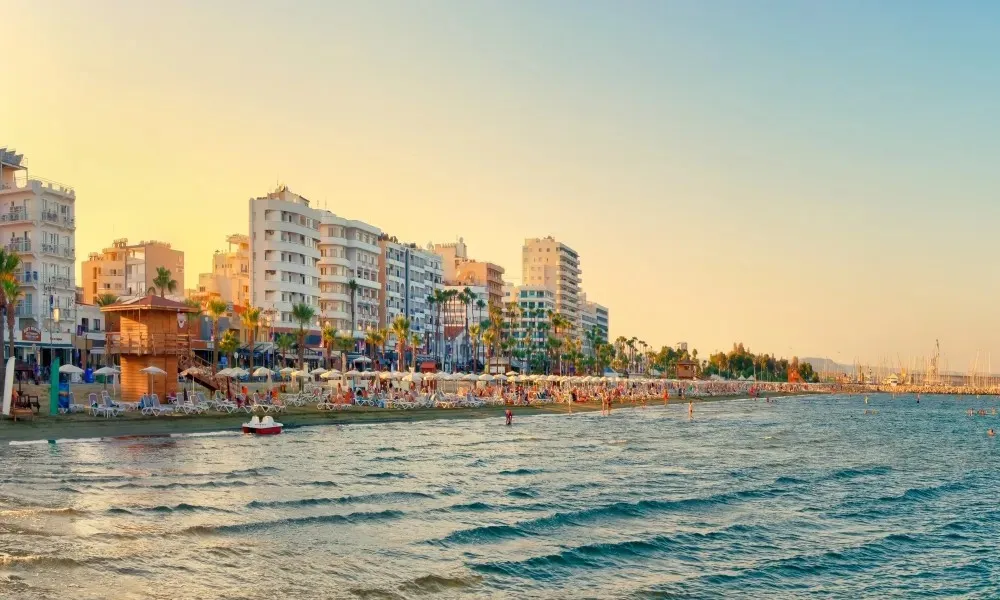

Tourism activity in Paphos is expected to remain strong throughout August, with hotel occupancy forecast to range between 85% and 90%, according to Paphos Hoteliers Association President Euripides Loizides.
The picture is expected to be particularly strong during the Assumption holiday period, when Paphos traditionally experiences a surge in visitor arrivals and accommodation demand.
The high occupancy levels confirm that August remains one of the most important months of the tourism season for the district, despite broader pressures facing the market, Loizides said.
While cautiously optimistic about August, he noted that a significant share of bookings is being made at the last minute.
According to Loizides, this trend is largely driven by economic pressures on consumers, who are delaying holiday decisions and searching for the best available prices.
The improvement in August follows a July that, despite positive tourism activity, ended with occupancy rates around 10% lower than in the corresponding month of 2025.
That nevertheless represented an improvement compared with earlier months.
In May and June, occupancy losses had reached approximately 15%, raising significant concerns within the hotel sector.
According to the association president, July's performance suggests that the tourism market has begun a gradual recovery, although it has not returned to last year's levels.
Strong August demand
Particularly strong activity is being recorded during the Assumption holiday period, with Paphos attracting large numbers of visitors.
The increased demand for hotels, tourist accommodation and dining venues is creating one of the busiest visitor waves of the summer season.
The period is considered crucial for hotel businesses, as stronger demand provides relief in a year marked by reduced occupancies in several months and significant pressure on prices.
Concerns over September and October
Greater concern exists, however, over the remainder of the tourism season.
Occupancy levels for September currently stand at approximately 75%-80%, representing a decline compared with last year.
Loizides estimates that the decrease is around 15%, and there are currently few signs of a substantial improvement in the outlook.
Conditions are expected to become even more challenging in October, increasing concern among tourism professionals, particularly as extending the tourism season has long been a strategic objective for Cyprus.
Rates down more than 20%
Despite lower occupancy levels, Loizides said the sector's biggest challenge is not visitor numbers alone.
Particular concern surrounds the significant decline in room rates, which he said have fallen by more than 20%.
The decrease is having a direct impact on hotel revenues and, consequently, on business sustainability.
As a result, even when occupancies remain relatively high, lower average room rates significantly reduce overall income.
Geopolitical uncertainty affecting demand
Geopolitical instability is also influencing this year's tourism market.
According to Loizides, part of the market appears to have been lost because of the war, with some potential visitors choosing alternative destinations for their holidays.
At the same time, rising living costs and broader economic pressures have changed traveller behaviour.
Many consumers are delaying holiday planning and making reservations much closer to their departure date while seeking cheaper options.
The growth of last-minute bookings therefore makes forecasting tourism demand for the coming months more difficult.
Israeli market remains strong
Against this backdrop, the Israeli market continues to perform particularly well, recording a significant increase in visitor numbers to Paphos.
Loizides attributed this growth partly to the large number of air connections between the two countries, making travel to Paphos easier.
If the trend continues through the end of the tourism season, Israel could become Paphos' second-largest tourism market after the United Kingdom, he said.
The development is viewed as especially important because it broadens the destination's tourism base and reduces dependence on a limited number of source markets.
Mixed picture for the season
According to Loizides, the 2026 tourism season in Paphos has produced mixed results so far.
On the one hand, August, and especially the Assumption holiday period, is generating a strong influx of visitors, with occupancies approaching 85%-90%.
On the other, losses recorded earlier in the year, room-rate reductions exceeding 20%, weaker demand in some markets and uncertainty surrounding September and October continue to create challenges for the hotel sector.
The coming weeks are expected to be crucial.
The performance of last-minute bookings, trends in international markets and, above all, the industry's ability to maintain demand beyond August will largely determine the final outcome of this year's tourism season in Paphos, Loizides concluded.


