
The government is moving forward with plans to implement its commitments for substantial pension increases, despite concerns over the significant fiscal cost involved and ongoing debate over how the measures will ultimately be financed.
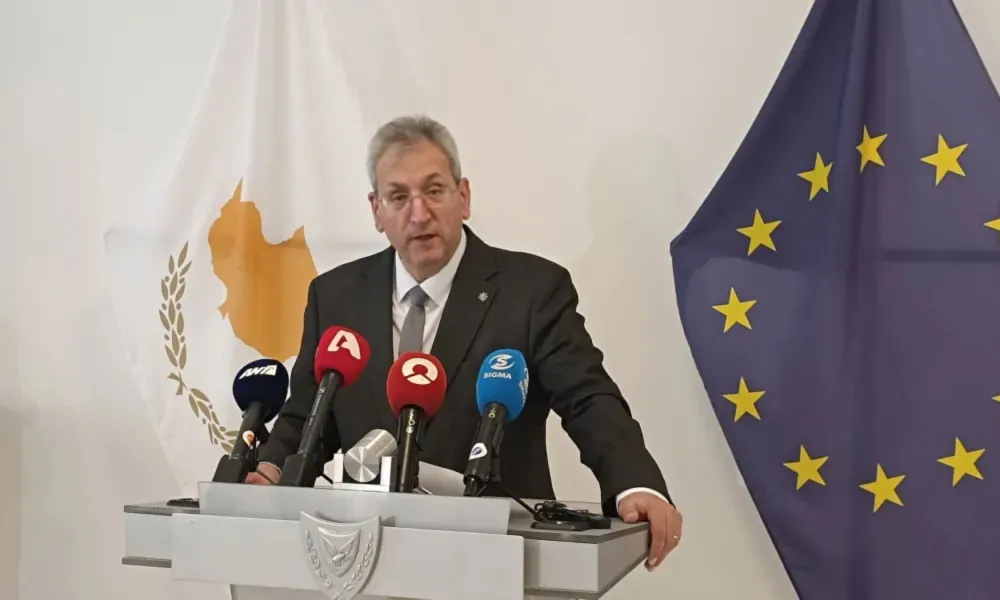
Speaking to Politis, Labour Minister Marinos Mousiouttas said pension increases under the draft reform legislation will range from 2 per cent to 60 per cent, based on provisions contained in the bill that is being finalised and is due to be sent to social partners before a meeting of the Labour Advisory Body on 19 August.
Mousiouttas insisted the reform package will not include any reductions in pensions.
According to the minister, the cost of the increases will be covered through revenue from the Social Insurance Fund, state contributions and additional measures, including higher contributions, the inclusion of new contributor categories such as income earners, and strengthened efforts to combat undeclared work.
Despite repeated questions, however, the minister did not explain in detail how the increases will be financed or specify the exact contribution the state will make, given that several of the proposed measures are not expected to generate immediate revenue for the fund.
The government's objective of implementing the pension reform from the beginning of 2027 appears more challenging than initially anticipated.
Nevertheless, Mousiouttas said a compromise had been reached with the Ministry of Finance, urging patience for a few more days while the final details are completed.
Pensioners awaiting details
Repeated references to significant pension increases have created high expectations among pensioners, many of whom continue to struggle with rising living costs.
President Nikos Christodoulides has publicly stated that pension increases could amount to between €250 and €300.
Funding scenarios
As officials seek ways to implement the reform, various options that had previously been rejected have reportedly returned to the table, including proposals to reduce higher pensions in order to fund increases for lower-income pensioners.
So far, however, it remains unclear what the overall cost will be for the Social Insurance Fund from increasing the basic pension from €529 to €764 over a five-year period, where the necessary funding will come from, and what additional costs will arise from reducing the 12 per cent actuarial reduction applied to the basic pension for early retirement.
Questions have also been raised about the government's proposal to impose contributions on income earners whose earnings originate from sources such as rents rather than employment income, and who are therefore not currently required to contribute to the Social Insurance Fund.
Another key issue remains pension adequacy, with social partners continuing to hold differing views.
The matter is expected to be discussed by the technical committee on provident funds when it meets on 1 September.
Provident funds
As far as provident funds are concerned, the government is considering whether participation should be mandatory, accompanied by incentives for employers designed to improve pension adequacy.
Mandatory participation, however, remains a major point of contention for employers, whose organisations have repeatedly stated their opposition to such a move.
No draft legislation on provident funds is expected at this stage. Instead, the aim is to establish a framework for agreement, although that is expected to prove difficult given the sharply differing positions of trade unions and employer organisations.
September target viewed as unrealistic
Despite government optimism, social partners are less convinced that the proposed timetable can be met.
SEK Secretary-General Andreas Matsas described the target of submitting the pension reform bill to parliament by 20 September as unrealistic, noting that social partners have yet to receive a draft of the legislation.
Speaking to the Cyprus News Agency, Matsas said meaningful discussion of the bill will not be possible at the Labour Advisory Body meeting on 19 August.
According to Matsas, the meeting is likely to have a primarily informational and exploratory character, while a comprehensive position from social partners is not expected before the end of August.
He added that even if the draft legislation is circulated this week, summer holidays will make it difficult for social partners' governing bodies to convene and examine it properly.
Increases and more favourable provisions
Speaking previously on the podcast A Look at the Economy, Mousiouttas said pension increases will be determined according to criteria including the level of contributions paid by employees, the regularity of those contributions and the length of an individual's working life.
The minister also said changes will affect all categories of pensions, including old-age, disability and widow's pensions.
Changes are also planned for various benefits, which he said will be provided under more favourable arrangements for citizens.
He added that additional measures incorporated into the reform are intended to support higher pension levels over time.
With regard to the 12 per cent actuarial reduction applied to early retirement pensions, Mousiouttas said the rate will be reduced to below 10 per cent on a horizontal basis.
He stressed, however, that the reduction cannot be abolished entirely, arguing that doing so would effectively amount to lowering the retirement age from 65 to 63.
The minister acknowledged that, even after the reform is implemented, some pensioners will continue to live below the poverty threshold.
The long-term objective, he said, is for provident funds to operate as a complementary mechanism to strengthen retirement incomes.