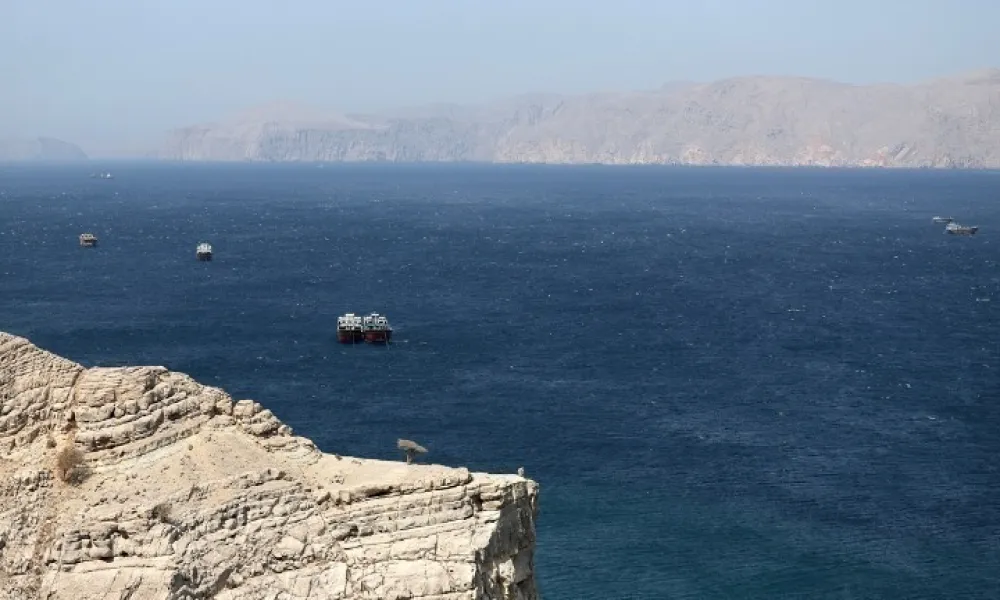
Ships have started crossing the Strait of Hormuz under a plan coordinated by the United Nations’ International Maritime Organization, offering an early sign that one of the world’s most important energy routes is beginning to reopen after weeks of disruption.
An IMO spokesperson said vessels had “already begun” to transit the strait under the scheme, but declined to give details on the ships involved. Ship-tracking data cited by Reuters showed that at least two dry bulk carriers and one cargo vessel had crossed the waterway in the past 12 hours, while dozens of other commercial ships were preparing to follow.
The movement comes as oil markets responded to the apparent easing of risks in the Gulf. Brent crude fell below $75 a barrel on Wednesday, as traders weighed the resumption of shipping through Hormuz and signs that the diplomatic process between Iran and the United States remains alive.
The IMO plan, which took months to prepare, is intended to allow hundreds of vessels and around 11,000 seafarers trapped in the Gulf to leave through the strait. IMO Secretary-General Arsenio Dominguez said on Tuesday that the operation would be carried out gradually, with safety arrangements coordinated between regional states, the United States, Iran and maritime industry bodies.
According to Reuters’ analysis of LSEG and MarineTraffic data, at least 35 other commercial vessels, mainly dry bulk carriers, cargo ships and container vessels, were preparing to sail through the strait. The plan uses temporary navigation routes designed to reduce risks in waters still considered dangerous.
A political opening, but not a final deal
The reopening of shipping lanes is closely linked to the interim understanding reached between Iran and the United States, which has created a 60-day window for negotiations on a broader settlement.
Iranian parliament speaker and chief negotiator Mohammad Bagher Ghalibaf presented the memorandum as a victory for Tehran, saying it was not the result of pressure but of “resistance and determination” by the Iranian people. Speaking in Baku, where he was attending a meeting of the Parliamentary Union of the Organisation of Islamic Cooperation, Ghalibaf described the Islamabad memorandum as “the declaration of America’s defeat”.
He also said Iran viewed the departure of foreign military forces from the region as a strategic objective, arguing that lasting security in the Middle East should be shaped by countries in the region rather than outside powers.
“We see the future of the region not in confrontation, but in cooperation,” he said, in remarks directed towards neighbouring Gulf states.
Lebanon remains part of the talks
Ghalibaf also linked the future of the agreement to the situation in Lebanon, saying that peace there was an essential part of any final settlement with Washington.
“For us, the ceasefire was and remains as important as the ceasefire in Iran, and ending the war in Lebanon is as important as ending the war in Iran,” he said.
The technical talks between the United States and Iran are expected to resume next week, according to Pakistan, one of the mediators in the process. A spokesperson for Pakistan’s foreign ministry said the talks would likely continue on Tuesday or Wednesday.
The first round of technical discussions began on Monday in Switzerland, following high-level political talks over the weekend. Iranian and Western media had previously reported that the technical talks were expected to last through the week.
The memorandum gives the two sides 60 days to try to settle outstanding issues, including the future of Iran’s nuclear programme. The timeline is ambitious. The 2015 nuclear deal took two years of intensive negotiations involving diplomatic, legal and scientific teams from Iran and world powers before it was concluded. Donald Trump withdrew the United States from that agreement in 2018, during his first presidency.
For now, the renewed movement through Hormuz has offered markets and shipping companies a measure of relief. But the pace of the reopening, the security of the routes and the success of the diplomatic process will determine whether the strait can return to normal traffic.
Source: AMNA