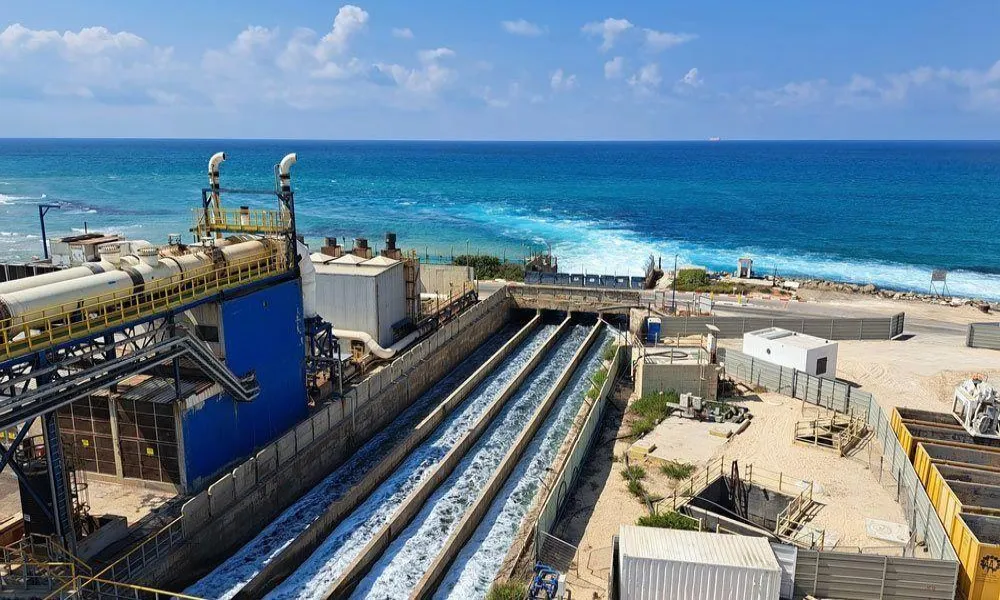

The Council of Ministers has approved three new permanent desalination plants as part of an updated plan to strengthen water security.
Following the interim phase, during which the country’s water supply is expected to be covered entirely by desalinated water from mobile units from 2027, the permanent plants will begin operating.
The Cabinet approved the construction of three permanent desalination plants:
- Dhekelia, with a capacity of 80,000 cubic metres per day
- Ayia Thekla, with a capacity of 30,000 cubic metres per day
- Polis Chrysochous, with a capacity of 10,000 cubic metres per day
Their construction remains subject to all required approvals and licences being secured.
The three plants will proceed alongside the new permanent desalination plant in Eastern Limassol, which will have a capacity of 60,000 cubic metres per day and has already been approved.
The four new permanent desalination plants will have a combined projected capacity of 180,000 cubic metres of water per day.
Floating Germasogeia plant postponed and Ayia Napa mobile plant cancelled
As part of a reassessment of projects previously planned as emergency measures to address water shortages, the Cabinet decided to postpone the floating desalination plant in Germasogeia.
The need for the plant will be reconsidered at a later stage, based on water demand, available reserves and its financial cost.
The Cabinet also decided to cancel the mobile desalination plant in Ayia Napa, which will be replaced in the plan by the new permanent desalination plant in Ayia Thekla.
According to an announcement by the Agriculture Ministry, the Council of Ministers has taken a series of decisions since 2024 to strengthen the country’s water balance and safeguard its water supply.
Based on the progress made in implementing the projects and a reassessment of water needs, the Cabinet updated its desalination plans during Wednesday’s meeting.
The decisions form part of a broader, long-term plan aimed at significantly strengthening the country’s water security and gradually reducing its dependence on rainfall and reservoir reserves.
Six-year desalination plan
The Cabinet also decided to proceed with the implementation of the Six-Year Desalination Plan for 2025-2031.
It also agreed, in principle, to move forward with a Long-Term Desalination Plan aimed at meeting the country’s water supply needs until 2050.
As part of the long-term planning, the Water Development Department is also launching a process to prepare a strategic feasibility study on desalination projects.
The study will examine, as its main scenario, whether 100% of the country’s water supply needs could be met using desalinated water. Final decisions on implementing the long-term plan will be taken based on the study’s conclusions.
According to the ministry, the decisions mark another substantial step towards strengthening Cyprus’ water security and creating a safer, more resilient and reliable water system, reducing the extent to which public water supplies depend on weather conditions.