
Cyprus must move from warnings to prevention by recording the condition of older buildings and preparing a national plan for seismic reinforcement, the Scientific and Technical Chamber of Cyprus has said.
Speaking to Politis radio, ETEK Secretary General Andreas Theodotou said the deadly earthquake in Venezuela was a reminder that building safety cannot be addressed only after a disaster. Although Cyprus is not expected to face an earthquake of the same scale, he noted that the island remains seismically active and must treat prevention as a priority.
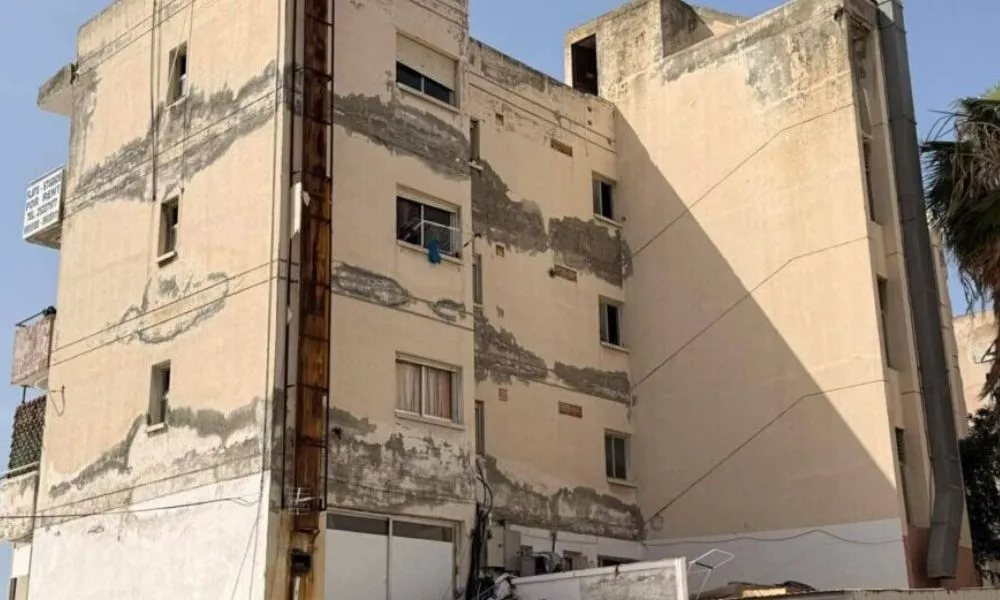
Theodotou said the strongest earthquakes recorded in Cyprus have generally ranged between magnitude 5 and 6.5. He added that many Cypriot buildings constructed before modern seismic rules had withstood previous tremors, but warned that a large part of the country’s building stock is now more than 40 years old and showing signs of natural ageing.
ETEK has long called for the introduction of a Building Inspection Certificate, which it says would allow the state to form a clear picture of the condition of properties across the country. Theodotou said Cyprus needs to know how many buildings are old, how many have been maintained, which are located in coastal areas and which show signs of structural deterioration.
Such a record, he said, would allow the authorities to design a national reinforcement plan and seek European funding, using a model similar to existing schemes for energy upgrades. ETEK is also proposing tax incentives, reduced or zero VAT and other support measures to help owners carry out necessary work.
On newer buildings, Theodotou noted that seismic design has been mandatory in Cyprus since 1994, while supervision by architects and civil engineers became compulsory in 2000. Since 2012, the use of Eurocodes has further tightened construction standards.
He also urged property owners not to ignore visible signs of damage, including rusted reinforcement, detached concrete, large cracks or loose sections of a building. A technical inspection, he said, costs little compared with the safety it can provide, while proper maintenance can extend a building’s lifespan and increase its value.
Theodotou made clear that responsibility for maintaining private buildings lies with their owners, not the state. The role of the government, he said, should be to create the right financial tools and incentives, rather than covering the repair costs of private property.
He added that anyone concerned about the condition of a building should contact a licensed civil engineer for an on-site inspection. Structural assessments, he stressed, cannot be carried out reliably from photographs alone, and early diagnosis can help prevent serious risks.