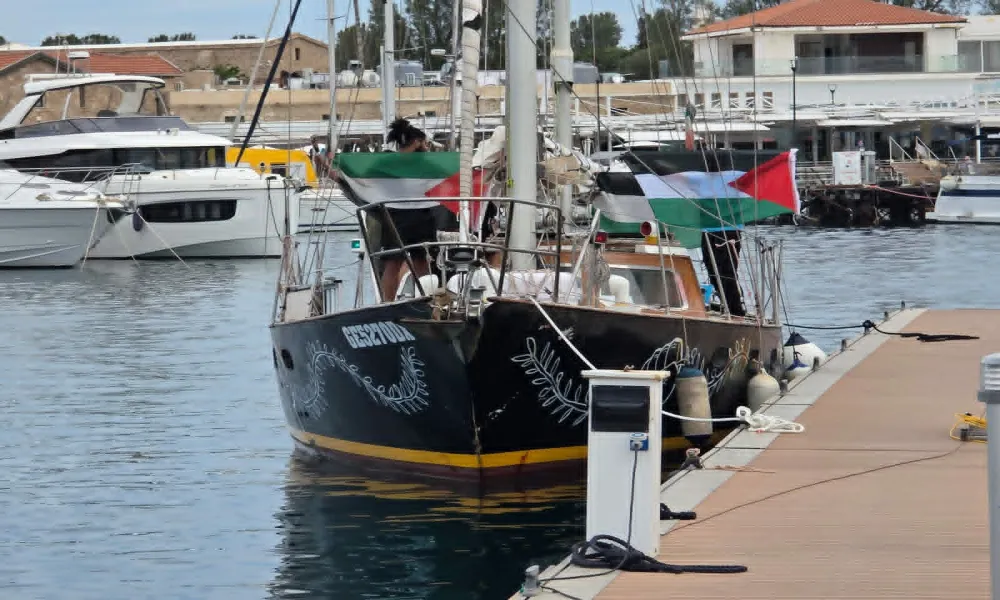



Volunteers aboard the Global Sumud Flotilla, including doctors, lawyers, activists, journalists and elected officials from 45 countries, departed Marmaris, Turkey, on 54 vessels loaded with food, medicine and humanitarian supplies, bound for Gaza. By Tuesday evening, according to the flotilla's own website, not a single ship remained free. Every vessel in the fleet has been seized by the Israeli military. The fate of the hundreds of passengers, nationals of more than 45 states, remains unclear.
Politis spoke with a source from Cyprus's Joint Rescue Coordination Centre (JRCC) and with international maritime law specialist George Pamborides, former Health Minister and DISY candidate in the upcoming elections, to understand what obligations Cyprus held within its Search and Rescue zone.
The mission
The Global Sumud Flotilla is an international civil society movement operating since 2025, with the stated aim of breaking Israel's naval blockade of Gaza, imposed in 2007. Under that blockade, which UN bodies and fact-finding committees have characterised as collective punishment, nearly two million Palestinians are denied free access to food, medicine, water and the outside world. UN Special Rapporteurs have confirmed that the flotilla has the right of free passage in international waters and that Israel should not obstruct freedom of navigation. Amnesty International has described previous interceptions as "cowardly and illegal."
The raid
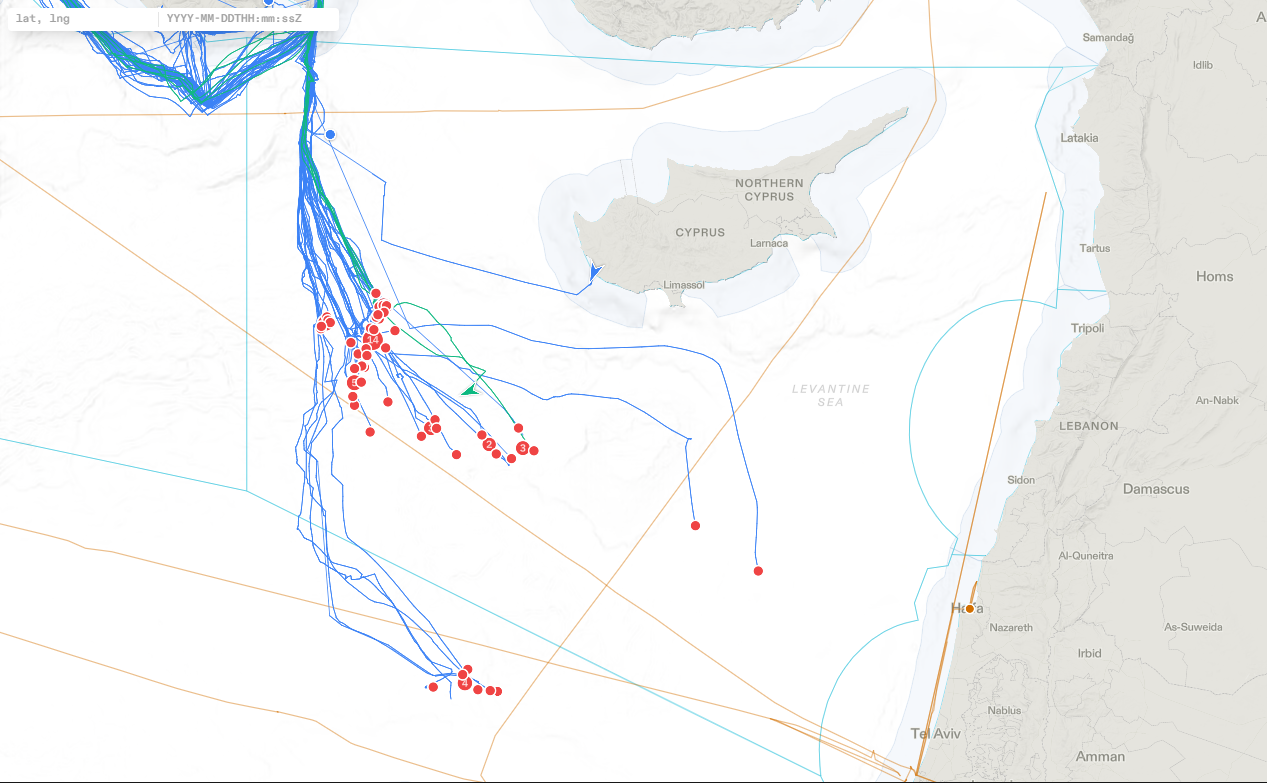
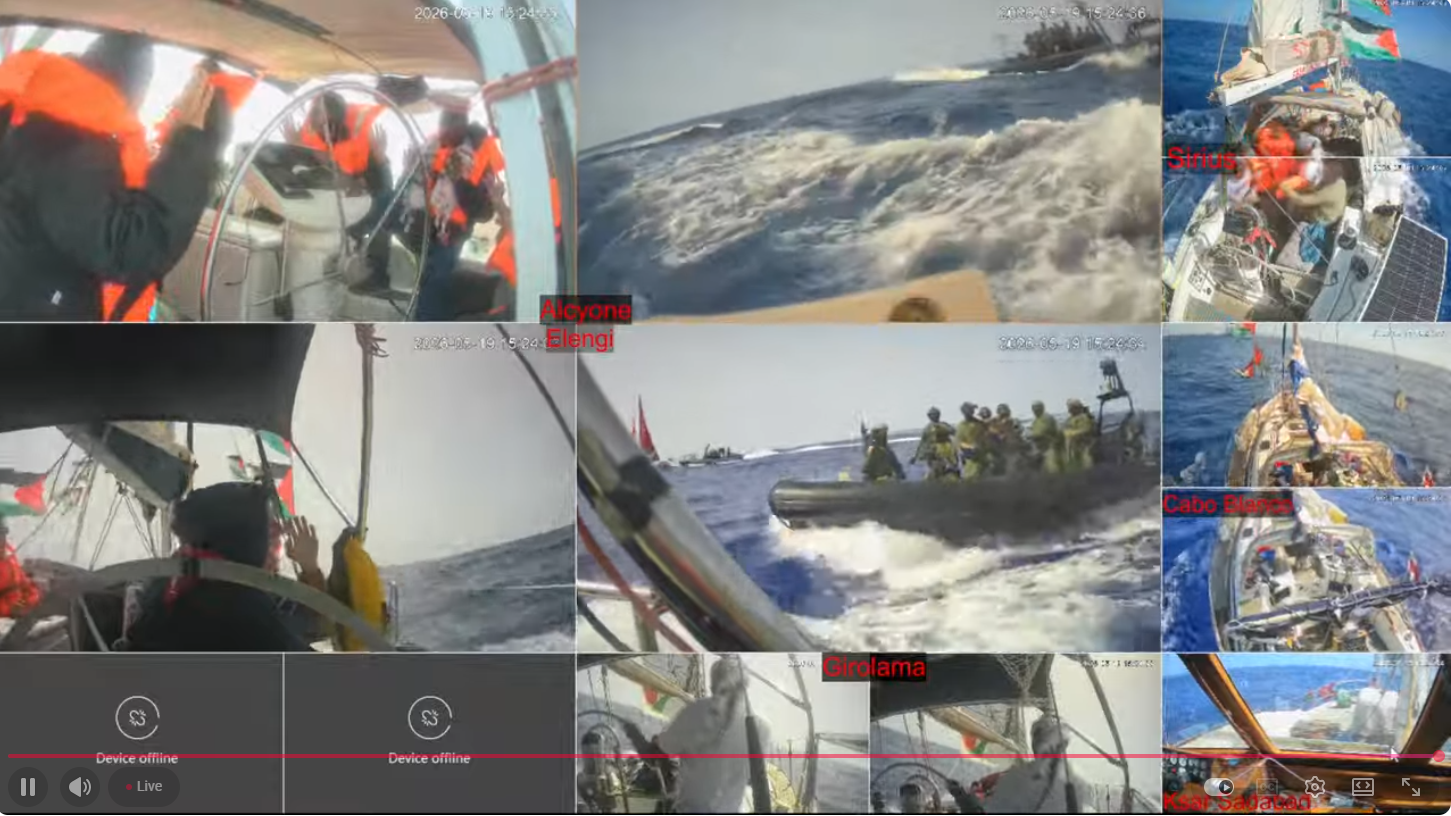
On Monday 19 May, shortly after 10:30am, Israeli naval forces surrounded and began intercepting the flotilla in international waters, approximately 90 nautical miles from the Cypriot coast but within Cyprus' Search and Rescue zone. By Tuesday evening, according to the GSF website, not one vessel remained free. Hundreds of activists from more than 45 countries have been detained. Their location, destination and date of release remain unknown. The only vessel to reach a Cypriot port was the Sabra (Vivi Sabra), which docked in Paphos carrying six passengers from Italy, Spain, Mexico and Morocco. Italian activist Daniele Galina said that "people were abducted, drones were watching us," and alleged that Paphos authorities asked the crew to remove Palestinian flags from the vessel.
The distress calls
During the interception, both the Global Sumud Flotilla and March to Gaza Greece alleged that they repeatedly transmitted MAYDAY distress signals to Cypriot authorities, from within the Cypriot SAR zone. Videos circulated on social media show captains broadcasting MAYDAY calls without response. GSF coordinator Iasonas Apostolopoulos stated categorically: "The obligation to respond to a MAYDAY signal is absolute."
The official response from the Larnaca JRCC, the independent unit within the Ministry of Defence responsible for Cyprus' SAR zone, which corresponds to the Nicosia Flight Information Region, was that "no distress signal was received requiring activation of search and rescue procedures under the National Plan 'NEARHOS'" and that the flotilla "never entered the territorial waters of the Republic of Cyprus." A JRCC source noted that the centre did receive the signals, but assessed them as incidents of "ship inspection," meaning the boarding of a vessel by a state authority, rather than a maritime accident or a threat to human life. In such cases, the source explained, the JRCC asks a nearby vessel to approach and dispatches a helicopter if deemed necessary. The protocol, the source said, was followed. The source added that Israel gave no prior warning before the operation.
The legal dimension
George Pamborides, former Minister of Health and specialist in international law of the sea, explains that the IMO's International SAR Convention encourages states to conclude bilateral agreements for rescue operations, while the prevailing element of the Law of the Sea is that maritime zones determine jurisdiction. Full jurisdiction applies within 12 nautical miles, partial within the Exclusive Economic Zone, and intervention in international waters is permissible only where there is evidence of international crimes such as piracy, terrorism or human trafficking. "When a vessel is in danger, the first country with the right and the responsibility to intervene is the one whose flag the vessel flies," Pamborides said. A state is entitled, though not obliged, to intervene within its SAR zone when there is a risk of maritime accident or loss of life. "There is no omission on the part of the Republic of Cyprus," he concluded, "since the MAYDAYs did not concern a maritime accident or risk to human life from a technical failure."
The SOLAS Convention, the International Convention for the Safety of Life at Sea, obliges the master of every vessel to proceed to the assistance of persons in danger regardless of nationality or circumstance. The critical question of whether Israel's invocation of "terrorism" legally justifies interception in international waters remains deeply contested in the international legal community.
'Provocation for the sake of provocation'
The Israeli Embassy in Nicosia attributed the mission to "two violent Turkish groups," the Mavi Marmara organisation and the IHH (Foundation for Human Rights and Freedoms and Humanitarian Relief), describing the latter as a "terrorist organisation" and insisting that "the naval blockade will not be breached." The Israeli Ministry of Foreign Affairs characterised the flotilla as "provocation for the sake of provocation: another so-called humanitarian aid flotilla without humanitarian aid," claiming its purpose was "to serve Hamas, distract from its refusal to disarm, and obstruct Trump's peace plan."
The Cyprus Democratic Lawyers Association issued a statement expressing "strong concern and condemnation" over the events, describing them as probable violations of international law of the sea, the principles of freedom of navigation, international human rights norms and the European Convention on Human Rights. The association stated explicitly that the vessels broadcast MAYDAY signals "within the Cypriot Search and Rescue zone, a fact that activates clear obligations on the part of the competent authorities," and called on the Cypriot government to "act immediately, demand full information on the fate of all those on board, and ensure respect for international law."