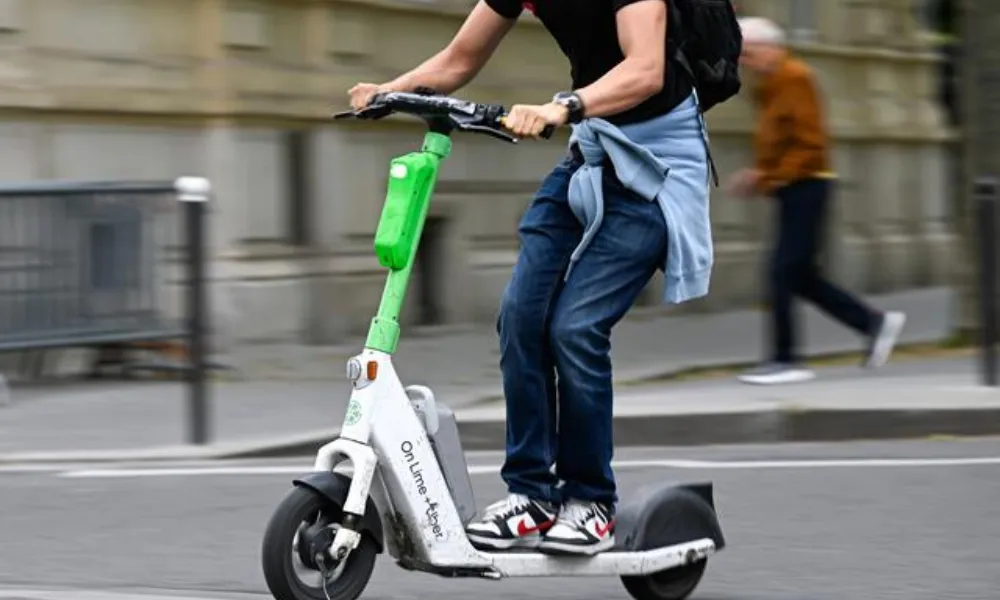

Parents of minors who ride electric scooters are now in the sights of the Traffic Police, as the first fixed penalty notices have been issued under the new legislation. According to data obtained by Politis, 33 fines were issued to parents or guardians of children under 17 between 22 April and 23 October 2026, for failing to take the necessary measures to stop their children using personal mobility devices, as the law describes them. In total, 8,094 fixed penalty notices were issued for e-scooter offences between 1 January and 23 October 2026.
Fines after the age limit was raised
The fines were issued after the amending Law 107(I)/2026 came into force on 22 April 2026. The law raised the minimum age for using personal mobility devices from 14 to 17. No fixed penalties were issued for this offence between 1 January and 21 April 2026, when the age limit was still 14.
According to the same data, a further 7 fines were issued between 22 April and 23 October 2026 to e-scooter owners, or to people legally responsible for managing or keeping them, for failing to take the necessary measures to stop under-17s using them.
2,616 caught riding in prohibited areas
From the beginning of the year to 23 October 2026, police issued 2,616 fines for riding e-scooters in areas where they are not permitted. A further 724 fines were issued for riding outside the designated lane.
123 Highway Code offences
Police issued 123 fines for the offence of a person who, while using a personal mobility device, “fails to comply with the instructions of traffic signs and traffic lights regulating the movement of vehicles, motorised and non-motorised”.
Other offences
Among other offences, police issued the following fixed penalty notices:
- 2,031 for not wearing a properly fastened protective helmet
- 1,507 for not wearing suitable reflective clothing or markings
- 410 for carrying any object placed on or hanging from any part of the e-scooter
- 370 for failing to ensure the lights were switched on
8,094 fines in total
In short, between 1 January and 23 October 2026, a total of 8,094 fixed penalty notices were issued for traffic offences in breach of the legislation governing the use of electric scooters.
The new rules
The amended legislation on personal mobility devices introduced stricter technical specifications and strengthened the authorities’ powers to deal with offences. The new provisions were published in the Official Gazette of the Republic on 22 April and came into force the same day. They aim to improve road safety, set clearer traffic rules and tackle the illegal use of personal mobility devices.
The changes are contained in the amending laws 106(I)/2026 and 107(I)/2026, as well as in related amendments to the legislation on fixed penalties. Police formally informed the public of the new provisions on 19 May 2026.
One of the most significant changes concerns the age of users. The minimum age for riding an e-scooter was raised from 14 to 17. Likewise, the minimum age for a passenger to be carried was raised from 12 to 17.
The legislation also provides for penalties for anyone who allows minors under 17 to use the devices, or fails to take the necessary measures to prevent it. Fines also apply to anyone carrying a passenger who has not reached the required age.
The change aims to limit the use of e-scooters by younger people, at a time when road collisions and injuries are causing growing concern.
Technical specifications and safety
The amendments also introduce mandatory technical requirements for personal mobility devices. E-scooters must carry the relevant CE marking and a declaration of conformity, and must meet the European standard CYS EN 17128:2020.
These requirements concern the suitability of the devices and compliance with the prescribed safety specifications. Users must also comply with the rules in force on equipment and traffic.
The speed limit linked to fixed penalties was raised from 20 to 25 kilometres per hour. This change concerns the legal threshold for penalties and does not mean that e-scooters may be used on any road or in any conditions.
Where e-scooters are allowed
The use of electric scooters remains subject to restrictions on where they may be ridden. Users cannot ride them regardless of the type of road or traffic conditions.
The new provisions strengthen the ability of the competent authorities to intervene when e-scooters are being used in prohibited areas. Users should therefore know the local and general rules in force before setting off.
The legislation strengthens the powers of the police and other authorised officers, including municipal traffic wardens, to impound devices in certain cases of offences. Additional powers are also given to municipal and community authorities.
The legislation also regulates e-scooter rental and operating companies, so that their activities fall within the legal framework.
In September 2026, the Ministry of Transport put out for public consultation a draft decree on the procedure for impounding devices in certain cases, including when they are used by people under 17 or in prohibited areas.