
Disturbing details have emerged about the alleged treatment of 74-year-old American Steven Hubbard in Russian prisons, days after his release following what US President Donald Trump described as a personal appeal to Russian President Vladimir Putin.
The retired English teacher spent approximately four and a half years in detention, during which he allegedly suffered repeated beatings, electric shocks, sexual humiliation and deprivation of basic necessities.
In an investigation published by the BBC, two former Ukrainian cellmates described what they said was a pattern of systematic abuse, claiming Russian prison guards treated Hubbard with particular cruelty because of his American nationality.
The allegations, reported by Greek newspaper Proto Thema, have renewed scrutiny of the treatment of detainees in Russian prisons and questions about accountability for alleged abuses.
Arrest in Ukraine and prison sentence
Hubbard, who is originally from Michigan, moved to Ukraine in 2014, where he worked as an English teacher.
He was arrested by Russian forces in April 2022 in the city of Izium, following its capture during Russia’s invasion of Ukraine.
Russian authorities accused him of fighting alongside Ukrainian forces as a mercenary. Hubbard denied the allegations but was sentenced in 2024 to six years and 10 months in prison.
The US government had described his detention as wrongful, disputing the basis of the Russian charges.
Beatings, electric shocks and humiliation
Ukrainian journalist Dmytro Khilyuk, who encountered Hubbard at the Novozibkov prison in September 2022, described to the BBC the threats and humiliation the American allegedly faced from prison guards.
According to Khilyuk, guards would repeatedly seek out Hubbard’s cell to threaten and insult him.
More serious allegations were made by Ukrainian soldier Ihor Sishko, who said guards beat the elderly detainee on different parts of his body and used electric-shock devices against him.
Hubbard was also allegedly forced to memorise Russian words, sing the Russian national anthem and recite prison regulations despite not knowing the language, Sishko said.
He further alleged that Hubbard was subjected to sexual humiliation and routinely denied adequate food and necessary medical treatment.
The accounts have not been independently verified in full, and the allegations should be understood as claims made by the former detainees.
Health deteriorated in prison
Hubbard’s condition reportedly worsened significantly after he was transferred to a prison in Pakino.
According to Sishko, the 74-year-old suffered serious problems affecting his legs and knees, while wounds became infected because of poor hygiene and a lack of medical care.
Sishko said he had to tend to Hubbard’s wounds himself because the elderly prisoner was not receiving the treatment he needed.
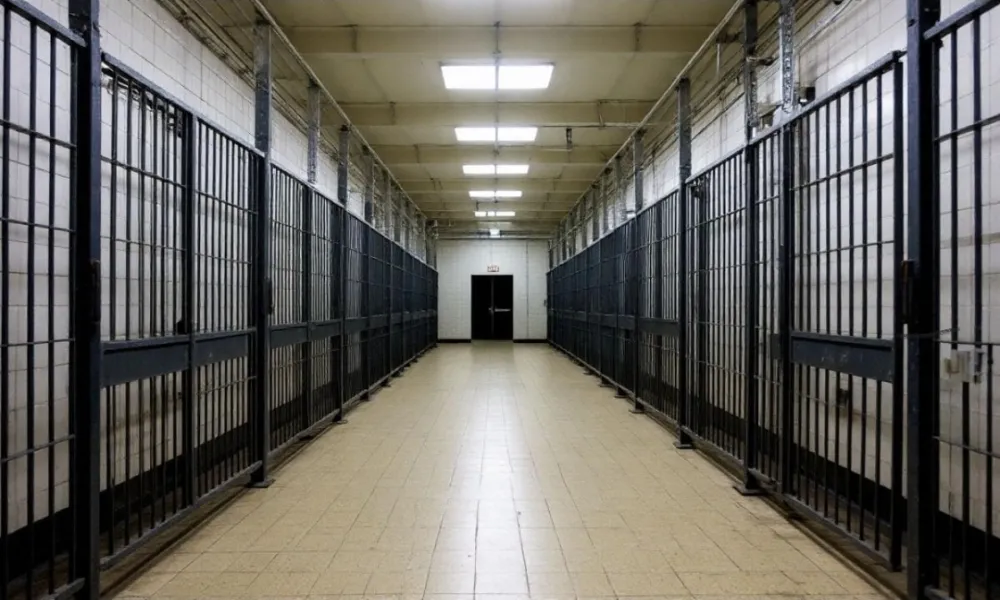
The former cellmates also described prison cells with broken windows, extremely low temperatures and insufficient food.
Khilyuk additionally alleged that Russian authorities concealed Hubbard during a visit by representatives of the International Committee of the Red Cross (ICRC), preventing them from seeing his condition.
The ICRC has said it seeks access to all detainees during visits to places of detention.
Trump’s intervention and Hubbard’s release
Hubbard’s ordeal came to an end on 21 October 2026, when Russian authorities released him on the same day that US special envoy Steve Witkoff met Putin in St Petersburg.
Trump subsequently disclosed that he had personally asked the Russian president to release the American during a telephone conversation.
According to Trump, Moscow agreed to the request without demanding a prisoner exchange.
The release nevertheless prompted political controversy in the United States, particularly after Witkoff described Putin as a “humanitarian” while thanking him for Hubbard’s return.
The remarks drew criticism from American politicians, who pointed to the allegations of torture and Russia’s ongoing invasion of Ukraine.
The controversy has also highlighted the diplomatic complexities surrounding the release of detainees held by Russia, particularly amid continuing tensions between Moscow and Western governments.
Hubbard’s little-known connection to Cyprus
A lesser-known aspect of Hubbard’s life is his connection to Cyprus.
According to the Associated Press, he moved to Cyprus in 2012 after retiring. One of his sons is a Greek Orthodox priest.
Hubbard later relocated to Ukraine, where he was living when Russia launched its full-scale invasion in February 2022.
His family welcomed news of his release after years of uncertainty about his fate and health.
The accounts provided by his former cellmates have brought renewed attention to allegations of abuse in Russian detention facilities and raised questions about whether those responsible for alleged acts of torture will face accountability.