
BirdLife Cyprus has secured funding from donors and has already begun preparations for restoration works at points of the Akrotiri wetlands degraded by pollution, specifically at Lake Makria and at lakes in the Lady's Mile area. The organisation hopes the action will mobilise the authorities to substantially address the pollution in the area.
Following the serious degradation caused in recent years by pollution at the Akrotiri wetlands, as the surrounding developments were carried out without proper planning, the first initiative that may act as a catalyst for changing the picture comes from the ranks of the Non-Governmental Organisations, specifically from BirdLife Cyprus.
The organisation has already secured funding from two private-sector donors and has begun preparations so that, from this coming September, it can start implementing a project comprising two actions. The first is the restoration of Lake Makria (known as Lake Zakaki), where pollution caused eutrophication in the reeds, with the result that the wetland, along with the bird observatory, has been choked by vegetation. The second is the creation of small islands in the lakes of the Lady's Mile area, so as to create more favourable conditions for the nesting of certain bird species important to the area.
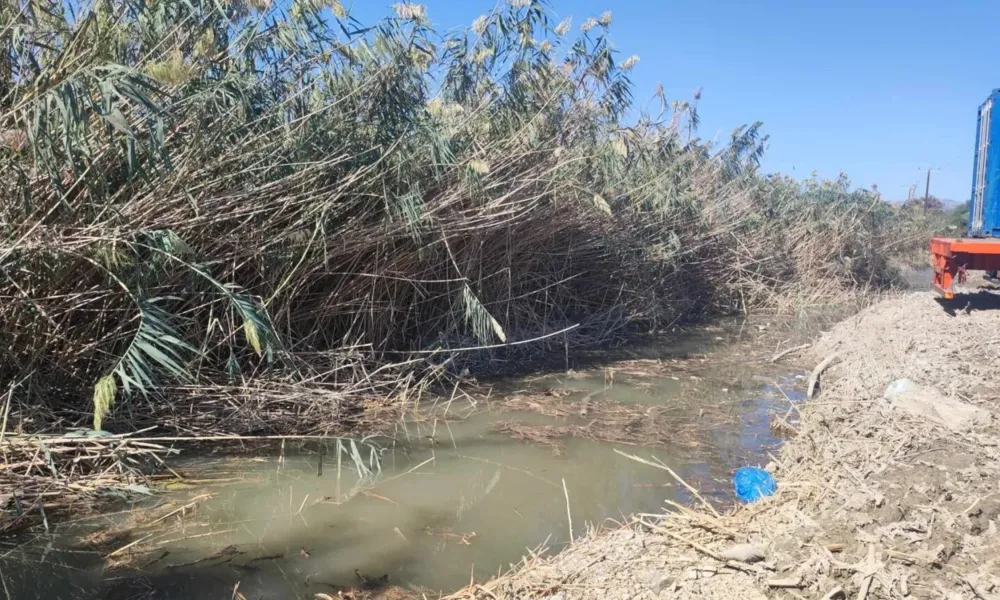
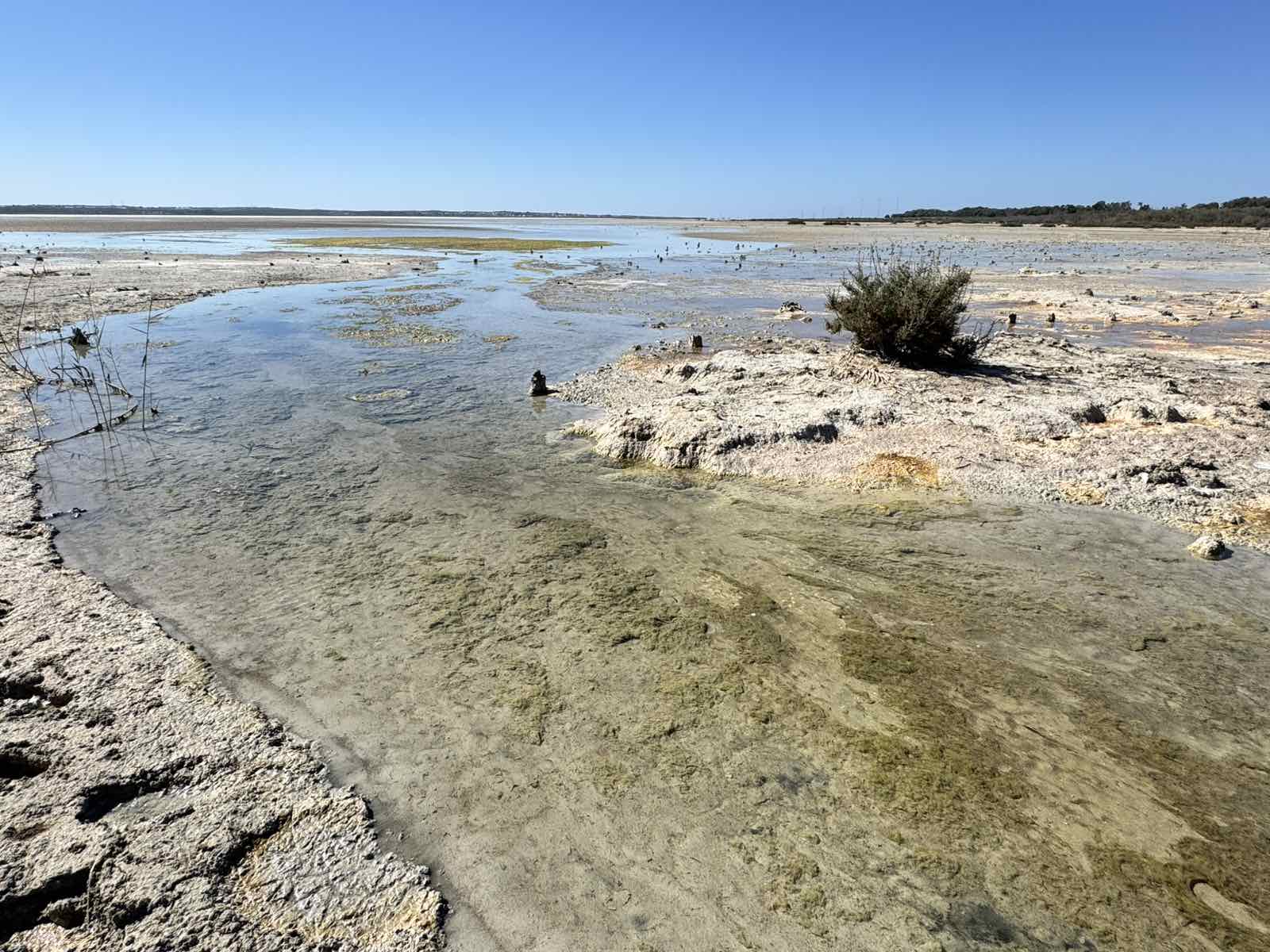
Lake Makria, one of the entry points of pollution into the Akrotiri Salt Lake, is not currently suitable for bird nesting and observation, as it has been "choked" by reeds, due to the eutrophication caused by the flow of contaminated water from the surrounding developments. At the same time, fauna is declining, because its food source is being killed by the pollution.
"Both the Game and Fauna Service of the Republic of Cyprus and the Environment Department of the British Bases, which deal with the protection of birds and nature in the area, are aware of both actions, while once the project begins there will be contact with all the bodies involved, such as Kourion Municipality and the Limassol District Local Government Organisation, for information and consultation," the director of BirdLife Cyprus, Melpo Apostolidou, told "P".
Contaminated water from surrounding developments
In previous months, following interventions by the NGOs, it became known that Lake Makria, which is connected to the Akrotiri Salt Lake, is one of the entry points of pollution into the salt lake. In recent years, contaminated water from the surrounding developments has ended up there, water that contains, among other things, coliform bacteria. This is then carried to the salt lake, leading to a gradual decline in the fauna it hosts, as their food source is killed.
In 2020, 13,000 flamingos arrived at the Akrotiri salt lake. In 2021 around 6,000, and since then their numbers have decreased ever more each year. In 2025 around 200 were recorded, while at the same time their population increased at the Larnaca Salt Lake and Paralimni Lake.
"As long as the pollution problem continues, we cannot speak of substantial restoration, but we hope this effort will also act as a catalyst to mobilise the authorities to substantially address the problem of the flow of polluted water into Lake Makria," said Melpo Apostolidou.
The involved parties are currently at the stage of preparing studies to address the problem. In February 2025, on the initiative of Kourion Municipality and the British Bases, to which the Akrotiri Salt Lake belongs administratively, though not the surrounding area, it was decided to take action by creating a technical committee to monitor and address the problem. The aim was that at the end of 36 months, that is in early 2028, they would arrive at works or actions that need to be carried out, the so-called "hard interventions". These works will be implemented by the body with the relevant responsibility. The technical committee includes the Municipalities of Kourion and Limassol, the Limassol District Local Government Organisation, the Environment Department of the Republic of Cyprus, the British Bases, the Geological Survey Department, the Water Development Department, the Forestry Department and the Directorate General for the Environment of the Ministry of Agriculture.
Reed removal and nesting works
The restoration works alone that will be carried out at Lake Makria under the BirdLife project are costed at around 20,000 to 25,000 euros, according to Melpo Apostolidou. After the specifications are determined, consultations with those involved and certain recordings, which among other things concern the assessment of impacts, the fieldwork is expected, she said, between the end of summer and the beginning of autumn. The organisation is currently in the process of recruiting staff for the project.
Specifically, quantities of reeds will be removed in a section of Lake Makria, in front of the bird observatory. In another section, a small island will be created, on which birds will be able to nest. At the same time, two permanent earth corridors will be made within the lake, along which machinery will be able to move in order to remove the reeds in future. Today, she explained, this is not feasible, because due to the water, a machine cannot enter to carry out cleaning.
The role of NGOs and the donors
She stressed that the project shows the role NGOs can play, as they can also attract private funds, acting as catalysts for something substantial to be done, because, she added, "we must now speak of restoration, we cannot leave the damage to remain".
The first donor is a private foundation, the John Ellermann foundation, based in England, which funded a previous BirdLife project, with recommendations on what should be done for the wider Akrotiri wetlands area. With the next project, "we come to build on the previous one, implementing some of its recommendations", said Melpo Apostolidou. The second sponsor is an organisation created by an agritourism and birdwatching company.