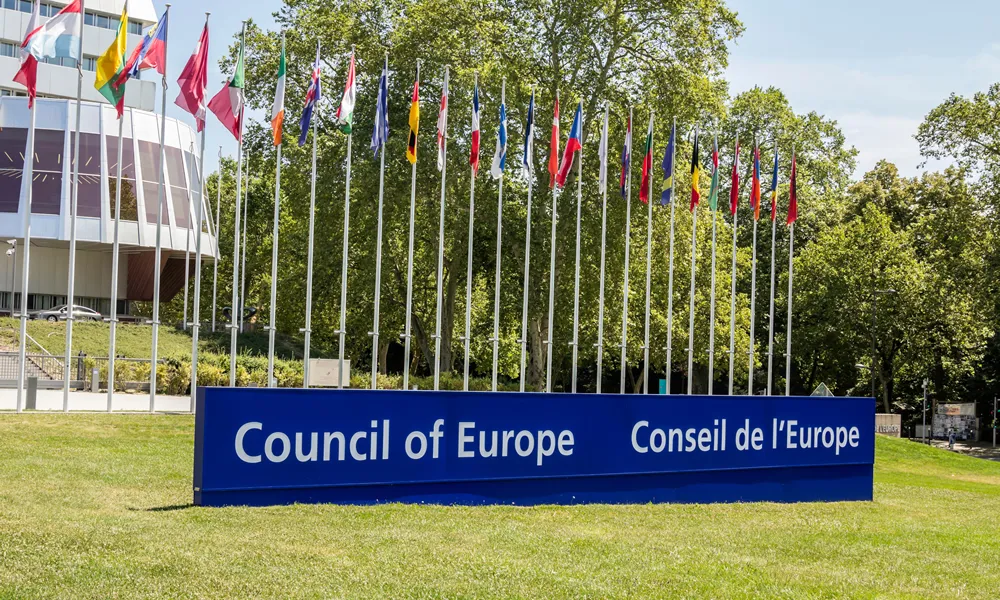



Cyprus has been held up as a model of good practice in the Council of Europe's latest anti-corruption assessment, with two recent reforms cited as examples for other member states to follow even as the continent-wide picture shows persistent gaps in tackling corruption among senior officials and police forces.
The Group of States against Corruption, known as GRECO, published its 26th General Activity Report, covering the watchdog's work across its 48 member states during 2025, including Kazakhstan and the United States. The report highlighted Cyprus's Law 20(I)/2024, regulating the employment and legal status of political advisers attached to government ministers. The legislation makes the accompanying code of conduct legally binding, meaning a breach is treated as grounds for dismissal under the consultant's employment contract, and introduces specific obligations around conflicts of interest, confidentiality, gifts and hospitality. A second piece of legislation, Law 137(I)/2024, adopted on 11 July 2024, extends asset and interest declaration requirements to associate consultants engaged at the government's discretion. The register of these consultants and their roles is now published on the presidency's website, a transparency step GRECO noted approvingly.
Cyprus was also commended for a centralised electronic platform for public consultations, launched in 2024, which replaced a patchwork of separate publications scattered across individual ministry websites with a single point of entry for citizens and stakeholders. The platform sets a minimum four-week consultation period, requires early identification of interested parties, designates a consultation coordinator within each ministry, and is backed by an annual review of how effective each consultation process has been, coordinated by the Directorate General for Growth.
The recognition comes within a broader evaluation framework. GRECO's current monitoring round, the 5th Evaluation Cycle, examines two groups: people holding senior executive functions within central government, including ministers and their political advisers, and law enforcement bodies. Cyprus's own compliance procedure under that cycle remained open at the end of 2025, alongside those of Azerbaijan, Czechia, Portugal and Romania. Detailed figures included in the report's annexes show that 30.8% of recommendations addressed to the Cypriot government and 22.2% of those addressed to Cypriot law enforcement had been fully implemented, with most of the remainder partially implemented rather than left untouched. Cyprus's earlier 4th Cycle review, covering parliamentarians, judges and prosecutors, showed 56.3% of recommendations implemented as of its most recent compliance report in 2023.
GRECO adopted 30 evaluation and compliance reports over the course of the year and conducted four evaluation visits, alongside its launch of a new 6th Evaluation Cycle focused on anti-corruption efforts at the local and regional level of government, with its first evaluation visits carried out in Estonia, Slovakia, Luxembourg and Slovenia. Implementation of the 5th Cycle recommendations remained, in the watchdog's own assessment, globally unsatisfactory, with just over a third of recommendations addressed to senior government officials still entirely unimplemented and only 22% fully carried out. The figures were somewhat better for law enforcement bodies, where 35% of recommendations had been fully implemented and only 28% remained untouched, a pattern GRECO said reflected more consistent progress in strengthening integrity frameworks within police forces than among political appointees.
GRECO's president, David Meyer of the United Kingdom, wrote in his introduction to the report that corruption prevention is not merely a matter of good governance but a key element of democratic resilience, warning that solid integrity systems are essential to preserving democratic institutions and public trust at a time when confidence in institutions is declining and geopolitical tensions are intensifying. The report also noted that, by the end of 2025, 13 GRECO member states had still not ratified the Council of Europe's Civil Law Convention on Corruption, despite its relevance to the public, private and non-profit sectors.
You may read the full report below: