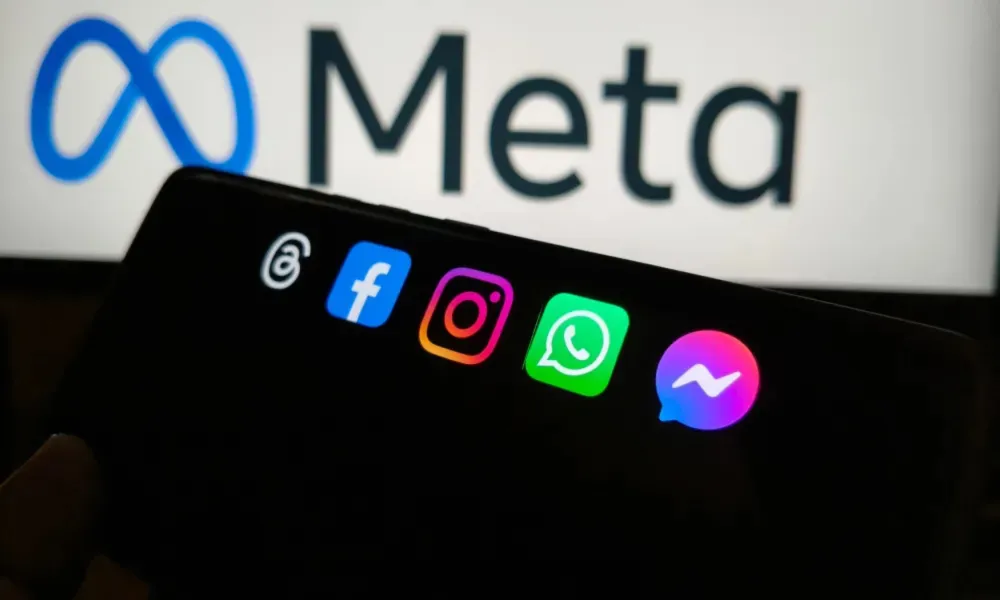

Meta's decision to impose default restrictions on teenage use of Facebook and Instagram in the United States is prompting governments around the world to demand stronger protections for children online.
The company agreed this week to pay up to $16.7 billion and introduce significant limits on teenage users under a settlement with nearly 40 US states over allegations that its platforms were designed in ways that encouraged addiction among minors.
Australia says the tools already exist
Australia argued that Meta's move demonstrates that social media companies already possess the technology needed to protect young users.
Communications Minister Anika Wells said social media companies "have the tools at their disposal to protect young people from the addictive features of their platforms, but have chosen not to use them".
Australia was the first country to introduce a legal ban on access to social media for children under 16 and says more than 20 countries are now following its example.
However, Australian authorities acknowledge that enforcement remains uneven.
Preliminary evidence suggests weak age-verification systems are undermining the legislation, with studies showing that most Australian teenagers continue to access social media despite the restrictions.
Research cited by authorities found that around 80% of minors were still using social media months after the law came into force in December.
The situation has prompted lawmakers to strengthen enforcement powers and increase potential penalties.
Poland seeks €250m fine
In Europe, Poland's Minister of Digital Affairs Krzysztof Gawkowski called on the European Commission to impose a €250 million fine on Meta.
He also urged the company to adopt stronger tools to combat scams, fake advertisements and the promotion of illegal applications.
Asian governments increase pressure
Several Asian countries, including China, South Korea, Malaysia, India, Indonesia and the Philippines, are also seeking tighter controls on children's use of social media.
In South Korea, the media regulator called on Meta to apply its new restrictions globally rather than limiting them to specific markets.
Meanwhile, Philippine Information and Communications Technology Secretary Henry Aguda said he hoped the US agreement would strengthen discussions with Meta executives during meetings in Singapore.
According to Aguda, the talks focus on:
- Online sexual abuse and exploitation of children.
- Child sexual abuse material.
- Online fraud targeting Filipinos.
- Online grooming of minors for sexual exploitation.
Pressure remains in the US
Despite the settlement, social media companies continue to face thousands of lawsuits across the United States.
Individuals, school districts, municipalities and other public bodies continue to argue that social media platforms knowingly encouraged addictive behaviour among children and contributed to a mental-health crisis involving anxiety, depression and self-harm.
More legal action possible
The legal pressure on Meta may expand beyond the United States.
Australian law firm Shine Lawyers said it is in discussions with Mark Lanier, one of the lawyers involved in the California litigation against Meta, to examine whether similar legal action could be pursued in Australia.
The developments suggest that Meta's US settlement may become a catalyst for broader international efforts to regulate social media use by children and teenagers.