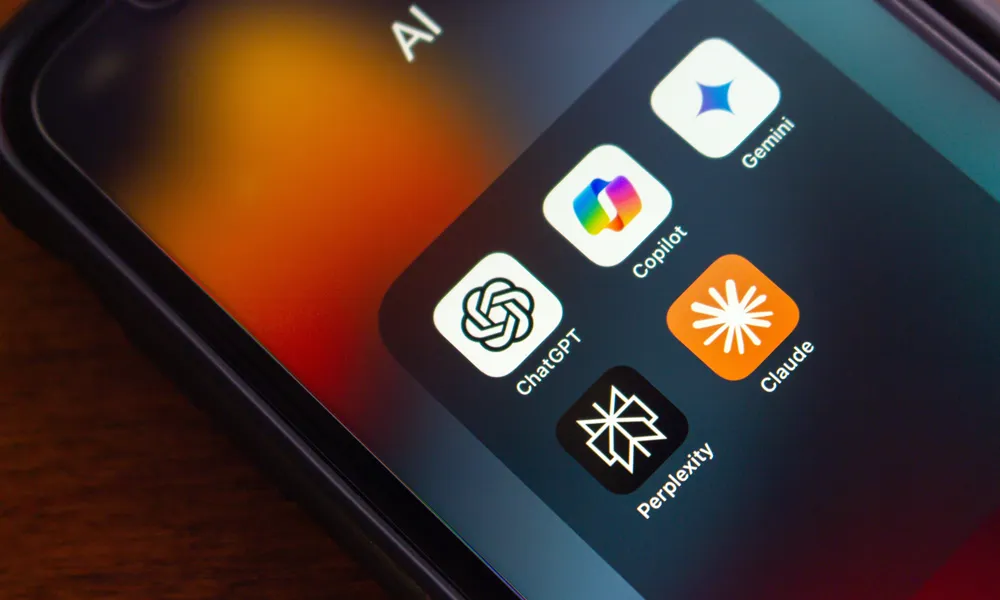


A month ago, Anthropic's Fable 5 was being called the most capable AI model ever released to the public. Stripe used it to overhaul a 50-million-line codebase in a single day, a job its engineers estimated would have taken more than two months. Three days after launch, the US government pulled it offline.
On 12 June, Commerce Secretary Howard Lutnick invoked export control authorities to order Anthropic to suspend access to both Fable 5 and its more restricted sibling, Mythos 5, citing national security concerns over a reported method of bypassing Fable's guardrails. Because the rules applied to any foreign national regardless of location, Anthropic had no technical means to comply selectively and cut both models off for all users worldwide. The National Security Agency, which had been testing Mythos and found it impressive, lost access alongside everyone else.
Restricted models
The restrictions have not stopped the technology from advancing elsewhere. Researchers found that a new AI model released this month by China's Zhipu AI, also known as Z.ai, can match the latest US models when it comes to finding security bugs, although it still lags behind Anthropic's and OpenAI's products in other tasks. Zhipu's GLM-5.2 lands within a percentage point of Anthropic's Opus 4.8 on a key agentic benchmark at roughly a fifth of the cost. Unlike Anthropic's restricted models, GLM-5.2 was released under a permissive open-weight licence, enabling any researcher or developer to download and run it on standard consumer-grade hardware.
The capability gap between top US models and those built by Chinese companies has narrowed significantly, and use of Chinese AI systems has surged as businesses seek to rein in costs. A host of companies, including Microsoft, are weighing how they can offer Chinese models on their platforms. Critics within the US industry argue the policy is counterproductive. "Banning Fable while selling chips China needs to develop its own version is a gift to China," said Saif Khan, a distinguished technology fellow at the Institute for Progress. "It is incentivising companies across the globe to use cheaper but very capable Chinese open-weight models, while at the same time undermining the US AI industry," said Niels Provos, a researcher who led security teams at Google and Stripe. "I don't understand it."
A reversed course
Anthropic announced, on Friday, it had received the green light to redeploy Mythos 5 to a set of US organisations that operate and defend critical infrastructure. Fable 5, the consumer-facing model, remains offline. Its return is being awaited by users and developers who were drawn to its coding capability, with Axios reporting it is on track to return within days following negotiations with the Pentagon and NSA. The same day Mythos access was partially restored, OpenAI released GPT-5.6 to a limited group of government-approved recipients. In a blog post, the company said the arrangement should not "become the long-term default," warning it "keeps the best tools from users, developers, enterprises, cyber defenders, and global partners who need them."
The episode has sharpened a debate in Europe about technological dependence. Austria's State Secretary for Digitalization Alexander Pröll wrote to EU Technology Commissioner Henna Virkkunen urging member states to explore the strategic establishment of Anthropic within the European Union, offering "legal certainty, market access, capital and a set of values that suits this company." When the US Commerce Department ordered Anthropic to cut off foreign nationals' access to its two most advanced systems, Anthropic, unable to fence off a shared cloud service by nationality, switched the models off for everyone outside the United States. A nationality-based restriction became, in practice, a global outage, and Europe found itself on the wrong side of it. Pröll did not specify whether he envisaged a European subsidiary, a data-residency arrangement or something looser, and acknowledged the proposal would face scepticism.
Sources: Reuters, Axios, Bloomberg, Euronews