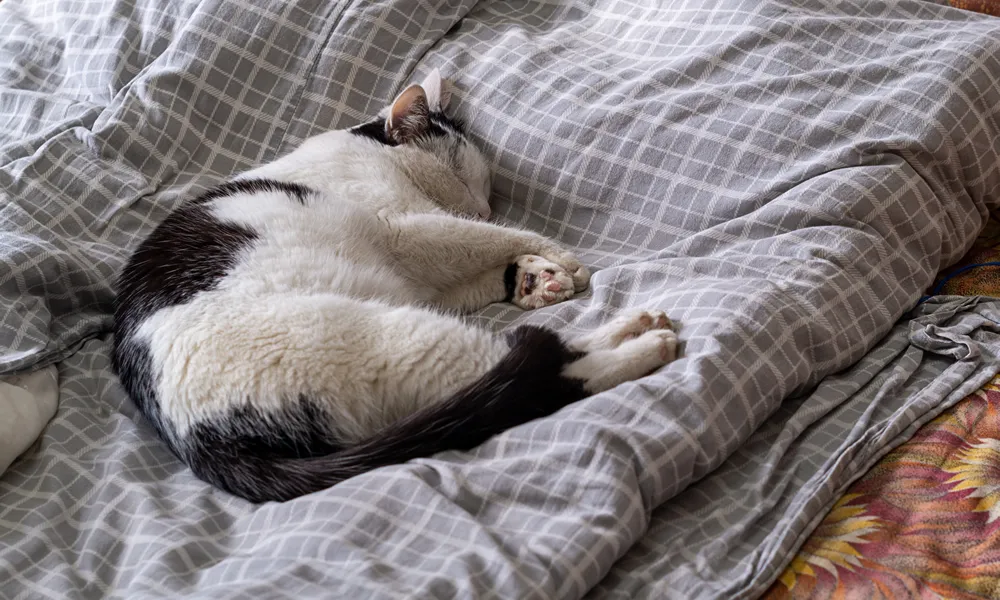
Nearly half of pet owners in the United States share their bed with an animal, according to a 2022 online survey of around 2,000 adults. Whether that is a good idea depends, it turns out, on a combination of factors that experts say are worth thinking through, from the risk of infection to the quality of your sleep and the emotional comfort a pet provides.
The hygiene question
Pets can expose their owners to ticks, fleas, parasites and bacteria, and sharing a bed increases that exposure, said Josh Daniels, a veterinarian and microbiologist at Colorado State University's veterinary school. In rare cases, sleeping with a pet has been linked to serious infections. Published case reports have described a woman who developed a bacterial skin infection after her cat regularly licked her feet while they slept together, a man who developed an infection around a hip surgery site after sleeping with his dog, and pet owners who contracted plague through flea bites after sharing a bed with an animal.
Such cases are uncommon, however. Bruno Chomel, professor emeritus at the UC Davis Weill School of Veterinary Medicine, said the risk of actually becoming ill from sleeping with a pet is generally low unless a person is immunocompromised or otherwise susceptible to infection. The most practical precautions, Daniels said, are using veterinarian-recommended flea and tick prevention and keeping up with routine deworming. For pets recently adopted from shelters, or puppies and kittens, it is also worth watching for skin conditions such as ringworm, which spreads easily through contact.
What happens to your sleep
The research on sleep quality is limited but points in a consistent direction. A 2017 study of 40 dog owners found that participants slept less efficiently when the dog was on the bed than when it was in the room but off the bed. A 2020 study of 12 women found that their dogs disrupted their sleep in ways that the participants often did not consciously register afterward.
Sleep psychologist Shelby Harris, who practises in New York City, said she always asks new patients with sleep problems whether they share a bed with a pet. She is not automatically against it. "Some people experience great joy from sleeping with their pets, and not everyone suffers from sleep disruptions," she told The New York Times. Her advice: remove the animal from the bed for a few nights and see if sleep improves. If there is no noticeable difference, the arrangement is probably fine.
Douglas Wallace, a sleep physician and clinical neurology professor at the University of Miami Miller School of Medicine, has observed that many people perceive their pets as beneficial to their sleep even when data suggest otherwise. He has theorised that the emotional support of sleeping with a pet may, in some cases, outweigh the disruption it causes. Pet owners who walk their dogs every morning also tend to get regular exercise and wake at consistent times, both of which support good sleep.
Clinical psychologist Brittany Lancaster of Mississippi State University takes a more cautious view. "I do not sleep with my cats, if that tells you anything," she she told The New York Times.
The bottom line, according to Chomel, is that it comes down to personal appetite for a small but real risk. For healthy people with pets that are properly treated for parasites, the danger is minimal. For those already struggling with their sleep, the bed may be better kept for humans alone.
Source: The New York Times