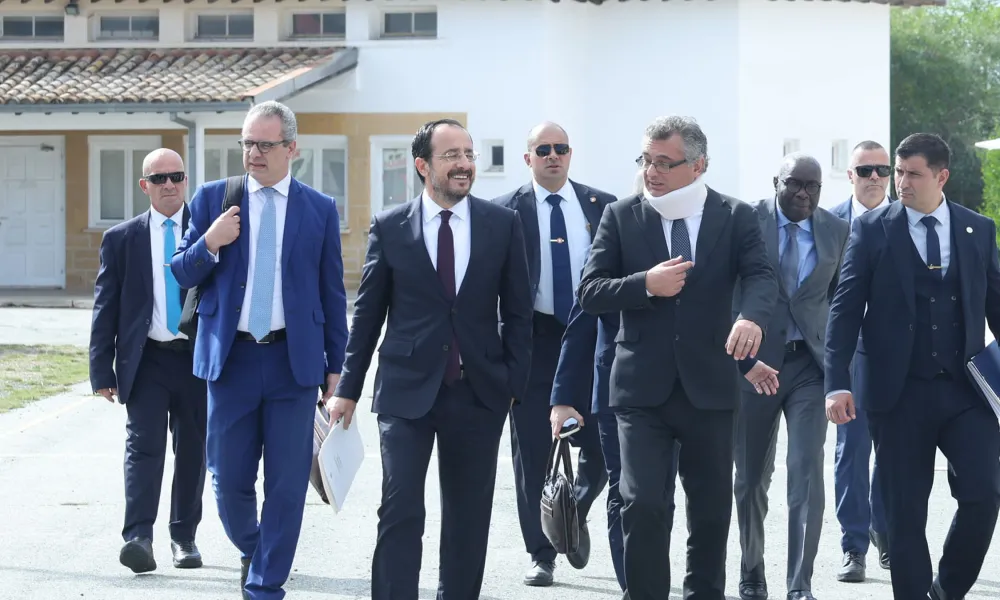

Greek Cypriot negotiator Menelaos Menelaou told Politis yesterday that the current peace effort was not advancing at the preferred pace, though if it was a choice between a slow pace and no pace at all, he would choose the former.
Speaking to Katerina Eliadi on Politis Radio’s Morning Review programme on 107.6 & 97.6, Menelaou discussed the outcome of the latest leaders’ meeting on Tuesday, acknowledging that the dialogue between the two sides was not progressing at the desired pace.
However, if it was a choice between a slower pace of progress and reaching a dead-end, where there is nothing, “it would be preferable to continue this effort and strengthen the conditions to achieve a faster pace and the more substantive content that we seek,” he said.
On 9 November, the two leaders agreed two new crossing points – Kampos-Karavaostasi and Louroudjina-Lympia – but left out the more sought-after Athienou-Pyroi-Aglandjia and Mia Milia crossings.
Menelaou agreed that the two crossing points announced would not impact many people’s lives as they mainly served people in the respective local areas. However, the other two crossings and Kokkina are still being pursued, he noted.
On why Athienou-Pyroi-Aglandjia and Mia Milia were not announced during the leaders’ two meetings this month, the negotiator indicated that the Turkish Cypriot side had backtracked, returning to the issue of the Athienou-Aglandjia route while adding other demands, not related to crossing points, involving Pyla.
He described a more cautious approach being taken that has slowed progress, stifling momentum somewhat.
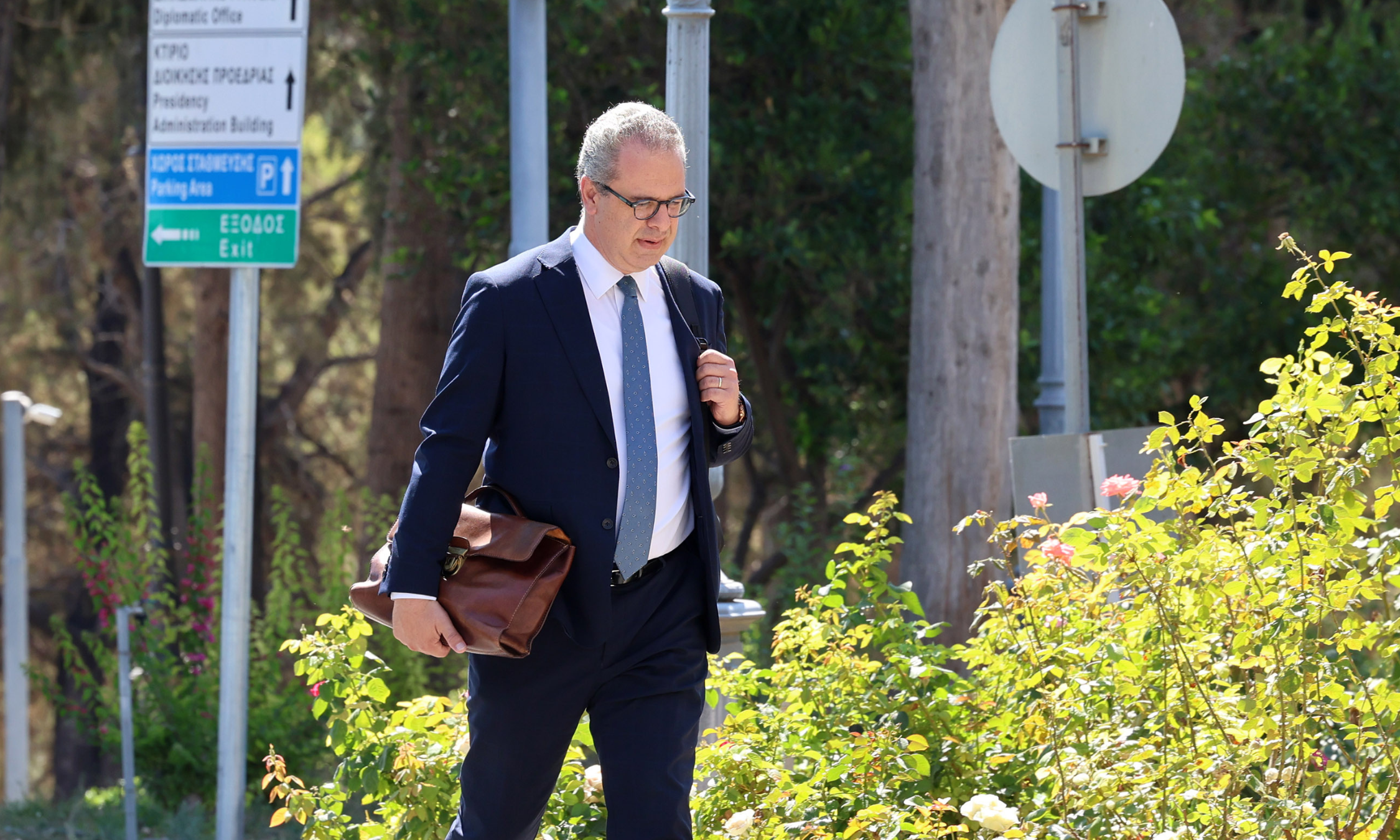
Asked what could possibly be achieved in the month remaining before António Guterres leaves office, Menelaou highlighted that the other side has not shown any intention to stop the peace effort completely, it is just engaging at a slower pace. Two crossing points were announced, which opened the door to a trilateral with Guterres that will likely be held in December, he noted. The negotiator did not rule out more leaders’ meetings being held before the trilateral.
The trilateral’s objective is to achieve an outcome that would lead to a 5+1 that reaffirms the negotiating acquis, thereby clarifying what remains pending for when negotiations resume, argued Menelaou.
Confidence-building measures
Tuesday’s announcement following the leaders' meeting was marked by a host of reaffirmations, reviews and renewals of previous agreements, along with continued discussion on issues agreed and pending.
Among the measures listed, the leaders endorsed a project titled ‘EduBites’, which involves a set of lesson plans for educators with the aim of promoting peace and reconciliation.
An environmental programme, ‘Green Cyprus – Voices for a Sustainable Future’, was also agreed. According to Technical Committee co-chair Michalis Loizides, it will engage children from primary school age through to university students in joint projects on water conservation, biodiversity, waste management and renewable energy, with the aim of promoting environmental cooperation and peacebuilding.
Meanwhile, the Education Ministry yesterday issued a circular on the bicommunal ‘Imagine’ peace education programme, which the two leaders agreed on 9 November to revive fully after the Turkish Cypriot side had pulled out in 2022. The circular covers a two-year period from 2026 to 2028, allowing for student voluntary participation in educational activities during school hours, and teacher participation in workshops and a bicommunal conference outside school hours. The ministry notes that ‘Imagine’ has been operating since 2016 and is implemented by the Association for Historical Dialogue and Research (AHDR).