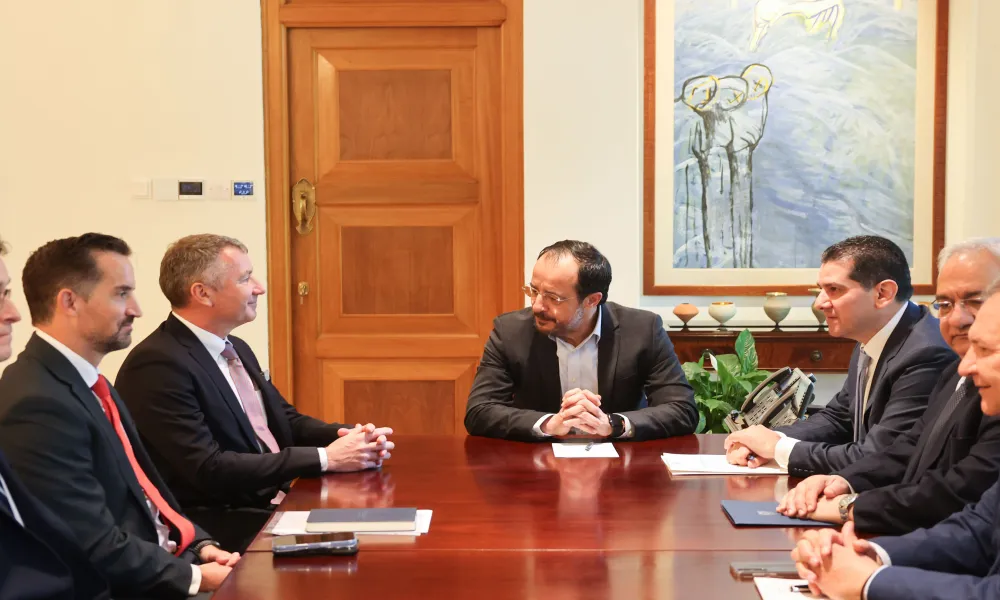

UN Secretary-General António Guterres aims to meet the two leaders for another trilateral before the end of November, it transpired on Tuesday night following a phone call between President Nikos Christodoulides and the UN chief.
According to Politis’ information, Guterres described the results of Monday’s leaders’ meeting as “substantive”. The two discussed next steps on the Cyprus issue and plans to hold a trilateral before the end of the month, following Guterres’ visit to the Philippines.
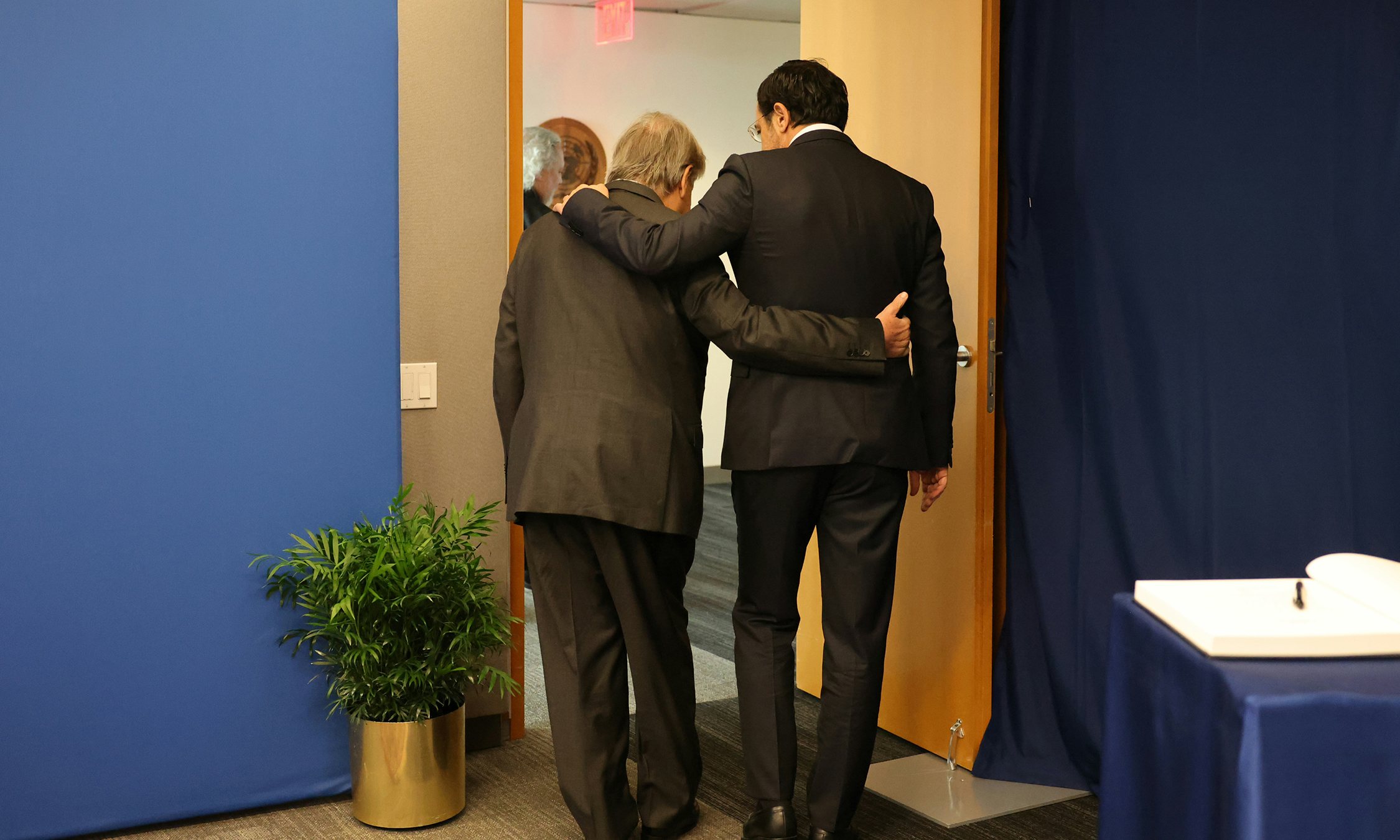
Christodoulides believes the meeting will likely be held in a European country, though the location has yet to be finalised.
The two also discussed Guterres’ meeting with Turkish President Recep Tayyip Erdoğan in Antalya.
5+1 still possible under Guterres
If the two leaders can secure progress at the trilateral with Guterres, the UN chief will consider convening a 5+1 meeting before leaving office, Politis has learned.
According to informed sources, Guterres remains committed to leaving something behind on the Cyprus issue for his successor. As a new Secretary-General in January 2017, Guterres convened the Conference on Cyprus in Geneva, where he came to know, at close quarters, the complexities of the challenge, as well as both the positions and idiosyncrasies of all the players involved, including the guarantor powers and EU.
Now, in his final days as Secretary-General, the former Portuguese prime minister wants to give one last effort to leave something for his successor on the Cyprus issue.
According to sources, Guterres may be available in late November or early December to meet the two Cypriot leaders. If the leaders can record adequate progress at the trilateral, Guterres will consider holding a 5+1 meeting in mid-December or at the year’s end, with the aim of leaving some kind of announcement or roadmap for his successor.
Monday’s results not enough
The two leaders, Christodoulides and Turkish Cypriot leader Tufan Erhürman, agreed on Monday to open two crossing points (Kampos-Karavostasi and Louroudjina-Lympia), as well as implement a number of confidence-building measures (CBMs) covering education, cultural heritage, environment, and crisis response.
EU Special Representative for Cyprus Raffaele Fitto welcomed the agreement on CBMs, describing it as “a good step forward in the discussions for a comprehensive settlement of the Cyprus issue.”
However, the leaders failed to agree on the two most anticipated crossing points, Mia Milia and Athienou-Pyroi-Aglandjia. The former would provide a much-needed alternative crossing for Nicosia and facilitate greater intra-island trade, while the latter could cut travel time between that area and Nicosia.
They also did not reach agreement on demining activities.
Unlocking a 5+1
The outcome was viewed as inadequate to support the convening of a 5+1. However, Politis understands that if the two leaders agree on the two pending crossings, among other things, at the trilateral with Guterres, this would go some way to convincing him to convene a 5+1 meeting in literally his final days in office.
From Antalya to Nicosia (via Dublin)
The two leaders have both travelled to Turkey to attend the 31st Leaders’ Summit in Antalya on climate change. Guterres will also be there, but the chances of the three meeting are slim. As for UN Personal Envoy María Ángela Holguín, she left Cyprus on Tuesday for Colombia.
The president will also meet European Commission President Ursula von der Leyen on the sidelines of the summit. He then departs for Dublin on Wednesday to participate in Thursday’s European Political Community summit and the informal European Council on 13 November.
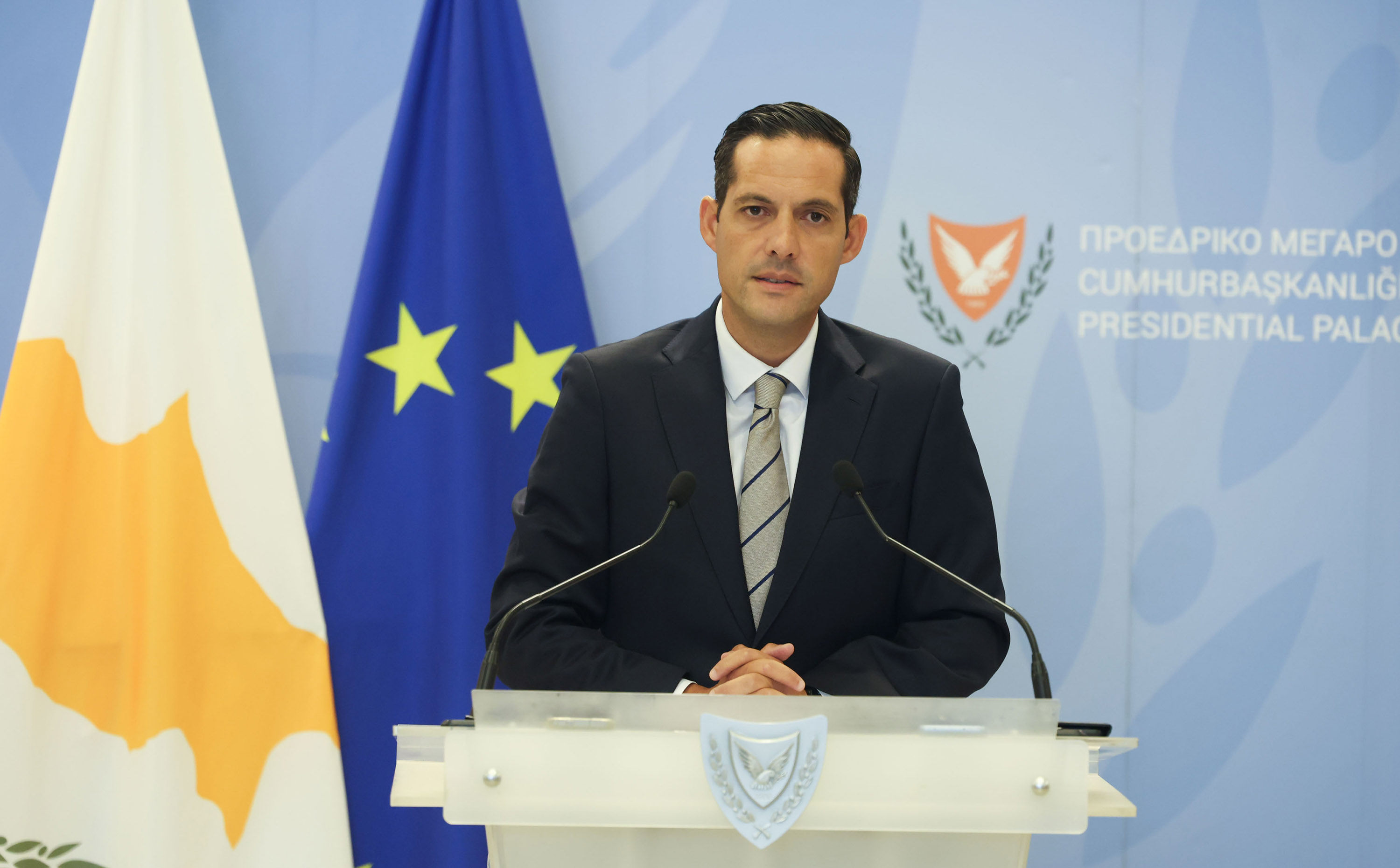
On his return, the two leaders are expected to continue discussions on CBMs, methodology and substance, first together and then with the UN Secretary-General, said Government Spokesman Konstantinos Letymbiotis on Tuesday.
Speaking to reporters, he welcomed Monday’s progress, arguing that a 5+1 before Guterres leaves office remains possible. He noted that the upcoming trilateral with the SG will focus on methodology and substance.
So close yet so far
Regarding Monday’s meeting, he said: “We came very close, and we believe we are still very close, to the opening of two more crossing points.”
He added: “However, if every time we approach or come close to reaching agreement on the issues that have been discussed, additional elements are introduced, that is neither constructive nor beneficial to the process.”
The spokesperson made the comment in reference to Erhürman’s latest proposal to provide access to the Arsos-Pyla road in the buffer zone, the rejection of which is believed to have blocked agreement on Athienou-Pyroi-Aglandjia, in turn taking Mia Milia off the table.
Asked to comment, Letymbiotis said: “I would remind you that this is the road where, in August 2023, we had those unfortunate and unacceptable incidents against personnel of the peacekeeping force.”
He also pointed to the common understanding reached on Pyla after that incident – brokered by then UN Special Representative Colin Stewart – which included a package of measures that would open the road in question but also allow for significant development of the area. The understanding was never implemented.
“One cannot isolate one part of that understanding,” and add it to a package of crossings that have been on the table since the 5+1 in March 2025 in Geneva, he argued.
Letymbiotis said the Greek Cypriot side wanted to see the whole understanding on Pyla implemented or incorporated into the discussions, not parts of it.
Regarding the two crossing points that were agreed, Politis understands that the Lympia-Louroudjina route will cross roughly 300m through the buffer zone to connect the two sides while Kampos-Karavostasi crossing will traverse around 2km of buffer zone to connect the northern and southern points of the ceasefire line.
The spokesperson said the two negotiators have already started discussion on setting a timeframe for completing the necessary works to open both, adding they will have a clearer picture in the coming days.
Meanwhile, according to sources, agreement on demining did not come to fruition after Erhürman proposed a dialogue mechanism for clearing potential minefields that would connect the National Guard Chief with the head of the Turkish Cypriot security forces, as opposed to the head of the Turkish forces.