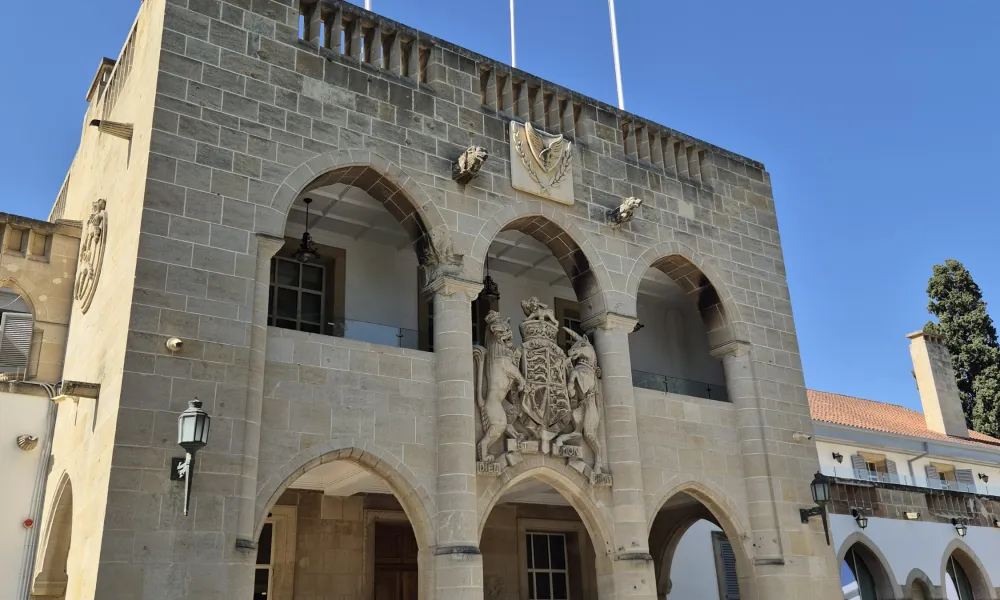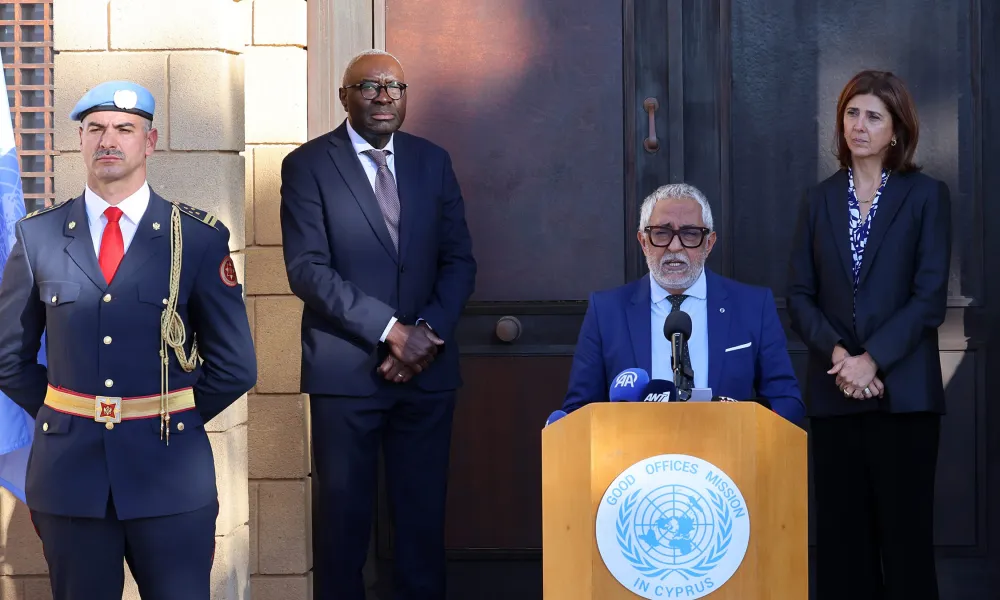

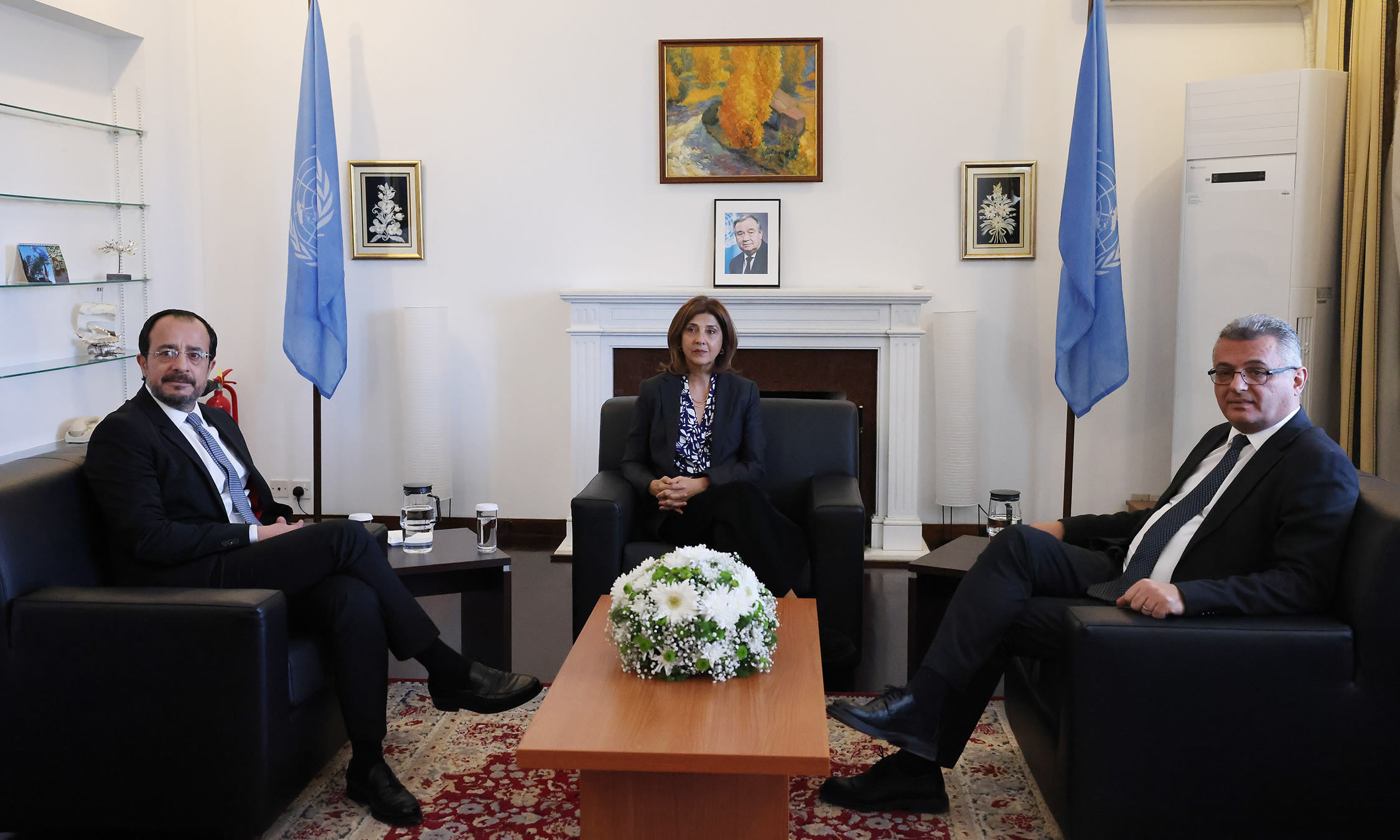
The two leaders on Monday kept the effort to resume negotiations alive for now by agreeing on two crossing points (Lympia and Kampos) and a number of trust-building initiatives, including the full return of the highly successful peace education programme ‘Imagine’. They also agreed to meet with UN Secretary-General António Guterres in the coming weeks to discuss confidence-building measures (CBMs), issues of methodology and substance.
Halfway house
After a three-and-a-half-hour meeting between the leaders and UN Personal Envoy María Ángela Holguín at the old Nicosia airport, the UN released a statement saying the leaders agreed to open crossing points at Louroudjina-Lympia, east of Nicosia, and Kampos-Karavostasi in the Troodos mountain range.
The agreement is for the two crossings to open simultaneously. Given the terrain and existing infrastructure in the Kambos area, Cyprus is not likely to see the two new crossings for some time yet, that would add to the nine already in operation. The last crossings to open were in Deryneia and Lefka in 2018.
The much-anticipated agreement on Athienou-Pyroi-Aglandjia and Mia Mila crossings did not materialise on Monday. According to Greek Cypriot sources, the Turkish Cypriot side backtracked on technical issues relating to the opening of Athienou, preventing agreement. Evidently, this removed Mia Milia from the equation, for now. The sides did not reach an expected agreement on demining either that would have included minefields on either side of the buffer zone in Deryneia.
In an interview with Politis on Sunday, Holguín had indicated agreement could be reached on all four crossing points, along with demining and other lower-level CBMs, though she noted final approval was still pending.
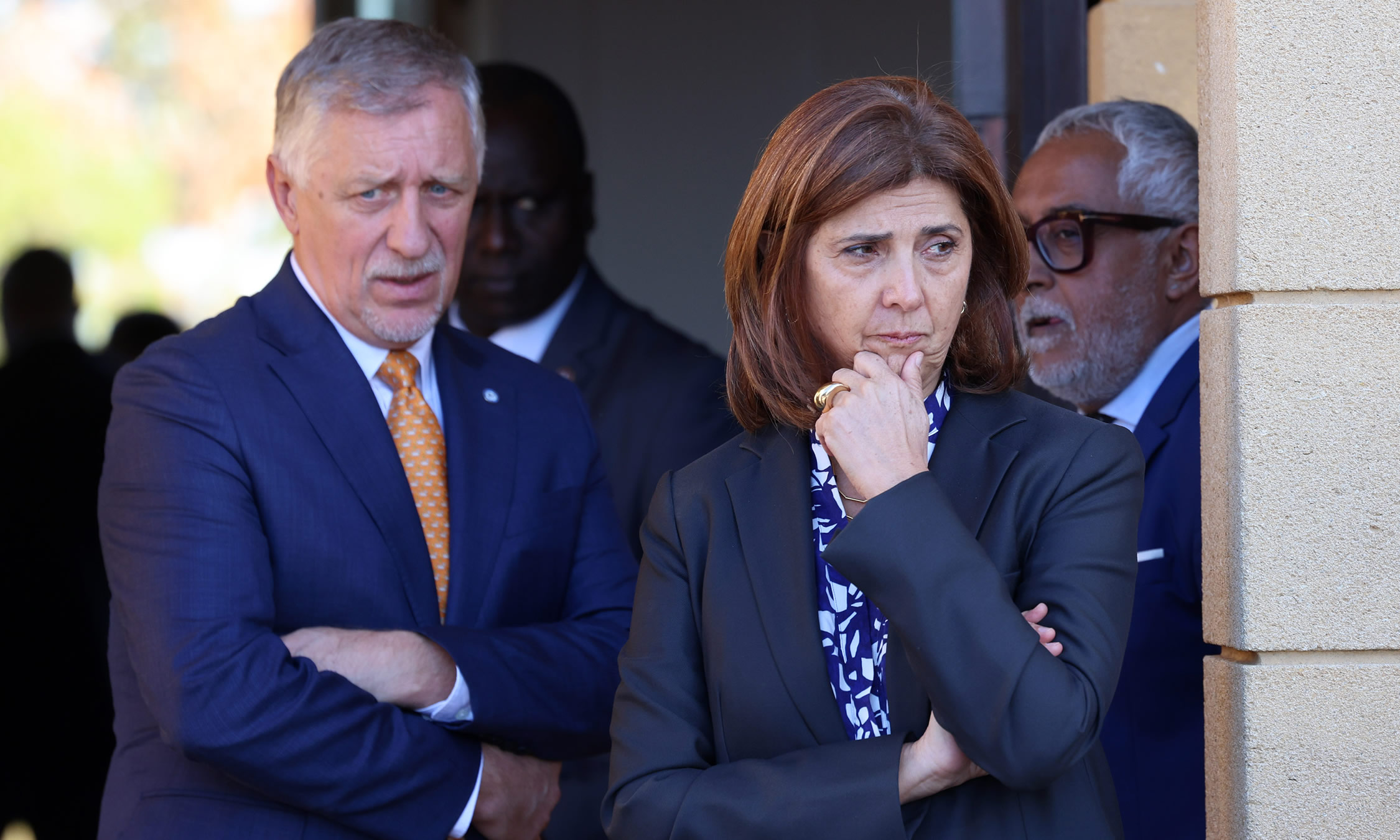
According to the UN statement, the two leaders also agreed to share archival material, through the Technical Committee on Cultural Heritage, and move ahead with environmental projects to be implemented by the Technical Committee on Environment. Politis understands these relate to mapping microplastics pollution across the island and providing information on air quality in a manner that is accessible to all.
Peace education makes surprise comeback
In a surprise move, the leaders agreed that the Imagine Project will recommence under the auspices of and as prescribed by the Technical Committee on Education. The peace education project was launched in 2016 by the Association for Historical Dialogue and Research (AHDR), engaging thousands of students and teachers from schools across Cyprus, winning awards and proving to be one of the most effective trust-building measures on the island.
In 2022, then Turkish Cypriot leader Ersin Tatar pulled out of the project, suspending bicommunal activities during school hours. His successor Tufan Erhürman and President Nikos Christodoulides on Monday jointly approved a return to the programme. The two also agreed to create a mechanism for a rapid response to emergencies and to proceed with the restoration of specific Maronite churches and an Armenian monastery.
Uncertain omens
When Turkish Foreign Minister Hakan Fidan made an impromptu visit to the north last Friday, speculation was rife as to whether this would help the process move forward or throw a spanner in the works. The same question was raised when Turkish President Recep Tayyip Erdoğan was quoted Monday morning saying Ankara continues to support a two-state solution, while noting that he does not see the non-solution as a solution. Meanwhile, Chief of the Turkish General Staff, General Selçuk Bayraktaroğlu, was also in the north on Monday, carrying out inspections of military units.
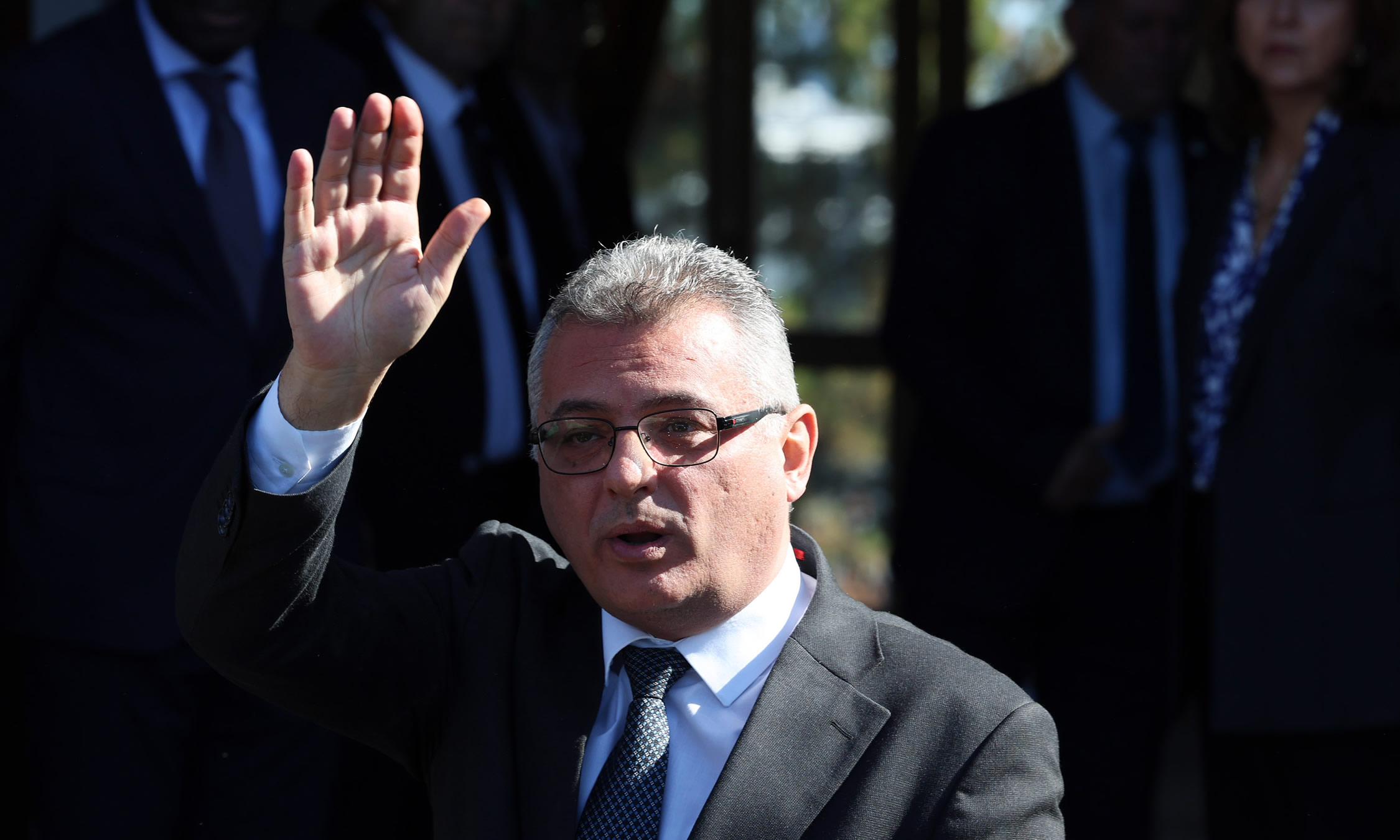
For his part, Erhürman surprised observers with an uncommon statement that he was going to the talks with a package of “bridge-building” proposals that also take into account the views of the Greek Cypriot side. He referred to a new proposal “that has the potential and significance to completely change the dynamics of the process and influence approaches”.
Christodoulides said he was going with “a very positive attitude” for concrete results, noting that the proposals under discussion were part of his package of 19 proposals submitted in September.
Just enough to keep flame alive
Despite their stated desires for concrete results, the leaders secured only two of the four anticipated crossing points and no demining. Considering Christodoulides could not convince Erhürman to hold a trilateral with Guterres in New York last September, the fact all three have agreed to meet again in the coming weeks could be interpreted as a step forward.
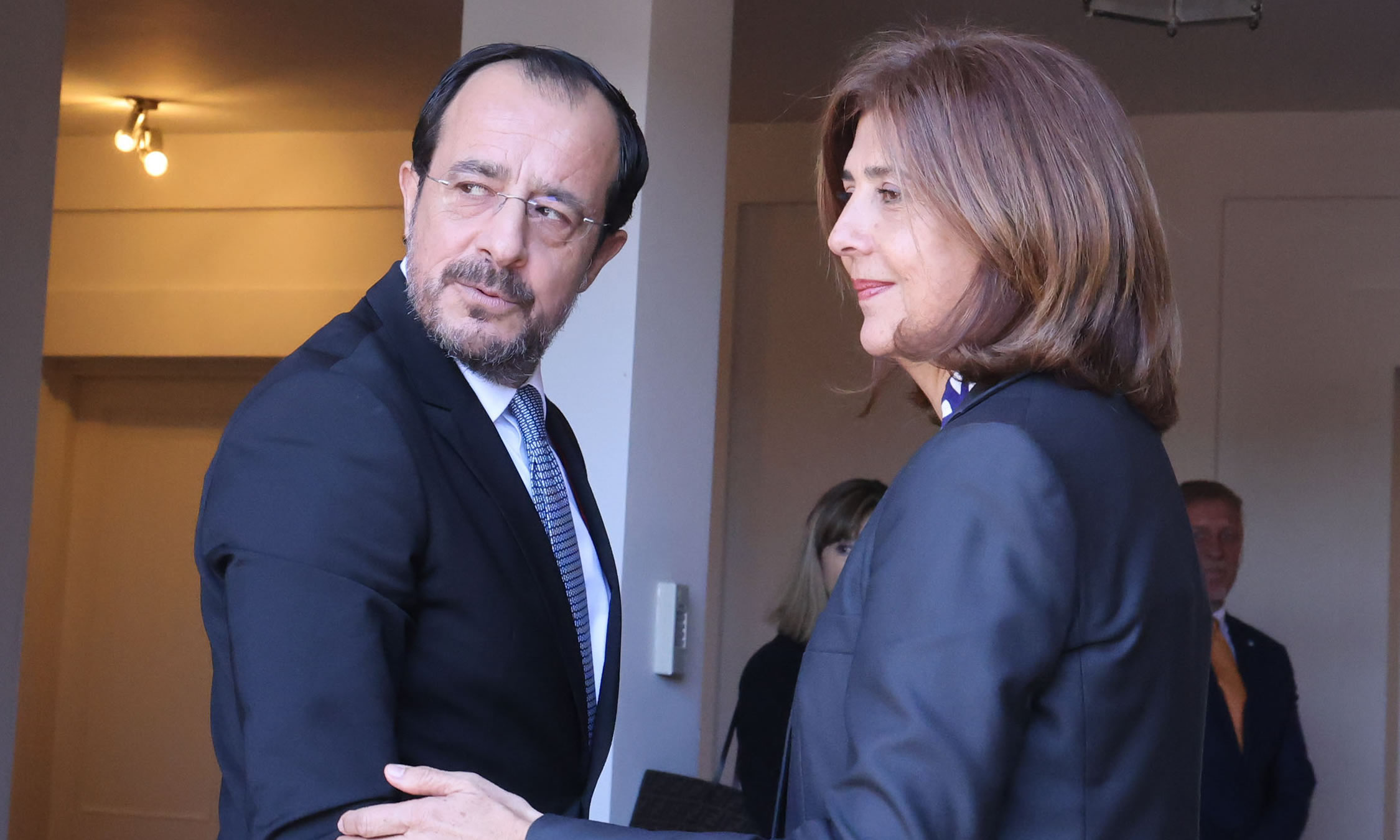
Speaking on his return, Christodoulides said the two sides made progress on other issues not announced, adding that discussions on CBMs, methodology and substance will continue with Guterres with the aim of announcing more results, and ultimately, the launch of formal negotiations. He clarified that discussions on a rotating presidency would be discussed at the negotiating table and not before.
The president said the meeting’s results could have been better and more extensive, noting that Fidan’s visit to the north last Friday “certainly influenced” developments.
Clearly in response to Holguín’s comment to Politis that she and Erhürman requested but did not receive his 19 proposals in writing, Christodoulides said he provided copies of the list to both.
On the Athienou-Pyroi-Aglandjia crossing, he said there was progress but no conclusion. Asked about Erhürman’s package of proposals, the president said the Turkish Cypriot leader came with one new proposal “which could not be accepted”.
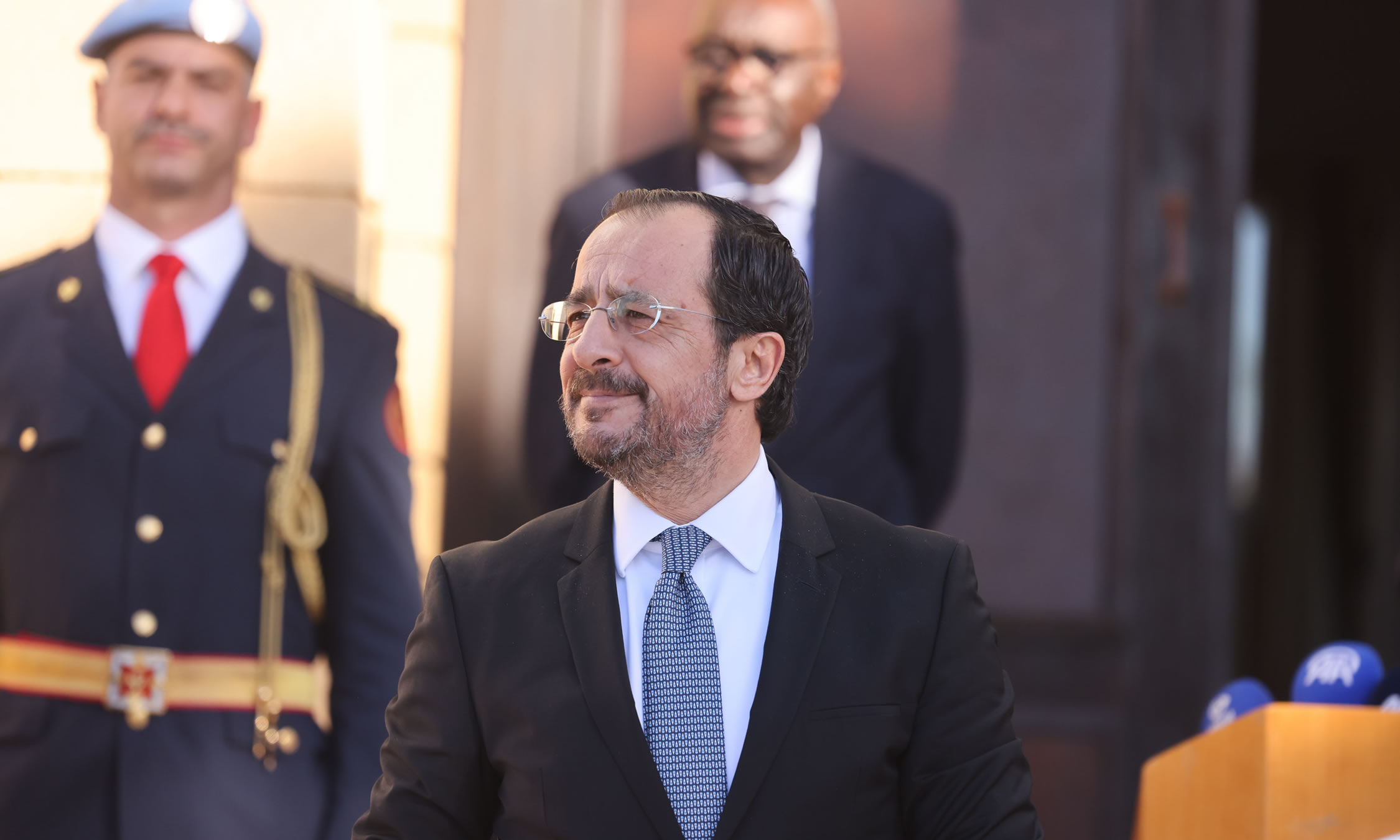
Asked if the Kampos-Karavostasi crossing was an alternative to Kokkina, he replied: “Kokkina remains on the table and remains among our 19 proposals.”
On demining, Christodoulides argued there was no discussion on demining at the trilateral meeting.
Erhürman adds Pyla to crossings package
In a press conference on his return, Erhürman also took credit for the measures agreed at the meeting. He said his proposals included a joint disaster response mechanism, a coordination mechanism for demining in the buffer zone, direct cooperation through a military mechanism, relaunching the Imagine project and opening all crossing points on the table in stages.
On crossing points, he said discussions would continue on Mia Milia and Athienou-Pyroi-Aglandjia. He highlighted that access to Pyla through the buffer zone would be part of a ‘package’ deal to be concluded. He argued that the Athienou route also includes buffer zone access, raising questions as to who would intervene in the event of an accident or criminal activity.
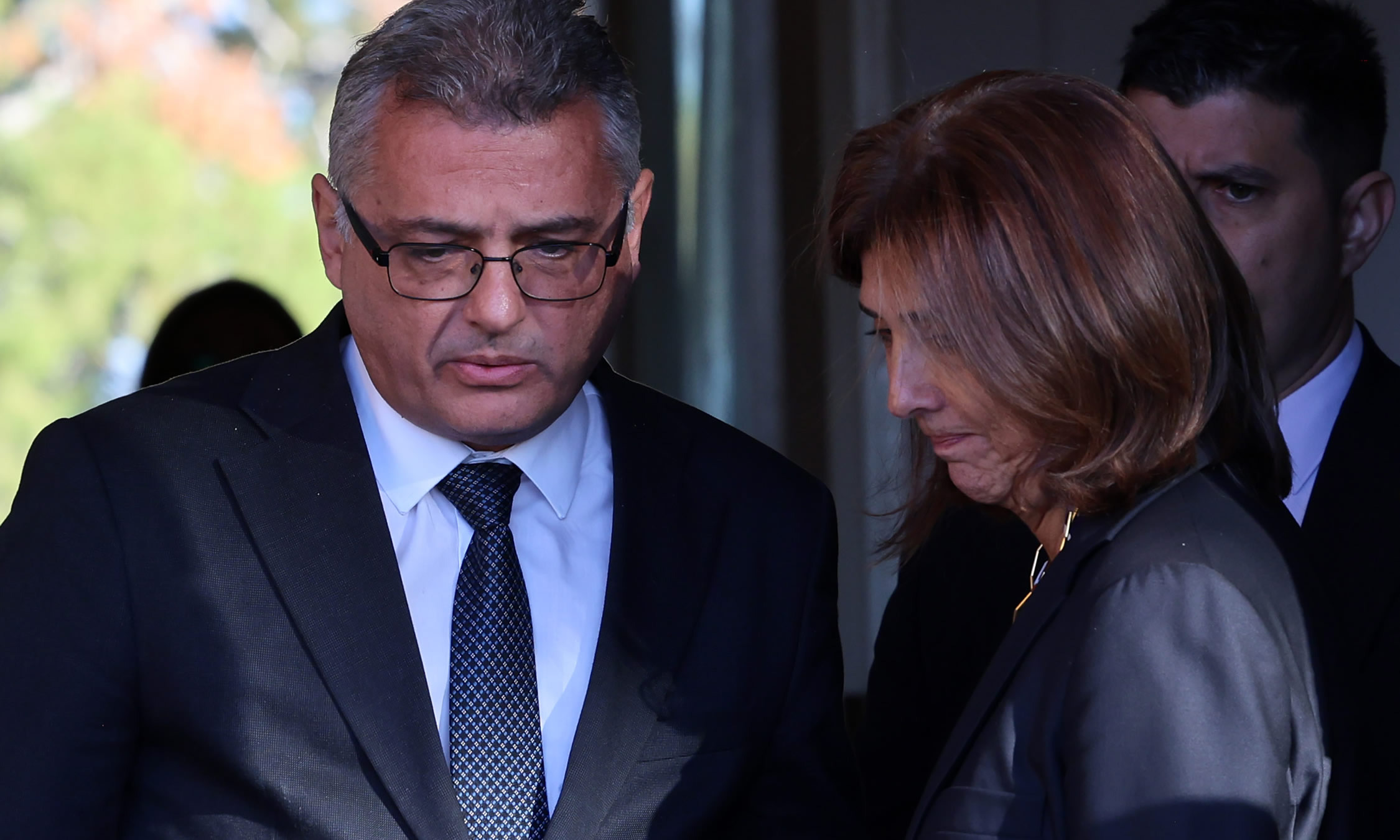
Regarding his new “game-changing” proposal made in consultation with Turkey, Erhürman said he wanted to give Christodoulides time to reflect on it and “give diplomacy a chance”. He argued it was more balanced and acceptable than the Greek Cypriot proposal on Varosha-Famagusta port.
On the peace effort, the question is whether Greek Cypriots are ready to share power and natural resources with the Turkish Cypriots, he said, adding, “What we have seen so far is that they are not.”
The two leaders now head off to Antalya for an international summit on climate change. Erhürman said Holguín explored the prospect of a trilateral with Guterres there, but Christodoulides replied that his stay in Antalya would be very brief.