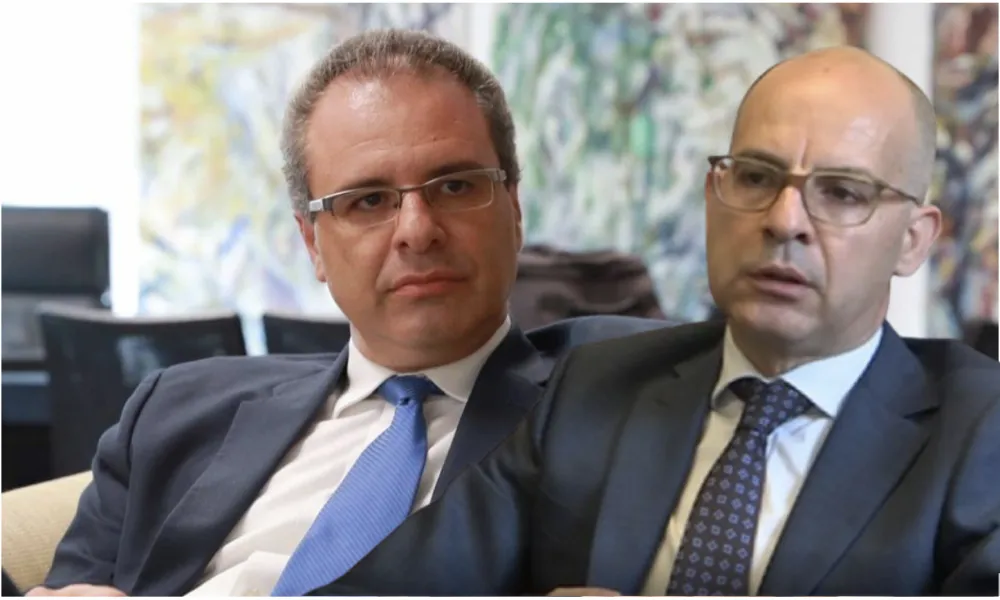

The two negotiators met on Monday to prepare for the last leaders’ meeting before both head to New York where they will brief the UN chief on any progress made in the last eight weeks.
The leaders will meet this Thursday for a third time since UN Secretary-General António Guterres left Cyprus in late July, after calling on the leaders to make progress on confidence-building measures (CBMs), methodology and issues of substance.
Both he and his Personal Envoy María Angela Holguín made it clear that convening a new 5+1 depended on progress in all three areas.
However, subsequent joint statements, or the lack thereof, and the mood music in general do not paint a promising picture.
It was thought perhaps Holguín’s arrival could help boost efforts for progress between President Nikos Christodoulides and Turkish Cypriot leader Tufan Erhürman, but her trip to Cyprus was cancelled due to illness, as was her planned meeting with Guterres in New York.
Envoy going to New York
According to Politis sources, Holguín will travel to UN headquarters next week, staying in New York from 22-28 September, during the high-level week of the UN General Assembly.
It is not yet clear whether she will meet with the two leaders separately or together or whether the UN chief will hold a trilateral with the leaders, as Christodoulides had suggested might happen.
One thing that’s clear is the need for the leaders to show signs of progress if Guterres is to call another meeting with the guarantor powers.
The two leaders have so far given different views on how close they are to moving forward. Christodoulides has suggested they agree on most aspects of methodology, while Erhürman has been more reserved in public, focusing instead on the erosion of trust between the two sides following the cancellation of a series of cultural and sporting events in the north.
Convergences document
Meanwhile, the UN is still preparing a document on past convergences between the two sides. When complete, this will help clarify to what degree the sides had reached common positions on different issues in the past. Whether the sides adopt those positions moving forward is another matter and depends on how they choose to proceed. The convergences document does not represent the negotiating acquis and will not necessarily clarify the methodology that needs to be agreed in advance.
The negotiations have always been governed by the principle, ‘nothing is agreed until everything is agreed’. This was meant to free up the sides to negotiate more freely without knowing the final shape that each issue or chapter would take. It also meant, after every failed peace effort, and every new electoral cycle, that the sides would once again have to agree on the point from which they wish to resume negotiations, with what goal and how.
Indicative of the challenge is the many months it took former leaders Nikos Anastasaides and Derviş Eroğlu to agree on how to resume negotiations – ultimately leading to the Joint Declaration of 11 February 2014.