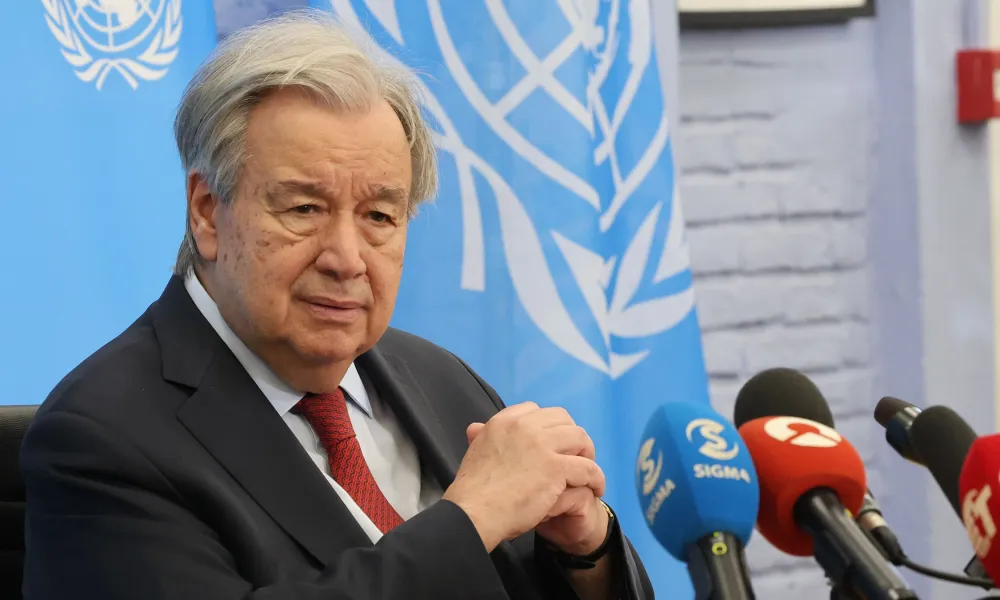

UN Secretary-General António Guterres concluded his visit to Cyprus on Wednesday with a call to the sides to make “adequate preparations” before he convenes another 5+1 meeting.
Following the one-hour trilateral with the two leaders at the old Nicosia airport, no date was set for a new expanded meeting, no joint statement was read out, and no confidence-building measures (CBMs) were announced.
On their return to either side of the divided capital, both leaders showed a rare unity in identifying positives from the UN chief’s visit. Turkey issued a statement noting there is no common ground for a solution while Greece said it encouraged every effort aimed at building confidence as an essential prerequisite for resuming talks.
No more meetings without results
Speaking to the press after his trilateral with President Nikos Christodoulides and Turkish Cypriot leader Tufan Erhürman, Guterres said he has decided to convene another 5+1 meeting, “after adequate preparations on confidence building, methodology and substance, taking into account the convergences already achieved”.
The UN chief did not clarify, however, whether this meant all sides were in agreement on the definition and scope of past convergences.
Asked to elaborate, he said the two sides in Cyprus and three guarantor powers have agreed to move to a 5+1 “but with adequate preparation”. He stressed that he did not want to continue with meetings that do not produce outcomes.
“I don't want to have more 5+1 meetings without results. I want a successful 5+1 meeting in order to pave the way for a solution to be achieved.”
He ruled out meetings on Cyprus during the UN General Assembly in September, saying the UN will concentrate its efforts on working with the two sides and guarantor powers “to be able to move decisively into a solution”.
A decade of trying
Guterres highlighted that since he took on the job of Secretary-General, he has acted in line with UN parameters to assist Greek Cypriots and Turkish Cypriots to reach a comprehensive, sustainable solution to the Cyprus issue.
He proceeded to list his efforts, starting with the Conference on Cyprus in Geneva and then Crans Montana in 2017, the trilateral in Berlin in 2019, and then the three 5+1 meetings held in Geneva and New York from 2021 to 2025.
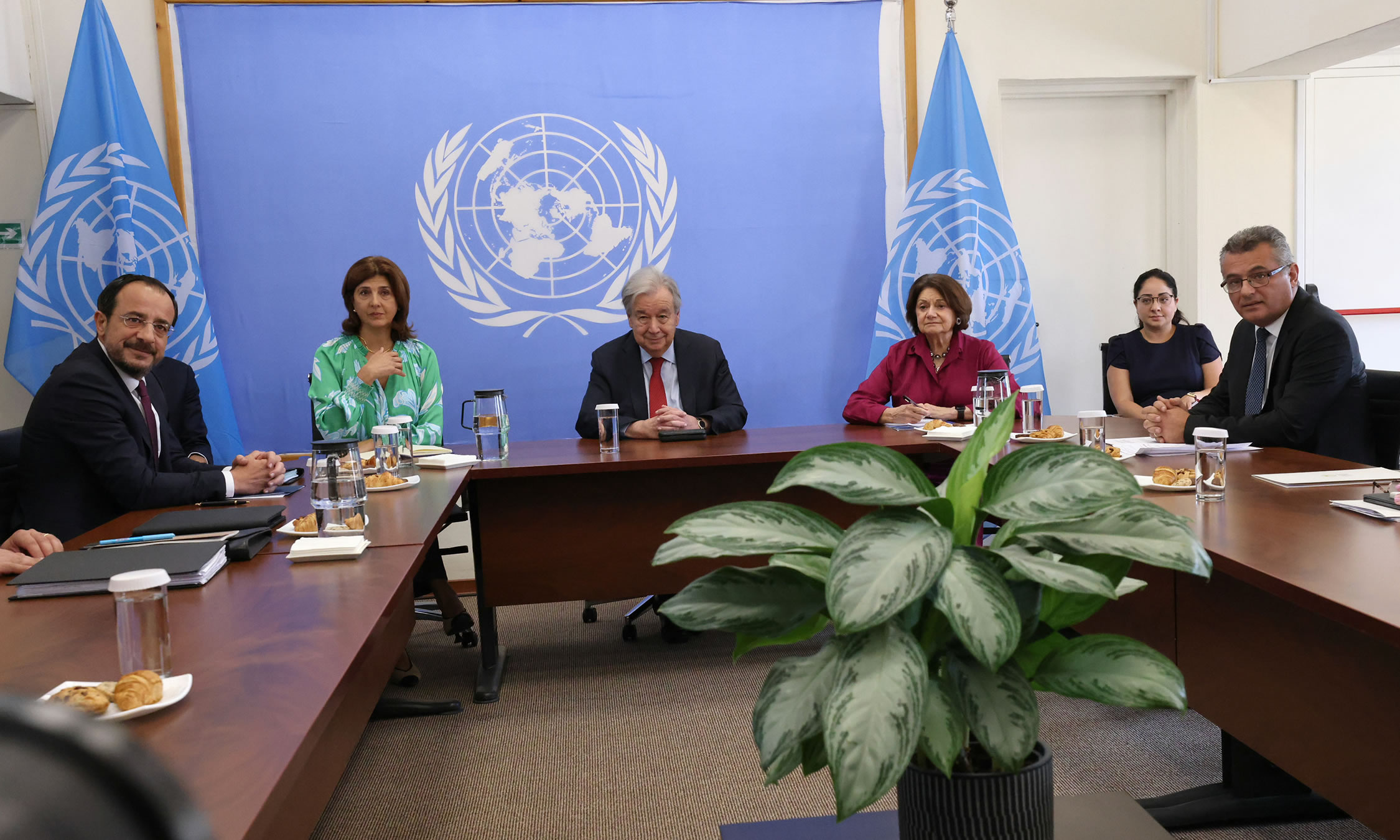
“This is the moment when all efforts must be made to rebuild trust. To that end, it is essential to redouble efforts to define and implement confidence-building measures that can make a difference in the daily lives of all Cypriots. I appeal to the two leaders to intensify these efforts,” said Guterres.
He added that the international community also has an important role to play on the Cyprus issue. “In particular, I count on the continued support of the three guarantors – Greece, Türkiye, and the United Kingdom.”
On his interactions with Cypriots while on island, the UN chief said their message was clear. “They want progress. They want to see their leaders make compromises and to walk that last mile towards a settlement of the Cyprus issue.
“They want a future in which this island is defined not by division, but by cooperation, opportunity, and peace,” he added.
Regional volatility
Guterres conveyed the UN’s full commitment “to supporting the people of Cyprus in this crucial moment for the island and the wider region”.
Asked how a solution could impact the region, the UNSG highlighted the important geopolitical developments taking place, where conflicts continue without end and even expand. A Cyprus solution “is absolutely crucial not only to preserve the interests and the peace of the Cyprus people but also as a factor of stability in what is becoming a dangerously unstable region,” he said.
Christodoulides on the positives
On his return from the trilateral, President Christodoulides described as “positive” the fact that issues of substance were discussed and that “everyone has accepted the convening of an expanded conference,” which wasn’t the case before.
He listed two further important outcomes from the UNSG’s visit. First, Guterres is fully committed to working within the framework of UN Security Council resolutions. Second, he is also committed to the body of work achieved in the negotiations up until Crans-Montana.
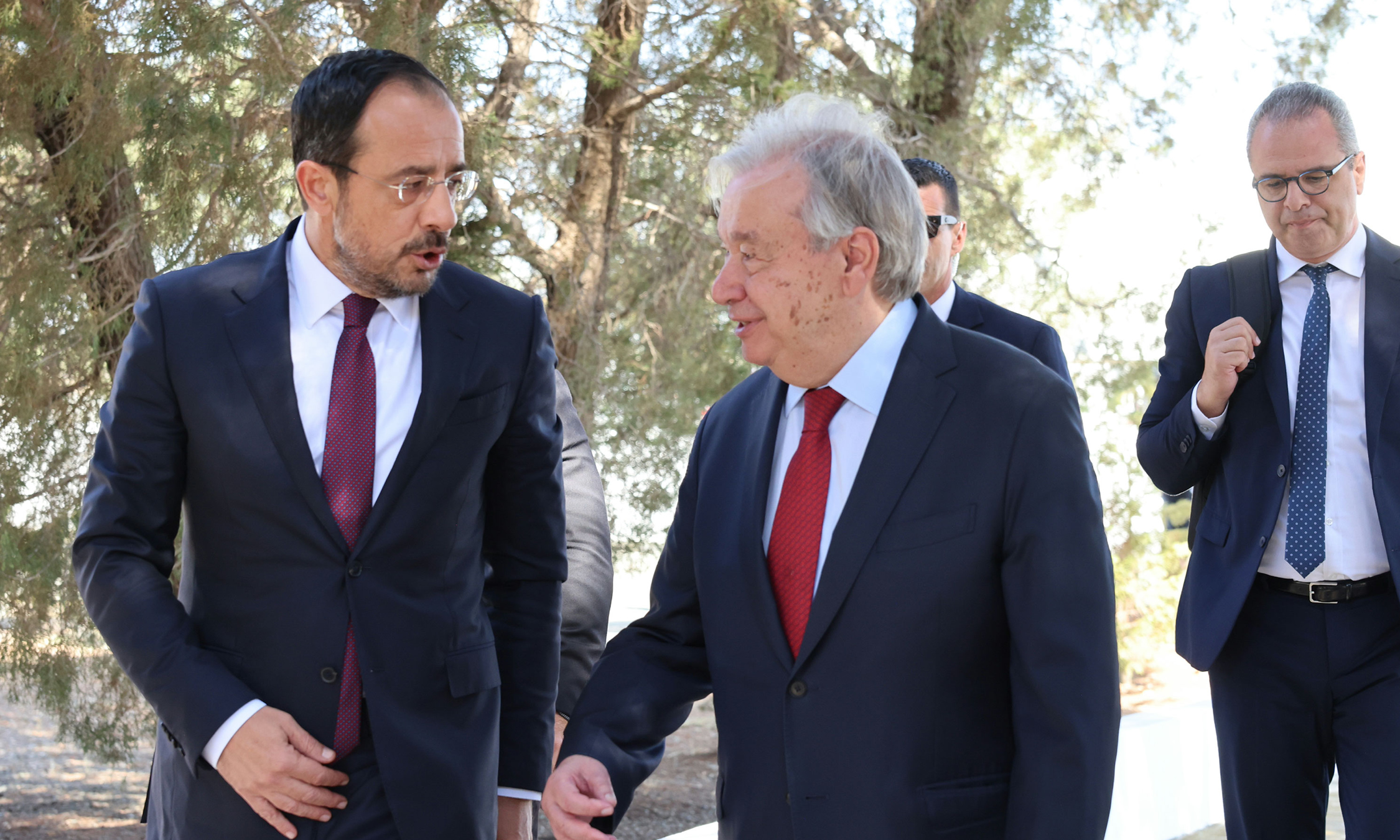
Asked what’s changed in essence, Christodoulides replied, the difference is certain things have now been clarified. First, the use of the negotiating acquis up to and including Crans-Montana, which was previously under dispute. And second, the willingness of the EU to play an enhanced role, both on issues of substance and regarding EU-Turkey relations. On the former, the EU is prepared to establish a legal team to support EU Special Representative Raffaele Fitto on areas where there are divergences in the talks, he said.
Fitto, meanwhile, is due to arrive in Cyprus for separate meetings with both leaders on Friday.
Christodoulides pointed to a further clarification achieved on the intended objective of the current effort, saying this was also previously under dispute. The focus now will be on preparing the ground to go to a 5+1 to discuss the resumption of talks from where they were interrupted at Crans-Montana.
Asked if he was concerned about the reference to methodology, the president said it was important for all sides to have a common understanding of where the negotiations will start from.
On CBMs, Christodoulides said progress would be positive, but this was not a prerequisite for convening an expanded conference.
Erhürman also sees glass half full
For his part, Erhürman told reporters he was “more hopeful” now than before Guterres’ visit. He noted that a clear road map was produced that could lead to a renewed process, while the idea of attending a 5+1 “empty-handed” was no longer an option.
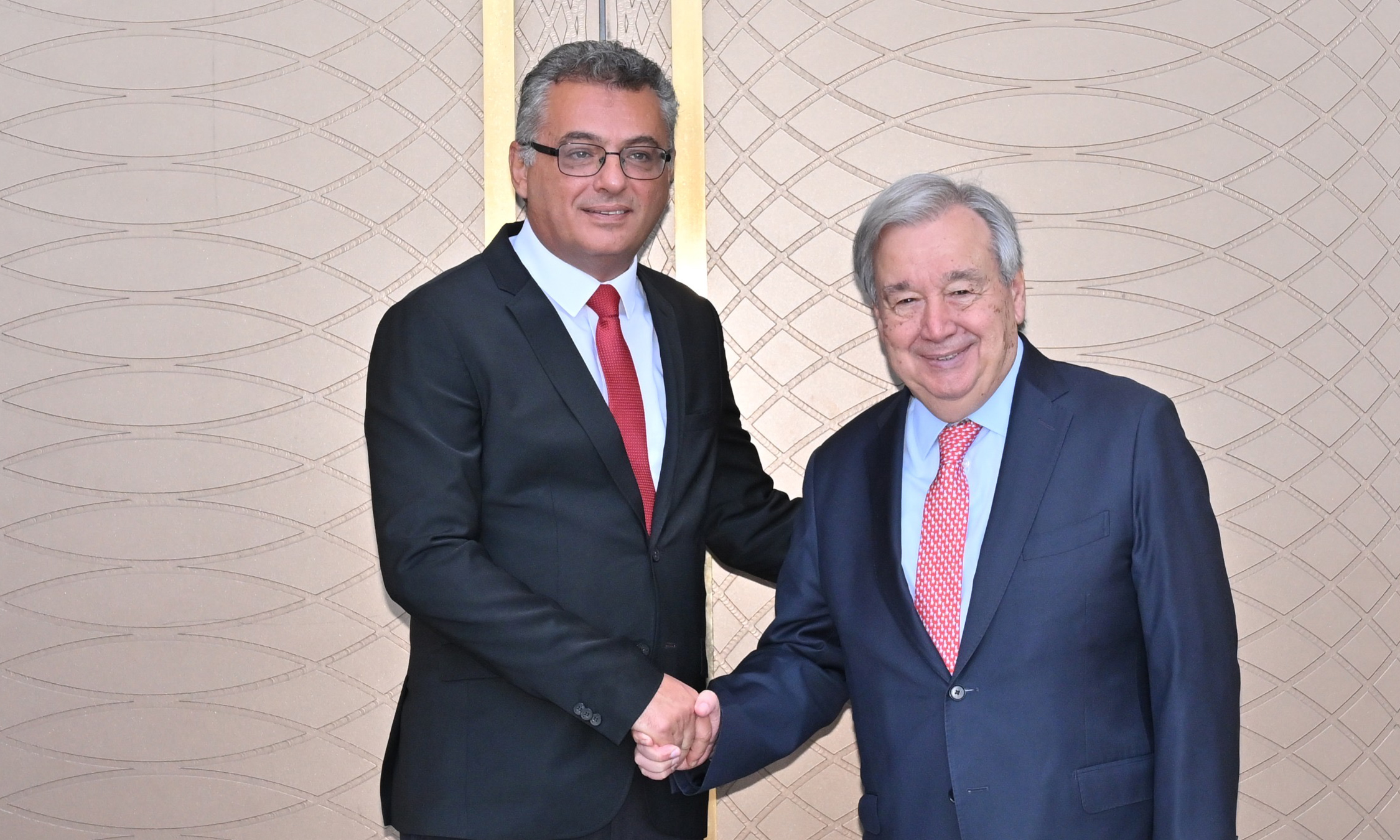
The Turkish Cypriot leader reiterated that CBMs should be implemented before formal talks are launched and welcomed Guterres’ emphasis on both CBMs and on adopting a new methodology before convening another 5+1. He noted that the EU could not participate in such a meeting.
Erhürman said he raised the issue of steps which undermine trust, including the recent questioning by the Cyprus police of a Turkish Cypriot businessman in connection with a property-related investigation. He warned that it was “not impossible” for Greek Cypriots living in or using Turkish Cypriot properties to be treated similarly in the north. Such developments discourage people from crossing, he added.
The guarantors bar one
The Turkish Foreign Ministry welcomed the USNG’s efforts, noting that while “there is still no common ground for a settlement”, a focus on cooperation and trust building was needed. The ministry noted that a solution was not possible so long as Greek Cypriots remain intransigent and act in a way that “also adversely impacts regional security”.
The Greek Foreign Ministry welcomed the announcement “of an informal expanded meeting aimed at restarting negotiations, based on the agreed framework” and under UN auspices. It added that Greece “remains ready to contribute constructively to a successful informal meeting, encouraging every effort and initiative aimed at building confidence, as an essential prerequisite for the resumption of negotiations”.
Now, it remains to be seen what constitutes “adequate preparations”, whether the sides can meet those milestones to unlock a 5+1 before Guterres departs, and how far they are all willing to go from there.