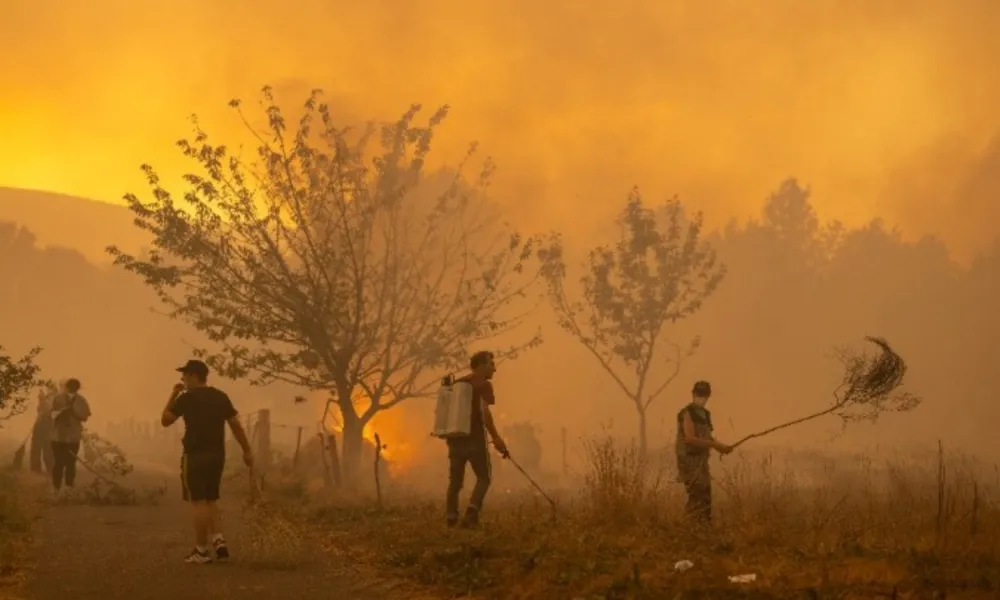
On that day, as Turkey invaded the island and the Turkish air force bombed front lines, populated areas and critical infrastructure, five days after the coup, fire had already spread through the valleys of Xeros, Kampos and Limnitis, reaching as far as Irka Sterazia, just short of the Valley of the Cedars.
The family separated
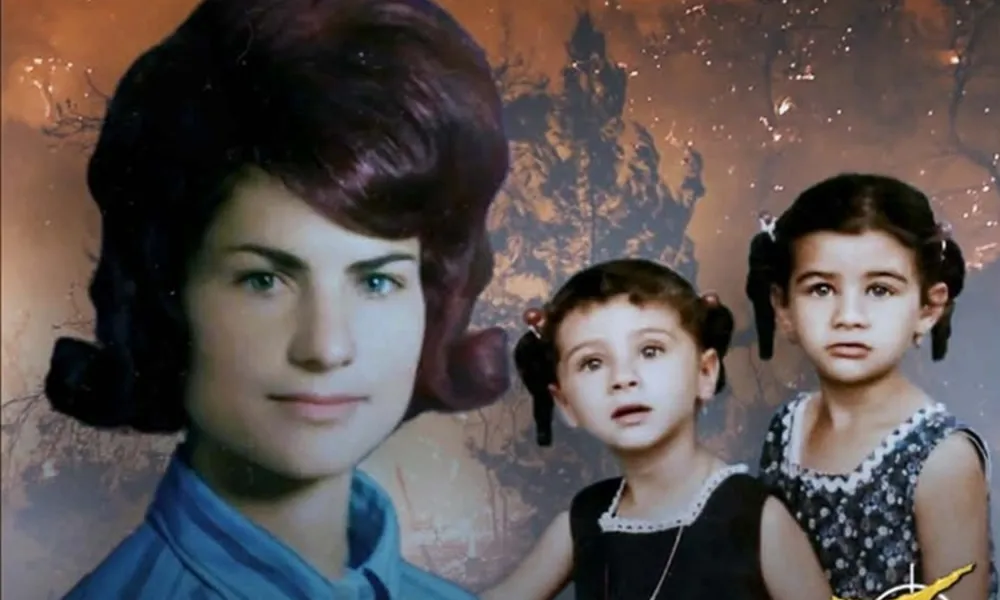
On 20 July 1974, the Vasiliou family lived in Potamos tou Kampou, a seaside village west of Morphou. Takis and Tasoula Vasiliou were both 25. Their daughters were Maria, five, and Lambidona, four. Takis had gone to the front. Tasoula gathered her own children, along with two children of her sister, for whom she was responsible while the parents worked as migrants in England, and climbed onto a truck with other villagers to look for safety. At the time, it was common for the children of migrant parents to be raised near relatives in Cyprus.
Since the early 1960s, residents of the area had lived with the fear of a possible Turkish landing. So when that day dawned, many decided to leave their homes temporarily and head for Kampos, in the mountains, believing they would be safer there from bombing or landing operations. About thirty women and children climbed aboard a single truck. The men had already been mobilised and were at their combat positions. The scene that day was typical of the time. People in the villages trusted one another. Unaccompanied children climbed onto trucks alongside fellow villagers, women looked after the children of relatives and neighbours, and everyone felt the threat of war closing in.
The fire
As the truck climbed toward Kampos, its passengers found themselves confronted by the fire front of the large forest blaze consuming the area, which reduced a significant part of the Paphos Forest to ash. The driver, a man from the neighbouring village of Tsakistra, stopped at a bend to assess the situation. According to witness accounts, other vehicles had already passed through the same point. The danger came less from the flames themselves than from the extremely hot air currents the fire was generating. He initially considered continuing on, but eventually judged it safer to turn back. The road was narrow and turning around was difficult. Some passengers managed to get down from the truck and set off on foot toward their destination.
At the roadside
Tasoula's nephew, about seven years old, got down from the truck and began walking, drawing away from the rest of the group. The other baby was asleep and was being held by fellow villagers on the truck when Tasoula, with her two daughters, got down so as not to leave her sister's son, for whom she was responsible, on his own. She was later found at the roadside, lying face down over her girls, her scorched arms covering her babies. The fire had generated a powerful wave of superheated air. The three of them are believed to have suffocated from lack of oxygen, collapsing after inhaling the scorching air.
Burial
After the three victims were found, the authorities were notified. Police handled their transfer to Pedoulas, where a government doctor confirmed their deaths. From that point, their trail is lost. Witnesses recalled the funeral of a young woman with two small children at the Pedoulas cemetery, held without the presence of a husband, parents or other relatives. Some even pointed, approximately, to the burial site.
Efforts to locate them
From 2014 onward, efforts were made to locate the remains of Tasoula, Maria and Lambidona. With the cooperation of the then head of the Committee on Missing Persons, Xenophon Kallis, the then Presidential Commissioner, Fotis Fotiou, the police, the Pedoulas community and others, excavations were carried out at the sites identified by witnesses. During the searches, human bones were found and submitted for scientific examination and DNA analysis, though the results did not confirm they belonged to the mother and, or, either of her two children. It is possible that remains were moved during work to extend or redevelop the cemetery, or that after so many years, memory has become unreliable about the exact location of the burial.
A debt owed to the living
Tasoula Vasiliou, Maria and Lambidona are recorded on the official list of those who fell during the Turkish invasion. Yet their case remains singular. Although it is known how they died and where they were buried, the location of their final resting place remains unknown. For the family, what is sought is simply the fulfilment of a human duty, that the remains of the mother and her two children be located, identified, and given a grave bearing a cross and their names.
Investigations
The story was told on Politis 107.6 and 97.6's Proini Episkopisi (Morning Review) by Kyriakos Kofteros, a friend of the family who was a schoolboy at the time and who never stopped gathering information about what happened. There are stories from the 1974 Turkish invasion that remain less well known, not because they are any less tragic, but because they were lost in the turmoil of events. One of these concerns Anastasia (Tasoula) Vasiliou and her two young daughters, Maria, five, and Lambidona, four. They were not killed by bullets or by bombing. They lost their lives on 20 July 1974, the first day of the Turkish invasion, trapped in the devastating forest fire caused by Turkish bombing as they tried to escape the war.
Fifty-two years later, the family is still searching for its loved ones. The story has resurfaced through the testimony of Kyriakos Kofteros, who has gathered evidence on the case and is working, together with the family, to launch a new effort to locate the remains of the mother and her two children.
To the Presidential Commissioner
Kyriakos Kofteros does not rule out the possibility that the actual burial site lies just a few metres from the point of the earlier excavation. He and the family are ready to brief the new Presidential Commissioner for Humanitarian Affairs, Marios Chartsiotis, so that a further, coordinated effort can be made to locate the three victims of the war, once witness testimony has been reviewed and the evidence reassessed.
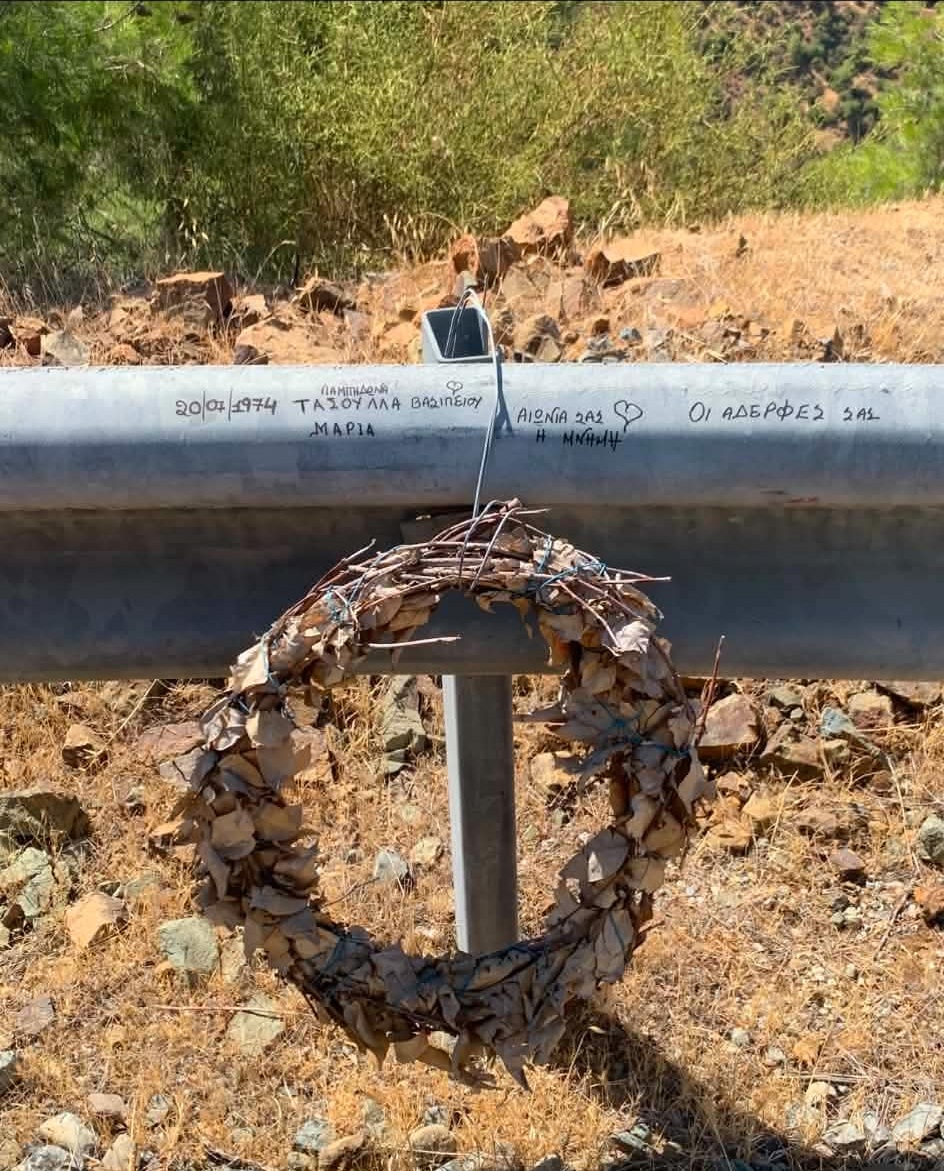
An open wound
Takis Vasiliou remarried and had two daughters. In the home he rebuilt, he did not speak of the first family he had lost in the fire of war, so as not to burden them with his own grief. Some nights, they would hear him weeping. His sorrow was that he did not know exactly where his first wife and daughters were buried.
He had wished for them to be moved to Nicosia, where Tasoula's parents, the children's grandparents, are buried, so that there would be a known grave where they could be honoured. He did not live to fulfil that wish. He died without keeping his vow, without saying goodbye to his own people the way he felt they deserved.
But at night...
This tragic story has been told before. It has been retold. But the wound remains open. The family and their friends will not rest until the remains of Tasoula, Maria and Lambidona are found. Until there is a grave for them. An oil lamp lit, a memorial service once a year at the burial site, so that the soul of Takis Vasiliou can finally rest, the man who never spoke to his second family about the tragedy of his life, but whom they would hear, on some nights, weeping.
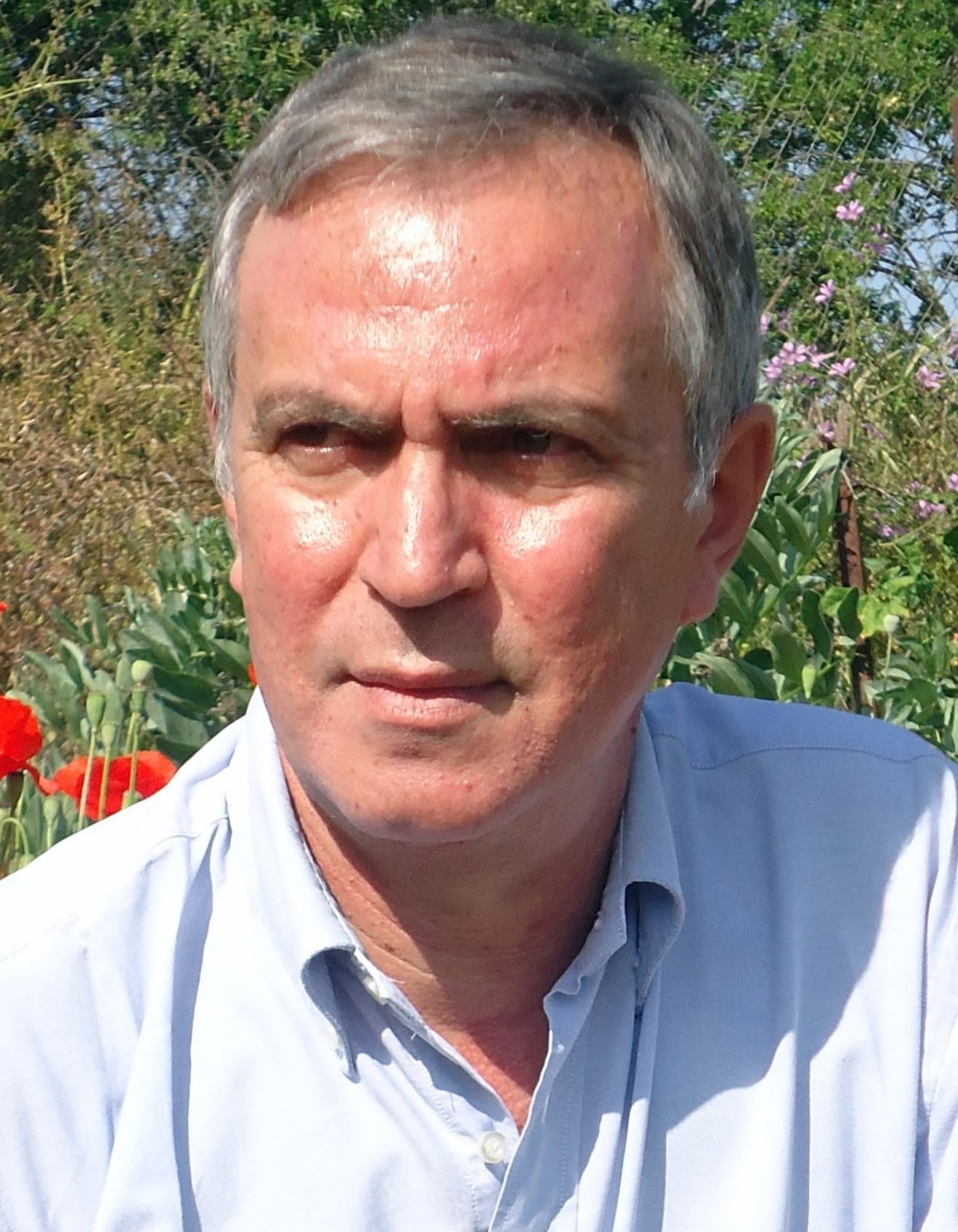
Kyriakos Kofteros is gathering evidence on the Vasiliou family's tragic story and trying to locate the burial site of the three victims of the Turkish invasion.