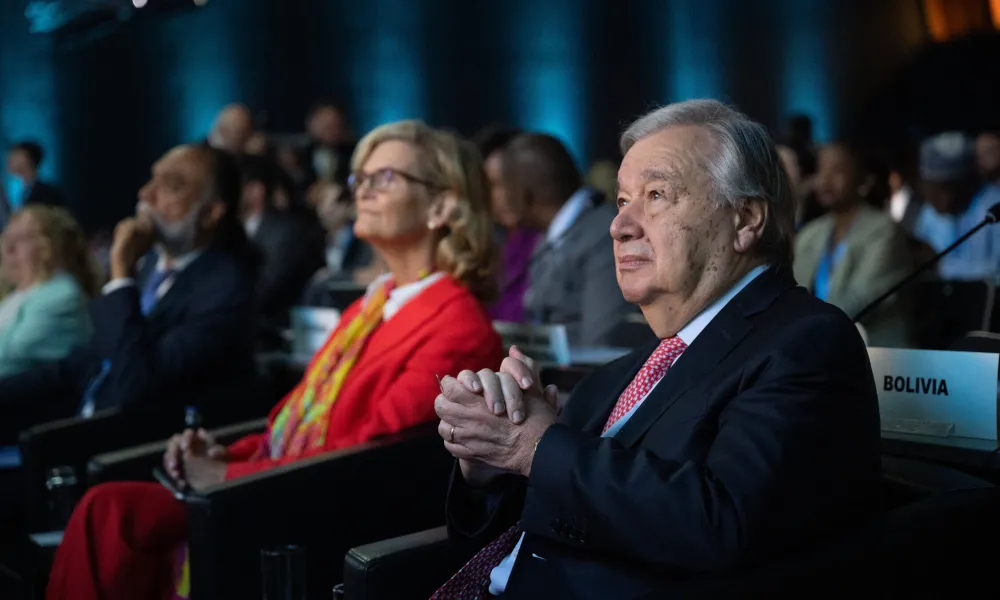



When António Guterres arrives in Cyprus on the evening of July 27, he will carry more than the authority of the United Nations Secretary-General. He will also carry the accumulated burden of six decades of frustrated mediation, failed summitry, abandoned maps, rejected plans and communiqués whose carefully balanced language could not survive contact with political reality.
Cyprus has long been described as a cemetery of diplomats. The phrase is harsh, but understandable. U Thant established the UN presence in 1964 and appointed Galo Plaza, whose mediation report followed in 1965. Yet the pre-1974 record also contains a largely forgotten reminder that diplomacy sometimes came close to success before being destroyed by forces outside the negotiating room.
According to the memoirs of constitutional expert Michalis Dekleris and Glafcos Clerides, as well as later scholarly accounts, Dekleris and Turkish constitutional expert Orhan Aldıkaçtı completed a draft agreement on July 13, 1974, after years of expanded intercommunal negotiations. The proposal would have preserved Cyprus as a unitary state with a single sovereignty and territorial integrity while granting substantial Turkish Cypriot communal and local autonomy in education, municipal affairs and other lower-level competences.
Clerides and Rauf Denktaş were expected to initial or formally approve the agreement on Tuesday, July 16. The Greek military junta’s coup against Archbishop Makarios on July 15, carried out through Greek officers in the National Guard and EOKA-B, installed Nikos Sampson as president and aborted the meeting. On July 20, Turkiye intervened under the 1960 Treaty of Guarantee.
It was one of the conflict’s cruellest near misses. Diplomacy was not defeated at the table. It was overtaken on the eve of agreement by a coup and then war. After 1974, the negotiating basis shifted from a unitary state with communal autonomy towards the bizonal, bicommunal federal model.
Kurt Waldheim helped secure the 1977 and 1979 High-Level Agreements that established federation as the agreed horizon. Javier Pérez de Cuéllar developed successive working papers and draft frameworks between 1984 and 1986. In 1992, Boutros Boutros-Ghali presented his 100-point Set of Ideas together with an indicative territorial map. The two sides reportedly agreed on 93 points, while Denktaş was, for roughly 24 hours, persuaded to accept the territorial concept known as “29 percent plus.” Yet the remaining disputes over territory, sovereignty, displaced persons and political equality were enough to sink the entire package.
Kofi Annan’s contribution cannot be reduced to one plan or one referendum. Between 1999 and 2004, his good-offices mission moved the Cyprus process from proximity talks to direct negotiations and then produced the most comprehensive settlement ever prepared under UN auspices.
Developed through five successive versions, the Annan Plan addressed the structure of a new partnership state, political equality, rotating executive arrangements, territorial adjustment, property, displaced persons, security, guarantees, troop reductions, European Union membership and transitional implementation. The final version was submitted to separate simultaneous referendums on April 24, 2004. It was approved by 64.9 percent of Turkish Cypriot voters but rejected by 75.8 percent of Greek Cypriots.
Cyprus entered the European Union a week later without a settlement. The outcome left Turkish Cypriots with a lasting grievance: their affirmative vote had changed neither their international status nor the suspension of the effective application of EU law in the north.
Ban Ki-moon subsequently promoted a more explicitly Cypriot-led and Cypriot-owned process. Beginning in 2008, the negotiations between Demetris Christofias and Mehmet Ali Talat, facilitated by Alexander Downer, produced substantial convergences on governance, power-sharing, sovereignty, citizenship and EU affairs.
The February 11, 2014 Joint Declaration reaffirmed a bizonal, bicommunal federation with political equality, a single sovereignty, a single international personality and a single citizenship. Ban’s tenure also prepared the ground for the intensified negotiations between Nicos Anastasiades and Mustafa Akıncı in 2015 and 2016.
Yet the Cypriot-owned approach exposed its own weakness. It reduced accusations of UN imposition, but provided no reliable mechanism for converting accumulated convergences into a final bargain.
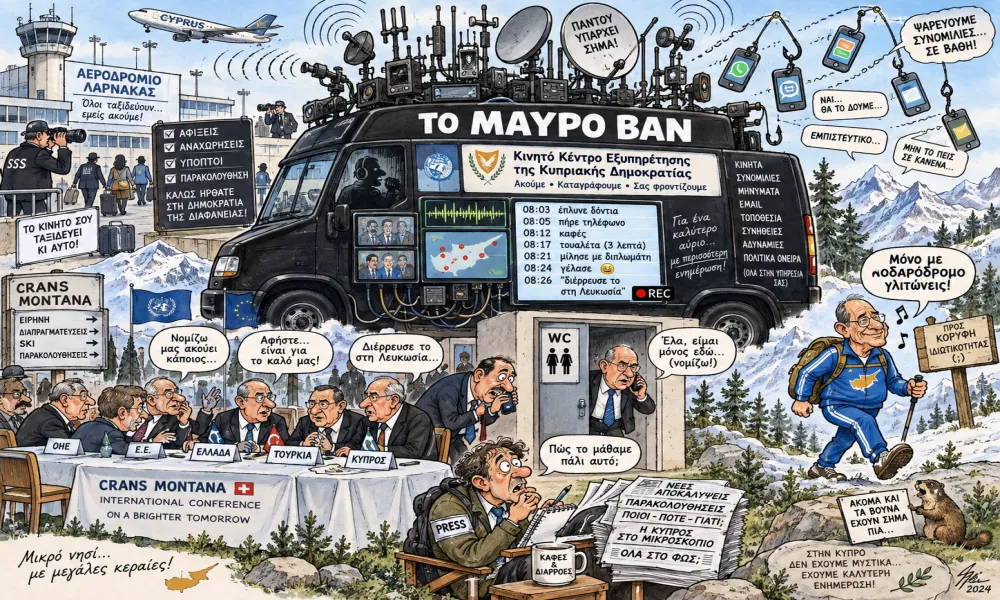
Guterres personally presided over the Conference on Cyprus at Crans-Montana in 2017, which collapsed without agreement. The Secretary-General’s good offices have nevertheless preserved a negotiating framework and a substantial body of convergences, while UNFICYP, present since 1964, has contained the conflict and prevented political failure from returning the island to large-scale violence.
Each Secretary-General left something useful behind. None left behind a settlement.
Not another ceremonial visit
Guterres will visit Cyprus from July 27 to 29, the first trip by a serving UN Secretary-General since Ban Ki-moon travelled to the island in 2010. His concentrated programme includes separate meetings with Greek Cypriot leader Nikos Christodoulides and Turkish Cypriot leader Tufan Erhürman, contacts with their negotiators, bicommunal technical committees and civil society, a private dinner with both leaders and a joint meeting followed by his press conference.
Under-Secretaries-General Rosemary DiCarlo and Jean-Pierre Lacroix and Personal Envoy María Ángela Holguín Cuéllar are expected to accompany him.
The programme is designed to test several layers of the problem at once. Separate meetings will allow each leader to explain his red lines without public theatre. The dinner will test personal chemistry. The joint session will test whether the two sides can agree on a common methodology.
The decisive moment, however, will come when Guterres faces the press on July 29 and explains whether sufficient common ground exists for an enlarged meeting involving the two sides, Greece, Turkiye and the United Kingdom, or whether Cyprus is returning once again to the diplomatic waiting room.
Guterres is nearing the end of his term. His decision to travel personally, rather than send Holguín on another round of shuttle diplomacy, indicates that he considers the opening significant enough to invest his remaining political authority. It also makes failure more consequential.
The preparatory diplomacy has been unusually intensive. Before travelling to Ankara, Holguín held a telephone conversation with European Council President António Costa and met separately in Brussels with European Commission President Ursula von der Leyen and Executive Vice-President Raffaele Fitto, the Commission’s special representative on the Cyprus problem.
Von der Leyen reportedly assured Holguín that the Commission would support efforts towards a Cyprus settlement, while the discussions with Fitto underlined the increasingly visible coordination between the United Nations and the European Union. Holguín then travelled to Ankara for talks with Foreign Minister Hakan Fidan before continuing to Cyprus, where she was expected to meet Erhürman ahead of Guterres’ arrival.
Christodoulides, meanwhile, convened his advisory National Council on Friday before travelling to Athens on Saturday to exchange views and coordinate positions with Greek Prime Minister Kyriakos Mitsotakis. Meeting at the Maximos Mansion, Mitsotakis pointed to rising tensions across the wider region and argued that they make close coordination between Athens and Nicosia more essential than ever. He called Guterres' visit, the first by a UN secretary-general to the island in nearly two decades, a meaningful chance to restart the process, pledged continued Greek backing for Christodoulides' initiatives, and stressed that any resumption of talks must stay strictly within the framework of UN Security Council resolutions.
Christodoulides, for his part, described the present period as especially critical both regionally and on the Cyprus question, and said Nicosia's strategy had helped raise international engagement, visible in both Guterres' trip and the deepening EU role, including the Commission's appointment of an executive vice-president to the file. His stated aim for the visit is a substantive outcome that allows negotiations to resume from where they broke off at Crans-Montana in 2017, within the UN framework and EU law. Following those talks, he was also expected to meet Fitto and Holguín.
The sequence was not accidental. Brussels, Ankara, Athens and the two Cypriot leaderships were all being consulted immediately before Guterres’ arrival. The visit is therefore the culmination of a concentrated diplomatic effort rather than an isolated act of UN ceremony.
Why now?
The immediate opening was created by Erhürman’s election in October 2025. His victory replaced Ersin Tatar’s insistence that formal negotiations could begin only after recognition of sovereign equality and equal international status with a more process-oriented Turkish Cypriot approach.
Erhürman has not abandoned Turkish Cypriot demands for equality or security. He has, however, reopened the possibility of building on previous federal convergences rather than requiring the UN to begin from an entirely new settlement model.
His four-point methodology calls for political equality and effective participation, preservation of previous convergences, a time-bound process and protection against another failed negotiation simply returning Turkish Cypriots to the same unequal status quo.
His phrase, “negotiations for a solution, not negotiations for negotiations,” addresses the central question that damaged confidence after both the Annan Plan and Crans-Montana: what happens when one side acquires the diplomatic benefits of engagement but avoids the final compromise?
Erhürman has also stressed that trust must be restored before formal negotiations can produce results. This does not mean postponing the search for a comprehensive settlement indefinitely. It means demonstrating through reciprocal action that agreements can be implemented, commitments honoured and the accumulated asymmetries of the status quo addressed.
Christodoulides says he wants an enlarged conference that would announce the resumption of negotiations from where they stopped. He insists on the established UN framework, EU law and a bizonal, bicommunal federation, while linking meaningful movement on Cyprus to the future development of EU-Turkiye relations.
Ankara, however, continues to define the parameters differently. Following Fidan’s meeting with Holguín, Turkish Foreign Ministry sources said the two exchanged views on recent developments ahead of Guterres’ visit.
Fidan stated that Türkiye, as the motherland and a guarantor power, believed the most realistic solution lay in the coexistence of the island’s two states side by side. He also argued that approaches failing to recognise the Turkish Cypriot people’s inherent rights to sovereign equality and equal international status would not contribute to a settlement.
Holguín made no public statement after the meeting. Diplomatic sources nevertheless suggested that the discussions were substantial and that her silence reflected a desire to preserve room for Guterres’ direct engagement rather than to conduct the negotiations through competing public declarations.
The divergence remains considerable. The United Nations continues to operate within the framework established by Security Council resolutions and the accumulated federal convergences. Ankara continues to speak of two states, sovereign equality and equal international status. Erhürman has returned the Turkish Cypriot leadership to the federal framework but still demands that political equality be made real, not merely repeated as diplomatic terminology.
The two Cypriot leaders are therefore closer on the need for a process than their immediate predecessors, but they are not necessarily agreed on what must protect each side within that process. Christodoulides wants continuity with the established framework. Erhürman wants assurance that continuity will not become another indefinite exercise whose collapse leaves the internationally recognised side untouched and the Turkish Cypriot community isolated.
Agreement to negotiate is not agreement on the destination, methodology or consequences of failure. Cyprus has repeatedly entered negotiations on the strength of ambiguous opening formulas, only to discover later that the parties had attached fundamentally different meanings to the same words.
Methodology before another plan
The temptation is always to search for a new Cyprus plan. It should initially be resisted. The island is not short of constitutional blueprints, maps, security formulas or property mechanisms. It may be the most extensively planned non-settlement in modern diplomacy.
The first task is to define the rules under which existing convergences, unresolved trade-offs and new ideas will be handled. Guterres must establish which agreements remain preserved, which questions are genuinely open, how long negotiations will last, who may bridge the remaining gaps, how implementation will be sequenced and what happens if either party abandons the process.
Without answers to those questions, another plan may become merely another exhibit in the diplomatic cemetery.
The Annan experience demonstrated that technical completeness does not guarantee political ownership. Crans-Montana showed that extensive convergences and the personal intervention of a Secretary-General do not automatically produce the final strategic trade-off.
The next process therefore requires local ownership, but also a sufficiently active UN role to prevent endless delay, selective reinterpretation and competing accounts of what was agreed.
A time-bound process does not necessarily mean an artificial deadline imposed regardless of progress. It means that negotiations should have defined stages, measurable objectives and a clear political horizon. Open-ended diplomacy has too often enabled the process itself to become a substitute for settlement.
Political equality is not a footnote
The central internal issue remains political equality. Turkish Cypriots regard effective participation not as a privilege granted by the majority, but as the constitutional expression of their status as one of the two founding communities of the 1960 partnership.
Greek Cypriot concerns about paralysis are real. A federation in which every routine administrative decision requires communal consent would be difficult to govern. Turkish Cypriot concerns are equally real. A system in which demographic majority rule could override them on questions of security, identity, constitutional status or vital interests would not amount to a genuine partnership.
The answer lies neither in universal vetoes nor in decorative participation. The leaders must identify the decisions requiring at least one Turkish Cypriot affirmative vote and combine those safeguards with credible deadlock-resolution mechanisms.
Cyprus repeatedly agrees on principles because each side can interpret them differently. The crisis arrives when “political equality” must be translated into voting rules, executive rotation, institutional composition and enforceable limitations on majority power.
A future settlement cannot survive if one community believes it has been reduced to a protected minority, or if the other fears that the machinery of government has been designed for permanent paralysis. Political equality must therefore be both meaningful and workable.
Security cannot be left to the last night
Crans-Montana demonstrated the danger of postponing security and guarantees until the final hours. Greek Cypriots seek an end to unilateral intervention rights and regard a continuing Turkish military role as incompatible with the sovereignty of a united EU member state.
Turkish Cypriots remember the collapse of the partnership and the violence of 1963-1974. They do not believe that constitutional promises alone can provide credible protection.
These positions cannot be reconciled by asking either community to forget its history. They require a phased security architecture linked to implementation, territorial adjustment and institutional performance. Troop levels, guarantees, review clauses, international participation and crisis-management mechanisms must be treated as parts of a single transitional package.
Guterres’ engagement with Ankara and Athens is indispensable. A settlement cannot be negotiated only by Cypriots when its security architecture depends on decisions by Turkiye, Greece and the United Kingdom. Yet no agreement among the guarantor powers can succeed unless both communities regard it as protective rather than coercive.
Security must therefore be negotiated from the beginning as part of the implementation structure. Leaving it until the final night would merely reproduce the circumstances in which fear overwhelms compromise.
The EU: necessary, but not the mediator
The European Commission’s appointment of Executive Vice-President Raffaele Fitto as its special representative adds another dimension. The EU must remain close to the process because any settlement must operate within the acquis and will require legal expertise, transitional arrangements and substantial financing for property, infrastructure and economic convergence.
But Brussels should support, not displace, the United Nations.
The increased European engagement appears intended to complement rather than replace the UN track. The visible coordination between Holguín, Costa, von der Leyen and Fitto suggests that the two institutions are seeking to align their efforts before negotiations formally resume.
There is a reasonable logic to this. The United Nations possesses the recognised good-offices mandate, the accumulated negotiating record and the political legitimacy to facilitate a comprehensive settlement. The European Union possesses legal, economic and financial instruments that could make such a settlement implementable.
Turkish Cypriots, however, do not regard the EU as a neutral mediator. The Republic of Cyprus is an EU member state, while the acquis remains suspended in the north. Turning the negotiations into an exercise in EU conditionality would deepen the recognition and balance asymmetries that have helped sustain the conflict.
Properly used, the EU can provide incentives, financing and legal credibility, while the UN designs and legitimises the political bargain. Improperly used, it could become another arena in which the unequal international status of the two sides is reproduced.
The challenge is therefore not whether the EU should be involved, but how. It must be close enough to make a settlement legally and economically viable, but not so dominant that the process loses its UN framework or its bicommunal character.
Confidence building as a test
Earlier informal meetings produced an agenda that included additional crossing points, demining, youth and environmental cooperation, solar energy in the buffer zone and cemetery restoration. Progress has been uneven.
These measures matter not because they can replace settlement negotiations, but because they test whether the two administrations can take reciprocal decisions and deliver practical results.
If they cannot open crossings, cooperate on energy or advance humanitarian work, voters will reasonably question whether they could implement a complex common state. Guterres should therefore seek a small package with firm implementation dates, rather than another decorative list of intentions.
Confidence cannot be restored through speeches alone. It requires evidence that cooperation produces tangible benefits and that concessions will not simply be pocketed without reciprocity.
A limited but implemented package would be more valuable than a lengthy catalogue of measures that remains trapped in committees. Trust must be built through performance.
What would count as success?
Nobody should expect Guterres to leave Cyprus with a final agreement. Success would mean establishing a structured road towards an enlarged conference and formal negotiations.
At minimum, the leaders should agree that previous convergences will not be casually reopened, political equality will be treated as an operational principle, the process will be time-bound and Holguín will continue intensive diplomacy. They should also approve confidence-building measures with firm dates.
A stronger result would include a date and mandate for a 5+1 meeting and an agreement that security, territory, property, governance and EU implementation will be negotiated as an integrated package.
The strongest outcome would be acceptance of a common framework for a short, results-oriented process eventually leading to separate simultaneous referendums.
Anything less than a clear next step risks becoming another “constructive exchange” without measurable movement.
The wording of the July 29 press statement will therefore matter. Diplomatic language can conceal disagreement, but it can also reveal whether a process has acquired direction. A commitment to remain engaged is not enough. There must be an agreed basis, a timetable and a political horizon.
The narrowing road ahead
The political moment now taking shape around Cyprus is more favourable than it has been for some time, though far from straightforward. The United Nations is actively invested, both Cypriot leaders publicly support renewed engagement, and Brussels is showing a greater willingness to contribute political weight, legal expertise and economic incentives.
Yet the apparent alignment conceals deep divisions. Ankara still regards a two-state settlement as the most realistic outcome. The two communities remain apart on the practical meaning of political equality, the future of security guarantees, the exercise of sovereignty and the safeguards needed if another round of talks ends without agreement. Greater EU involvement may help unlock compromises, but it could also sharpen Turkish Cypriot concerns over neutrality and institutional imbalance.
Cyprus has heard the language of final opportunities too often for it to retain much credibility. The history of the dispute is littered with supposedly decisive moments that passed without resolution. No diplomatic opening is literally the last.
What makes the present moment different is not that negotiations will become impossible afterwards, but that the conditions for reunification are steadily deteriorating. Division is no longer maintained only by troops, ceasefire lines and diplomatic disagreement. It is being embedded in daily life through separate economies, diverging institutions, changing population patterns, unresolved property arrangements and younger generations raised with little experience of coexistence. Time, in other words, is not preserving the options. It is narrowing them.
For Turkish Cypriots, another process without a defined end would deepen the conviction that negotiations provide international legitimacy to the search for a settlement while leaving their isolation largely intact. For Greek Cypriots, renewed talks that produce no change in Turkiye’s military role or in the political reality of the north would fuel the fear that diplomacy is gradually making partition more acceptable.
The consequences would extend well beyond the island. Continued stalemate would place further strain on EU-Turkiye relations and deprive the Eastern Mediterranean of a stable framework for addressing energy, maritime boundaries, migration and regional security. It would also erode the authority of the UN settlement model by widening the gap between formal resolutions and political realities on the ground.
Guterres cannot impose a solution, nor can a brief visit overcome disputes that have resisted generations of mediation. He can, however, force greater clarity. The parties should no longer be permitted to affirm incompatible objectives while sheltering behind diplomatic ambiguity. Either they remain committed to building a common federal state, or they are moving, openly or otherwise, towards permanent separation.
The Secretary-General’s immediate challenge is therefore procedural as much as substantive. He must seek a negotiating framework that makes delay more difficult, preserves what has already been agreed, establishes a credible timetable and links commitments to implementation. A process in which failure carries no political cost will simply reproduce earlier failures.
A meaningful outcome from the visit would not be a settlement document. It would be agreement on how the next phase will work: the basis of negotiations, the issues to be treated as settled, the matters still open, the role of the guarantor powers, the contribution of the European Union and the timetable for decisions.
If such a framework emerges, the unfinished process left behind at Crans-Montana may still be revived rather than buried.
If it does not, the next Secretary-General will confront a harsher reality. The formal commitment to federation may survive in Security Council resolutions, while the island itself continues to move in the opposite direction.
That is why the significance of Guterres’ final press appearance will lie not in diplomatic courtesies or carefully chosen adjectives, but in whether he can announce that the parties have entered a defined and consequential process.
Success would not end the Cyprus conflict. It would show that reunification remains politically possible.
Failure would suggest that partition is no longer merely the absence of a settlement, but the outcome that history is gradually imposing.