


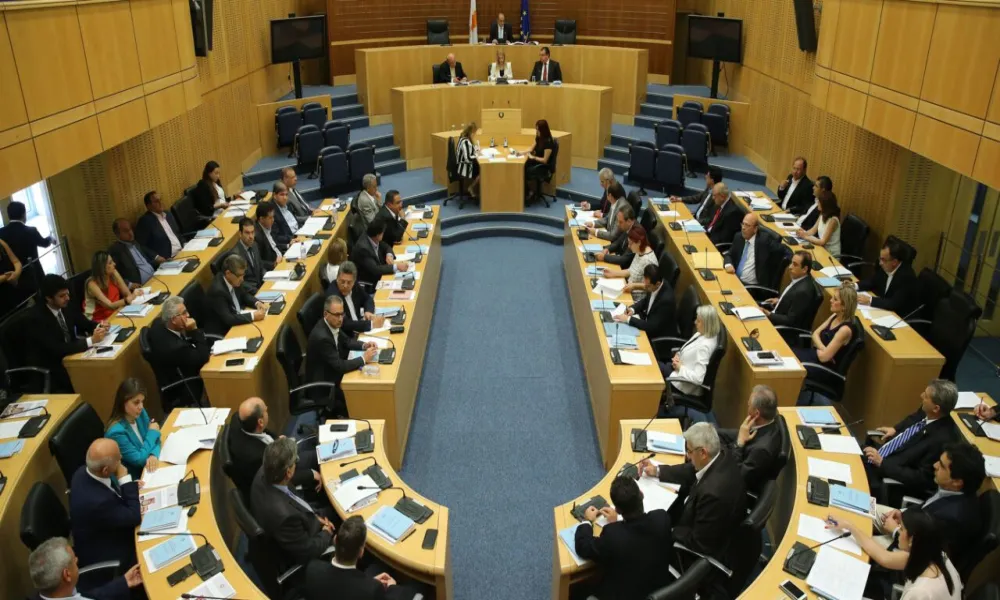
The 56 newly elected Members of Parliament (MPs) will officially assume their duties on 4 June after making the prescribed affirmation before the plenary of the House of Representatives. In this oath, lawmakers pledge faith and respect to the Constitution and all laws consistent with it, alongside a commitment to maintain the independence and territorial integrity of the Republic of Cyprus.
Immediately following the affirmation ceremony, the House will proceed with the election of its new Speaker. The selection will emerge from cross-party negotiations beginning on Monday, 25 May, as political leaders seek to solidify legislative coalitions with an strategic eye toward the February 2028 presidential elections.
Simplified voting process for Speaker
The plenary of the House of Representatives recently revised and simplified the internal regulations governing the election of the Speaker. The updated framework, which will be implemented for the first time on 4 June, dictates the following procedure:
- Candidacies must be formally submitted through the nomination of a candidate by another lawmaker.
- The election requires a roll-call vote.
- A candidate is elected in the first round if they secure an absolute majority of the total parliament, which constitutes at least 29 out of the 56 votes.
If no candidate achieves an absolute majority in the initial ballot, a second round of voting is conducted exclusively between the two leading candidates. In this round, the candidate who secures a simple majority—the highest number of votes—is elected. In the event of a tie, a repeat vote is held. If the repeat vote also ends in a draw, the election is decided through a public lottery draw to determine the winning Speaker.
Following their election, the new Speaker appoints two MPs to serve as secretaries and two as questers of the house. Supported by this leadership team, the Speaker directs and coordinates the work of the plenary, ensuring orderly legislative proceedings. The Speaker also heads all parliamentary services, overseeing and coordinating their staff in conjunction with the Director-General of the House.
Furthermore, the Speaker of the House temporarily replaces the President of the Republic in cases of temporary absence or provisional impediment. During a brief absence of the Speaker, or when the vacancy of the Speaker's office is pending fulfillment, parliamentary duties are discharged by an MP chosen by the meeting of party leaders. Until recently, these temporary duties were automatically assigned to the oldest sitting MP.
Representation of religious groups
The three recognized religious groups of Cyprus—the Armenians, Latins and Maronites—are represented in the legislature by one elected representative each. These three representatives are elected concurrently with the regular members of the House every five years. They participate in the Parliamentary Committee on Education, attend plenary sessions and express views on matters directly affecting their respective groups, though they do not possess the right to vote on legislation.
The three religious group representatives enjoy identical privileges and rights to those granted to standard MPs. This includes an identical salary and allowances package totaling €6,000 net monthly, the entitlement to a parliamentary assistant and full legislative immunity. Despite holding these explicit rights, representatives historically participate in the Committee on Education sessions very rarely and even more seldom request the floor to speak during full plenary sessions.
Committee allocation and ethics oversight
The Selection Committee, an institutional body explicitly provided for under the Constitution of the Republic of Cyprus, is formed on the day following the election of the Speaker. It consists of the newly elected Speaker and eight additional MPs drawn from the largest political parties. The Selection Committee is responsible for forming all permanent parliamentary committees, setting up temporary or specialized committees (ad hoc), and appointing MPs to serve as committee chairs and regular members. The body also manages any subsequent reassignments of lawmakers between committees throughout the five-year legislative term.
Concurrently, the new plenary will vote to elect the members of the seven-seat Ethics Committee. This body is legally mandated to investigate formal complaints regarding unethical behaviour brought against MPs, filed either by members of the public or fellow lawmakers, as well as any other matters arising from the enforcement of the parliamentary code of conduct.
If the Ethics Committee determines that an MP has committed an ethical violation, it can impose disciplinary sanctions based on the nature, severity and repetition of the offense. These penalties include:
- An oral reprimand.
- A written reprimand.
- A formal censure for verified unethical and improper conduct.
- An order requiring the MP to issue a public apology from the podium of the full plenary.
- An order requiring a written apology, which must be read aloud from the parliamentary podium.
The definitive findings of the Ethics Committee are published openly on the official website of the House of Representatives, and the censured lawmakers are legally obligated to comply with the imposed disciplinary penalty.
Incompatibility checks, resignations and state pensions
Prior to officially taking the oath of office, all newly elected lawmakers must undergo strict vetting to ensure there is no incompatibility of office. Under constitutional law, the office of an MP is legally incompatible with the position of a minister, mayor, municipal councillor, member of the armed forces or security forces, or any other public office or civil service position. Consequently, any candidates who win a parliamentary seat but hold a conflicting role must formally choose between entering parliament or retaining their existing public office or position.
In the outgoing parliament, more than ten lawmakers were legally required to resign from high-ranking public sector and civil service positions due to these incompatibility rules. Upon submitting their resignation to enter parliament, these individuals automatically became eligible to receive an immediate state pension, regardless of their current age.
This immediate pension payout is governed by Section 24 of the Pensions Law of 1997. The statute stipulates that civil servants and broader public sector employees who resign specifically to assume a public office or political position are entitled to receive their pension immediately without age restrictions. The exact financial value of the pension is calculated based on the specific salary scale of the civil service position they vacated and their accumulated years of public service.
Provisions of parliamentary immunity
Upon making their official affirmation on 4 June, the new lawmakers instantly receive all legal protections and immunities tied to their parliamentary office. These privileges include:
- Freedom of speech: Lawmakers cannot face prosecution or legal action for any opinion expressed or vote cast inside the House of Representatives.
- Legal immunity: No MP can be criminally prosecuted, arrested or imprisoned during their parliamentary tenure without the express prior authorization of the Supreme Court.
The law notes that prior Supreme Court permission is not required if an MP is caught in the act of committing a major offense that carries a statutory prison sentence of five years or more.