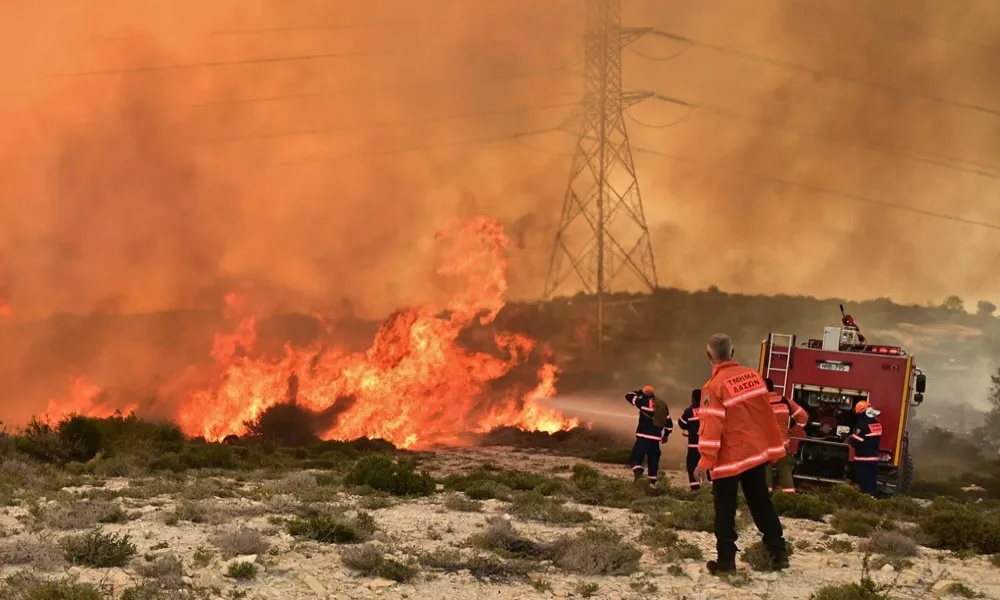
The persistent existence of illegal dumping grounds across Cyprus remains a dangerous vulnerability within the state's structural mechanism for fire prevention and suppression. For the current fire season, the operational responsibility for clearing these hazardous waste sites falls exclusively upon local authorities. However, municipal and community leaderships have declared a complete inability to respond effectively, citing a critical deficit of economic resources and essential personnel.
A critical vulnerability in fire prevention
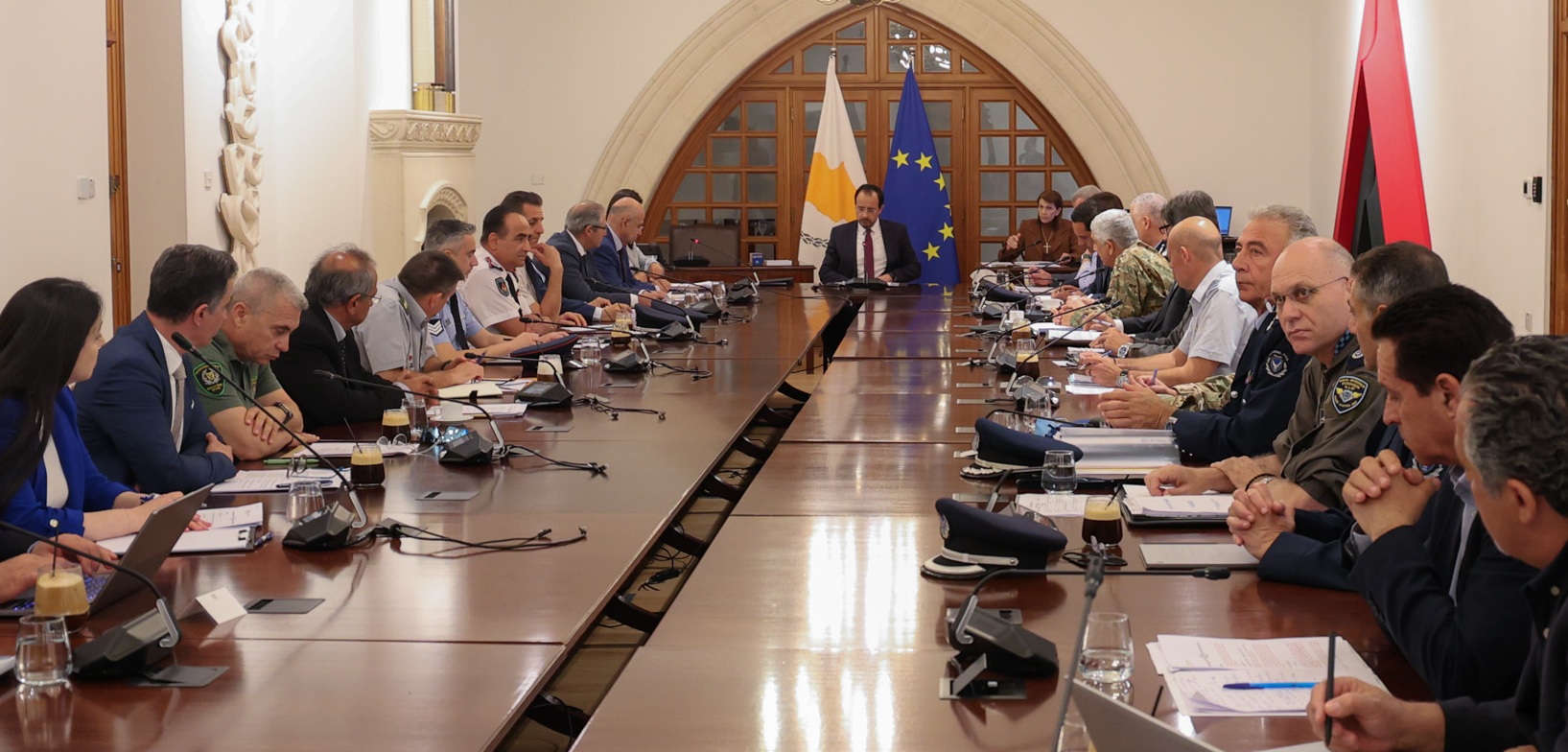
The issue was highlighted following a high-level coordination summit hosted at the Presidential Palace under President Nikos Christodoulides. When questioned whether the national fire prevention and suppression apparatus had achieved a higher state of readiness compared to the previous year, Nicos Longinos, the Chief Fire Officer and acting general fire coordinator, acknowledged that significant gaps persist. Longinos stated that priority is being directed toward addressing operational vulnerabilities identified during the last season, alongside targeted campaigns to brief community leaders on their statutory obligations.
This administrative briefing masks a highly volatile security hazard. Despite holding numerous inter-departmental meetings over recent months, the general coordinator has failed to secure a permanent solution for the illegal dumpsites. This failure stands in sharp contrast to other critical operational advancements achieved in recent years, including the acquisition of dedicated aerial firefighting assets, the formulation of community evacuation blueprints, and reduced response times via the Fire Service's new centralized coordination center.
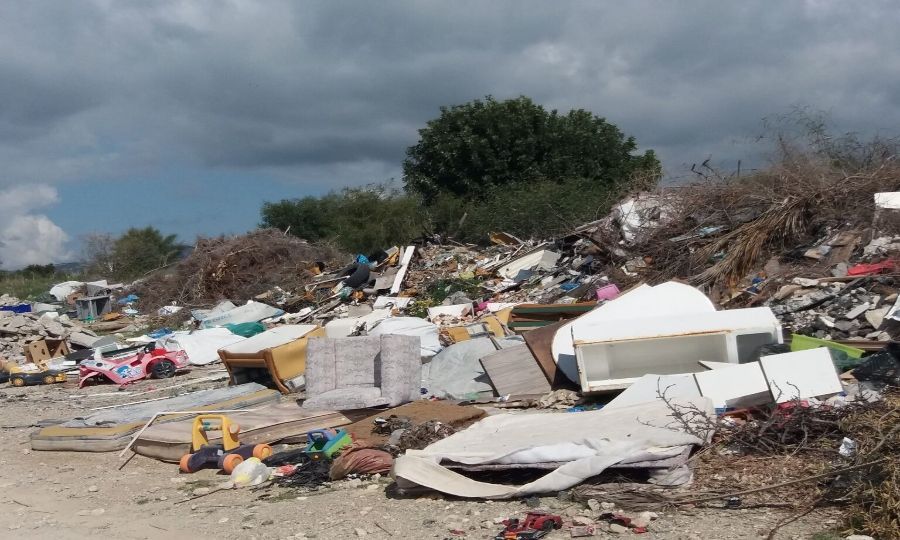
Data compiled by local authorities and the Department of Environment confirms the active presence of approximately 850 illegal dumping grounds distributed across the island. Chief Fire Officer Longinos confirmed to Politis that municipalities and community councils must now manage these sites utilizing their own overextended municipal budgets. This follows a decision by the Department of Environment to withhold the dedicated financial subsidies provided during the previous year, when it distributed approximately €1 million to local authorities to clear illegal dumps on the strict condition that they would not be allowed to re-emerge. Under existing legislation, maintaining local sanitation and preventing the creation of illicit waste disposal zones remains the statutory duty of local government.
Rigorous inspections and enforcement actions
Longinos clarified that the Department of Environment remains in continuous communication with emergency services to inspect volatile locations, issue criminal citations, and execute out-of-court fines. The 850 illegal dumpsites have been explicitly included in the localized fire-risk inventories dispatched by the Fire Service to every individual community council. These tailored lists were compiled following comprehensive field inspections conducted for the first time by specialized teams of fire safety officers. The same official notifications detailed additional critical mandates, including the clearing of combustible wild grasses and the immediate creation of firebreaks, granting local authorities a strict 15-day compliance window.
While the Department of Environment is unable to provide direct capital injections for waste clearance this season, the agency is currently accelerating the establishment of temporary green points within rural communities. These mobile facilities are being prioritized for mountainous and geographically isolated districts to discourage rural residents from engaging in uncontrolled fly-tipping due to their distance from the 26 permanent green points currently operational across the island.
Local communities declare administrative inability
The response from the Union of Cyprus Communities mirrors the institutional gridlock of previous years. The association maintains that local councils lack the structural capacity to clear or continuously monitor illegal dumping sites due to an absolute lack of financial resources and municipal personnel. Furthermore, local authorities remain legally barred by the Office of the Commissioner for Personal Data Protection from deploying closed-circuit television (CCTV) surveillance systems to identify illegal dumpers. They also note that the Department of Environment has yet to deploy specialized environmental inspectors to enforce the upcoming "Pay-as-You-Throw" waste management framework.
The Union of Cyprus Communities has scheduled an emergency summit with the Chief Fire Officer on Thursday, 21 May, to address the systemic gridlock. However, seasonal wildfires are already actively engaging emergency response teams. Over a single recent weekend, the Fire Service responded to 56 emergency incidents, 38 of which were located in rural open country, raising concerns regarding the late scheduling of these administrative coordination meetings.
Infrastructure planning: 18 temporary green points
The Department of Environment is currently evaluating expressions of interest from 18 separate rural communities to host the new temporary green points. Engineers are assessing the proposed geographic coordinates against the existing national grid to maximize population access, with a target completion date set for 2027.
These facilities will consist of secure, fenced enclosures equipped with four heavy metallic skip-type containersdesigned to segregate four distinct waste streams:
- Bulky domestic waste.
- Scrap timber and wood products.
- Post-consumer plastics.
- Waste Electrical and Electronic Equipment (WEEE).
The existing network of 26 permanent green points spans eight facilities in the Nicosia district, two in the Famagusta district, seven in the Larnaca district, four in the Limassol district, and five in the Paphos district. The Ministry plans to commission 10 additional permanent green points by the end of 2028, bringing the national operational total to 36.
Review of the 2024–2025 environmental campaigns
To support local governments in mitigating these hazards, the Ministry of Agriculture, Rural Development and Environment launched a targeted funding framework in June 2024 under the banner "Cleanliness Campaign – #WasteFreeCyprus", which extended through December 2025. According to the Department of Environment, funding applications submitted by local councils were strictly prioritized based on wildfire vulnerability indices, proximity to national forests, state-owned land plots, and coordinates within the protected Natura 2000 network.
The campaign concluded with the disbursement of €1.2 million in direct grants to 71 participating local authorities. The collaborative effort resulted in the successful clearance of 267 high-risk locations out of an initially approved pool of 352 points submitted by 83 local bodies.
Additionally, to address a severe environmental and fire hazard adjacent to the third industrial zone of Ypsonas, the Department of Environment approved and disbursed a specialized €1 million grant to the Kourieras Municipality at the end of 2025. This funding is legally earmarked for extensive clearance and land restoration works to be executed within 2026, alongside the mandatory installation of monitoring infrastructure to prevent recurring illegal tipping. The contract allows environmental officers to conduct unannounced field audits to verify project deliverables.
Volunteer engagement and landfills under remediation
Parallel to heavy mechanical clearance operations, the state deployed organized volunteer groups during 2025 to manage low-intensity environmental pollution. Executed in coordination with the Pan-Cypriot Volunteer Coordination Council(PVCC), the Department of Environment supported 12 distinct volunteer campaigns by absorbing a portion of operational costs and supplying safety gear, including protective gloves and specialized waste and recycling bags, drawing down a total budgetary allocation of €3.4 million.
On a macro level, Cyprus has systematically decommissioned its legacy network of 124 uncontrolled landfills (known locally as CHADA), which operated unlawfully prior to 2013. The final two mass facilities—the Kotsiatis landfill in Nicosia and the Vati landfill in Limassol—were permanently closed to incoming municipal waste in February 2019. Land restoration across 53 individual landfill sites in the Paphos, Larnaca, and Famagusta districts was completed in 2015.
In the Nicosia district, structural restoration works at the massive Kotsiatis site were officially completed in January 2026, while engineering works across the remaining 23 smaller landfills in the capital's periphery are scheduled for completion by June 2026.
The Limassol district presents a more complex engineering challenge, with 47 legacy landfills still requiring formal environmental remediation. On 19 March 2026, the Water Development Department signed a binding construction contract for the comprehensive restoration of the primary Vati landfill alongside eight smaller adjacent dumpsites, with heavy machinery deploying to the field on 6 April 2026. Under the statutory terms of the contract, the core landscape restoration of the Vati site will be completed by February 2028, while auxiliary infrastructure works will extend through August 2029.
Furthermore, the Water Development Department published an international commercial tender on 14 April 2025 for the remediation of an additional 19 landfills in the Limassol province. The final signature on this construction contract remains stalled due to active legal appeals lodged by commercial bidders before the Tenders Review Authority, with the project duration fixed at 18 months once cleared. For the remaining 19 landfill sites in Limassol, field evaluations indicated that natural environmental recovery has already occurred. Consequently, water engineers are currently commissioning targeted Environmental Impact Assessment (EIA) studies to formalize the legal status of these recovered zones.