The conflict involving Iran has returned as the dominant theme of the week in the international press, driven by mounting evidence that the confrontation is entering a highly volatile phase. Military movements, economic blockades, and shifting diplomatic alignments in the Persian Gulf point toward a protracted regional crisis. International media networks are examining both the heavy financial toll of a prolonged standoff and its long-term consequences for the balance of power in the Middle East. Concurrently, Western outlets are tracking the domestic political erosion of US President Donald Trump and the regional fallout of Israeli strategy in Gaza and Lebanon. In contrast, Middle Eastern publications focus on divergent assessments of the war's outcome, while Asian media examines a sharp freeze in Japan-China relations as Tokyo edges away from its post-war pacifist identity.
The Western press: Cumulative commitments and economic damage
An analysis by political scientist and wartime specialist Robert Pape, published by the American conservative network Newsmax under the title "Five signs indicate the conflict with Iran is widening," argues that the confrontation has reached a critical tipping point. Pape asserts that major wars rarely ignite from a single flashpoint; instead, they expand incrementally through cumulative commitments. He identifies five primary indicators of escalation: intensifying economic distress in the Gulf marked by surging war-risk insurance premiums in the Strait of Hormuz; the expansion of US military obligations via mission creep; a hawkish shift in Washington's rhetoric, with Secretary of State Marco Rubio framing the confrontation as an international obligation; a fragmentation of unity among Gulf states as Saudi Arabia pursues independent ties with China and Pakistan; and the risk of the war becoming self-sustaining as accumulated economic sunk costs reinforce, rather than weaken, strategic commitments.
Simultaneously, an evaluation by The Economist titled "A prolonged crisis with Iran could cause irreparable damage to Gulf countries" details the severe economic consequences of the current six-week-old standoff. Following a temporary agreement on 8 April, a fragile truce has done little to reopen the Strait of Hormuz, which remains effectively closed to commercial traffic due to unresolved disputes surrounding Iran's nuclear programme. Gulf Cooperation Council (GCC) member states have collectively deployed tens of billions of dollars to stabilize their domestic economies, yet the structural losses are mounting. Saudi Arabian oil exports have plummeted by one-third, while those of the United Arab Emirates have been cut in half. Furthermore, the regional hospitality sector has suffered an immense blow, with hotel occupancy rates in Dubai projected to collapse to a mere 10 per cent during the current quarter. Analysts warn that the end of summer represents a critical deadline; if a permanent diplomatic breakthrough is not achieved by September, the temporary downturn will harden into a permanent structural economic crisis for the entire Middle East.
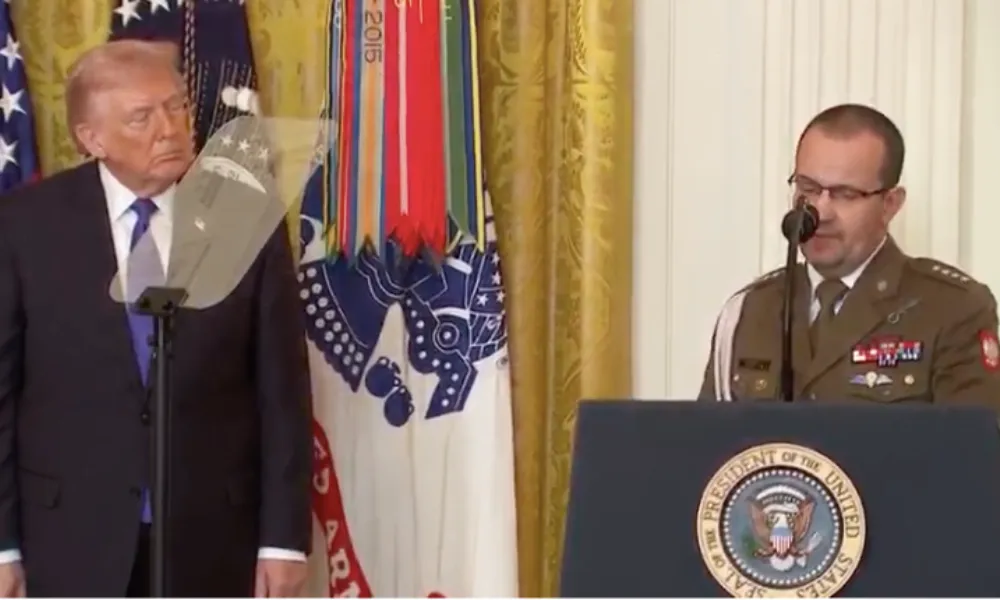
On the domestic political front, El País commentator Boris Muñoz outlines a severe reversal of fortune for the White House in an article titled "The toxic year of Donald J. Trump." Although the year began with the high-profile capture of Nicolás Maduro in Venezuela in January, the subsequent outbreak of the US-Israeli war against Iran on 28 February has completely derailed the administration's vision of a prosperous political era. Internal political dissatisfaction within the United States is widespread, with current polling indicating a 67 per cent disapproval rating for the president. Diplomatic channels with Tehran are frozen, global crude oil prices remain locked above $100 per barrel, and the core MAGA political movement is showing visible signs of fragmentation. Key international allies, including German Chancellor Friedrich Merz and King Charles III, have voiced rare public criticism of Washington's trajectory. Citing analysis from Bloomberg's Andreas Kluth, the report concludes that American soft power is retreating across vital sectors such as higher education, entertainment, and technology, transforming what was intended to be an annus mirabilis into a highly damaging political liability.
Writing in Le Monde, historian and Sciences Po professor Jean-Pierre Filiu delivers a stern warning titled "Israel’s impunity in Gaza can only encourage it to be just as ruthless in Lebanon." Filiu argues that the Middle East has been transformed into a "monstrous laboratory of 21st-century warfare," where military tactics refined in one theater are systematically deployed in another. The analysis charges that Israel, under Prime Minister Benjamin Netanyahu, is replicating the same systematic violations of international law in Lebanon that it initiated in Gaza in October 2023. According to Filiu, at least 465 Lebanese citizens have been killed since the declared 17 April ceasefire in Lebanon. The commentary denounces the enforcement of arbitrary eviction orders, military destruction inside designated safety zones, and targeted strikes against non-combatants. Highlighting that 220 journalists and 589 humanitarian aid workers have been killed by the Israeli military in Gaza, Filiu concludes that continued international impunity undermines the global legal order, inadvertently strengthens Hezbollah, and inflicts an unacceptable human cost.
The Middle Eastern press: Military miscalculations and asymmetric alliances
An assessment published by Al Jazeera, co-authored by economists and analysts Jeffrey Sachs and Sybil Fares under the title "The war against Iran will likely end in an American retreat," argues that Washington cannot secure a decisive military victory at an acceptable cost. The authors assert that the military campaign launched by the US and Israel on 28 February 2026 was built upon the deeply flawed assumption that the Iranian state would collapse rapidly under pressure. Instead, the Islamic Revolutionary Guard Corps (IRGC) has consolidated its institutional power, the country's leadership has remained stable, and the domestic population has unified.
The analysis identifies four fundamental strategic miscalculations by Western planners:
-
Complete underestimation of Iran's deep cultural and historical resilience.
-
Ignorance regarding Tehran's domestic technological advancements.
-
Failure to comprehend strategic asymmetry, which pits low-cost Iranian drones and missile systems against exceptionally expensive Western air defense interceptors.
-
A highly insulated decision-making process dominated by an insular circle at Mar-a-Lago, completely devoid of rational bureaucratic evaluation.
Sachs and Fares project that the conflict will ultimately force a return to the pre-war status quo, leaving Iran in control of the Strait of Hormuz with significantly enhanced deterrent capabilities and a permanently diminished US naval footprint in the Persian Gulf. They conclude with a call for Washington to permanently abandon regime-change doctrines and return to conventional diplomacy.
Conversely, the Jerusalem Post features an op-ed by Neville Teller titled "Israel and the United Arab Emirates: An alliance of 'brothers in arms' facing the growing threat of Iran," which highlights a rapid deepening of regional military alignment. The most significant manifestation of this partnership is the active operational deployment of an Israeli Iron Dome anti-missile battery, fully manned by Israeli defense personnel, on Emirati soil. The deployment was executed at the direct request of UAE President Mohamed bin Zayed to counter incoming Iranian ballistic missile strikes.
Teller notes that this operation marks the first time an indigenous Israeli weapons system has been deployed defensively within an Arab state, a move accompanied by targeted Israeli Air Force strikes against Iranian assets deemed an immediate threat to the UAE. The article traces this defense path back to the 2020 Abraham Accords, citing previous acquisitions of Barak and Spyder missile systems, joint naval maneuvers, and the collaborative engineering of unmanned surface vessels. While public sentiment and delicate regional balances have prevented this relationship from crystallizing into a formal, binding defense treaty, Teller concludes that the axis has reached a functional brotherhood in arms. This alignment is poised for further institutionalization via a US Senate bill introduced in March 2026, aimed at legally integrating defense infrastructure between Washington and Abraham Accords signatories to deter Iranian expansion.
The Asian press: Tensions in the Taiwan Strait and constitutional shifts
In the Far East, regional stability is facing severe strain. The Asahi Shimbun published an editorial titled "Japan must chart a course to unfreeze chilly relations with China," voicing urgent concern over a prolonged diplomatic freeze between Tokyo and Beijing. The deterioration accelerated sharply following a controversial statement by Prime Minister Sanae Takaichi in November, which openly warned of a potential military conflict surrounding Taiwan.
Beijing retaliated swiftly by placing a total ban on Japanese seafood imports, implementing stringent export restrictions on dual-use commercial goods, and restricting Chinese tourism to Japan. The publication labels Takaichi’s rhetoric as reckless, while criticizing the Ministry of Foreign Affairs for downgrading China's status to a mere "important neighbor" in its official Diplomatic Bluebook, thereby downplaying the strategic necessity of the relationship. Against a backdrop of dangerous military close-encounters in the Taiwan Strait and near Amami-Oshima Island, alongside a sharp slowdown in vital Chinese rare earth imports, the newspaper expresses hope that an upcoming diplomatic delegation to Beijing led by Yohei Kono will establish a more stable, constructive bilateral dialogue.
Providing a sharply contrasting perspective from Beijing, the state-run People’s Daily Online published an analysis titled "Japan erases its commitment to peace," focusing on the systematic dismantling of Tokyo's post-war pacifist doctrine. The critique uses Constitution Memorial Day on 3 May as its starting point—a date honoring the 1947 Japanese Constitution, whose famous Article 9 explicitly renounces war as a sovereign right and outlaws the threat or use of force to settle international disputes.
The Chinese state media outlet argues that this foundational commitment is being erased as Prime Minister Takaichi accelerates efforts toward comprehensive constitutional revision. The analysis highlights Japan's expanding military footprint abroad, specifically pointing to its active participation in the massive US-Philippine Balikatan 2026 joint military exercises. During these maneuvers, Japanese forces deployed and fired Type 88 surface-to-ship missiles on foreign soil for the first time since the conclusion of the Second World War. The official organ of the Chinese Communist Party frames these developments as a clear return to militarism and a dangerous abandonment of post-war pacifist principles.
The Russian and Ukrainian press: Mediation efforts and exhausted Western strategies
The diplomatic dimensions of the Middle Eastern crisis are analyzed in the Russian newspaper Izvestia by international relations expert Marat Zembatov. In his piece titled "The role of the mediator," Zembatov reviews international efforts to avert a total war between Washington and Tehran following a dangerous maritime standoff in the Strait of Hormuz on 8 May, where US destroyers and Iranian fast-attack craft engaged in a tense confrontation.
Zembatov posits that despite raw operational friction, the signing of a de-escalatory bilateral memorandum remains possible because both core leaderships wish to avoid total war. The article identifies Pakistan as the primary diplomatic mediator leading a temporary stabilization initiative, with secondary supporting roles attributed to Oman, Russia, and China. The analysis reveals that Brazil has also engaged in the process, with President Luiz Inácio Lula da Silva relaying direct messages from Trump as a prominent voice of the Global South. Zembatov concludes that while a managed truce punctuated by minor operational violations remains the most likely outcome, Israel's independent strategic objectives—which may not align with de-escalation—remain a highly volatile and unpredictable variable.
Finally, the Ukrainian media platform Ukraine Maidan features an interview conducted by Olena Mukhina with human rights attorney Simon Papuashvili, program director of the Brussels-based International Partnership for Human Rights (IPHR). In the article, titled "The West has the power to end Russia’s war against Ukraine — it chooses not to do so," Papuashvili argues that the most definitive method to halt the conflict would be a total, uncompromising European embargo on Russian fossil fuels. These commodities continue to generate at least 30 per cent of Russia's state revenues, directly financing its military apparatus.
Papuashvili points out that four years after the launch of the full-scale invasion, multiple European nations continue to purchase Russian oil and natural gas through various channels. He attributes the flawed enforcement of existing sanctions to a lack of specialized, centralized institutional oversight mechanisms within the European Union. While praising Finland for successfully pairing decisive anti-import legislation with extensive civic education campaigns, the interview expresses cautious hope that the newly elected government in Hungary will alter its pro-Moscow trajectory. The core conclusion of the IPHR assessment is that Western governments lack a coherent, unified strategy to enforce a decisive conclusion to the war, choosing instead to sustain a geopolitical compromise where Ukraine is provided enough aid to survive, but Russia is never forced to suffer a definitive defeat.