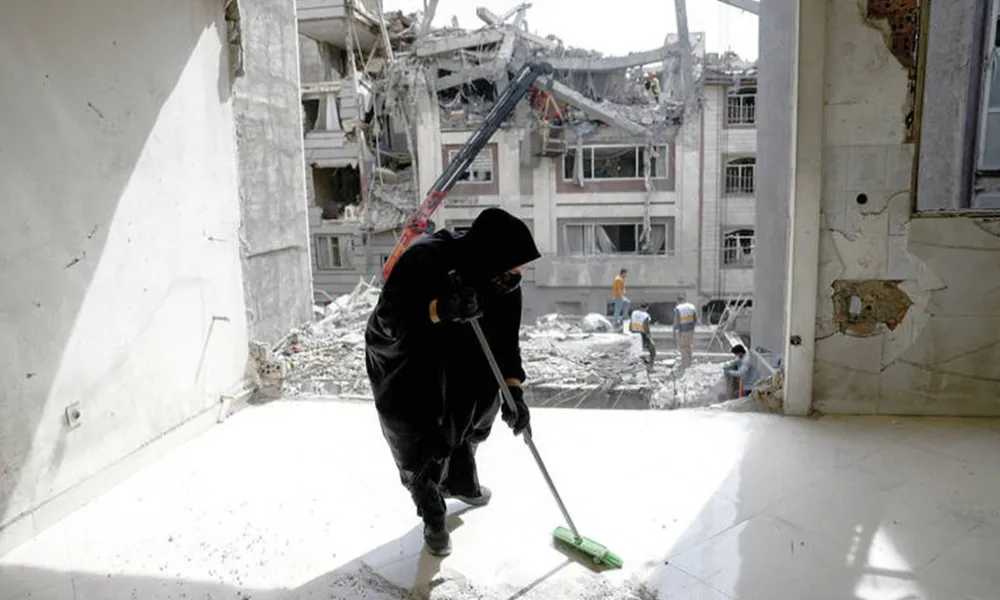

On the morning of 28 February 2026, the United States and Israel launched simultaneous airstrikes across Iran in an operation the US called Epic Fury and Israel called Operation Roaring Lion. Within hours, Supreme Leader Ali Khamenei was dead, killed in a strike on Tehran alongside several members of his family and senior figures in the Islamic Revolutionary Guard Corps. Iran's defence minister and IRGC commander were also killed in the opening salvos. It was the most dramatic escalation in decades of hostility between Iran and the West, and it had not come without warning. What it had come without was a diplomatic resolution, a congressional authorisation, or a UN Security Council mandate. Forty days of strikes, retaliations, a regional conflagration, the closure of one of the world's most critical shipping lanes, and a ceasefire that remains deeply uncertain have followed.
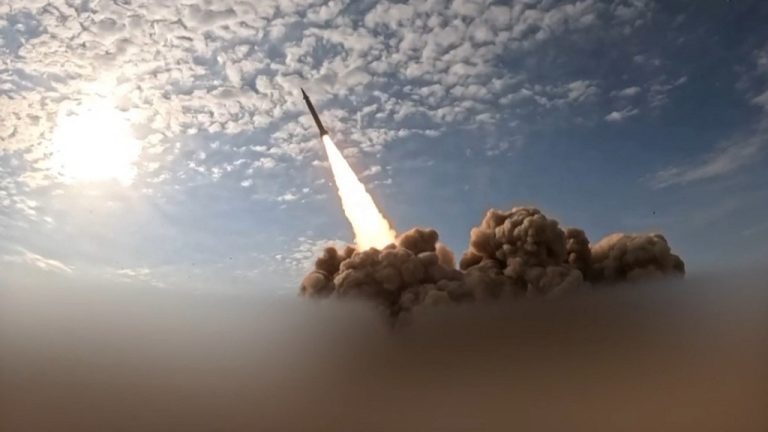
How it began: a decade of pressure, a year of escalation
The roots of the 2026 war stretch back to 2018, when President Trump withdrew the United States from the Joint Comprehensive Plan of Action, the nuclear deal negotiated three years earlier between Iran and six world powers. Sanctions were reimposed, the "maximum pressure" strategy was formalised, and Iran began violating the deal's enrichment limits from 2019 onwards. By June 2025, an IAEA report found Iran had accumulated enough enriched uranium to theoretically produce nine nuclear warheads, though the agency found no evidence of an active weapons programme. Iran maintained consistently that its nuclear activities were for civilian purposes. Analysts in the UK and US characterised its approach as nuclear hedging: developing the technical infrastructure to assemble a weapon at short notice without crossing into production.
The first major military confrontation came in June 2025. On 13 June, Israel struck Iranian nuclear and military facilities in a surprise attack, assassinating nuclear scientists, military commanders, and politicians. Iran retaliated with more than 550 ballistic missiles and over 1,000 drones targeting Israeli cities and military sites. On 22 June, the United States entered directly, striking the nuclear facilities at Natanz, Fordow, and Isfahan. A ceasefire brokered by Oman took effect on 24 June. Trump labelled it the "12 Day War," a name that entered common usage by late 2025. The ceasefire held, but the conditions it left behind were acutely unstable.
Iran's currency collapsed in the months that followed, compounded by new international sanctions imposed in September 2025. By December, mass protests had erupted across Iranian cities, the largest since 1979. On 8 January 2026, Iranian security forces carried out a brutal crackdown. Human Rights Watch put the death toll at between 2,500 and 4,000 in the first 48 hours alone; Iranian government-related estimates cited by Reuters put the total protest death toll at "at least 5,000." Around 53,000 people were arrested, according to HRANA. Trump, who had told Iranians that "help is on the way," did not immediately strike. The military buildup he had begun in late December continued through February. Indirect nuclear negotiations resumed in Geneva, mediated by Oman, producing what mediators described as "significant progress" after three rounds of talks. On 28 February, two days after that third round concluded, the US and Israel struck anyway.
Forty days of war
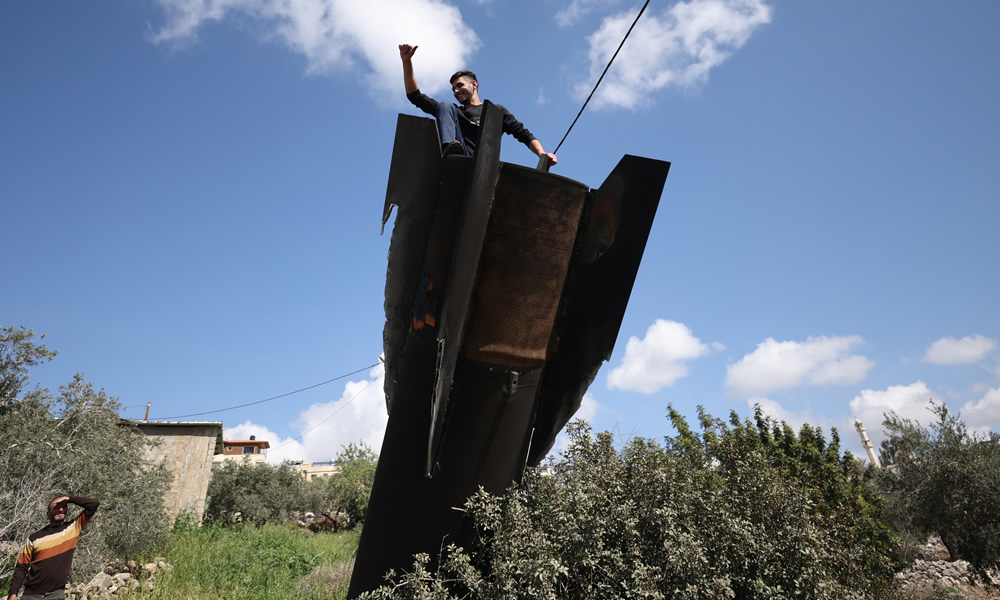
The scale and character of the February strikes differed fundamentally from those of June 2025. Where the Twelve-Day War had targeted specific nuclear and military infrastructure, leaving room for negotiation, Operation Epic Fury opened with the assassination of Iran's supreme leader, a move that analysts at Al Jazeera described as a "drastic strategic pivot" that "shattered the previous rules of engagement." With no obvious Iranian interlocutor and no diplomatic off-ramp, the conflict rapidly widened. Iran launched missiles and drones at Israel and at US military bases across the Gulf, striking targets in Bahrain, Kuwait, Qatar, Saudi Arabia, and the United Arab Emirates. The Strait of Hormuz, through which approximately 20% of the world's oil passes, was closed. Oil prices surged past $100 a barrel. The CSIS estimated the first 100 hours of US operations cost approximately $3.7 billion; by 19 March the total US military cost stood at $18 billion, with the Pentagon requesting a further $200 billion. Iran assessed damage to its own economy at between $300 billion and $1 trillion. Arab states put their own losses at over $120 billion by 31 March.
The conflict spread to Lebanon, where Israel launched wide-ranging operations against Hezbollah, killing more than 2,000 people and displacing over one million. The Houthis in Yemen entered the war, launching missiles toward Israel. Iranian strikes had hit targets across nine countries by late March. At home, Trump faced mounting constitutional questions: no congressional authorisation had been sought, no imminent threat in the legal sense had been demonstrated, and no public debate of substance had preceded the strikes. The Stimson Center stated plainly that the war was "unconstitutional, unwise, and a betrayal" of Trump's electoral promises, noting that the executive's authority under Article II had never been intended to allow a single person to launch the country into an offensive war.
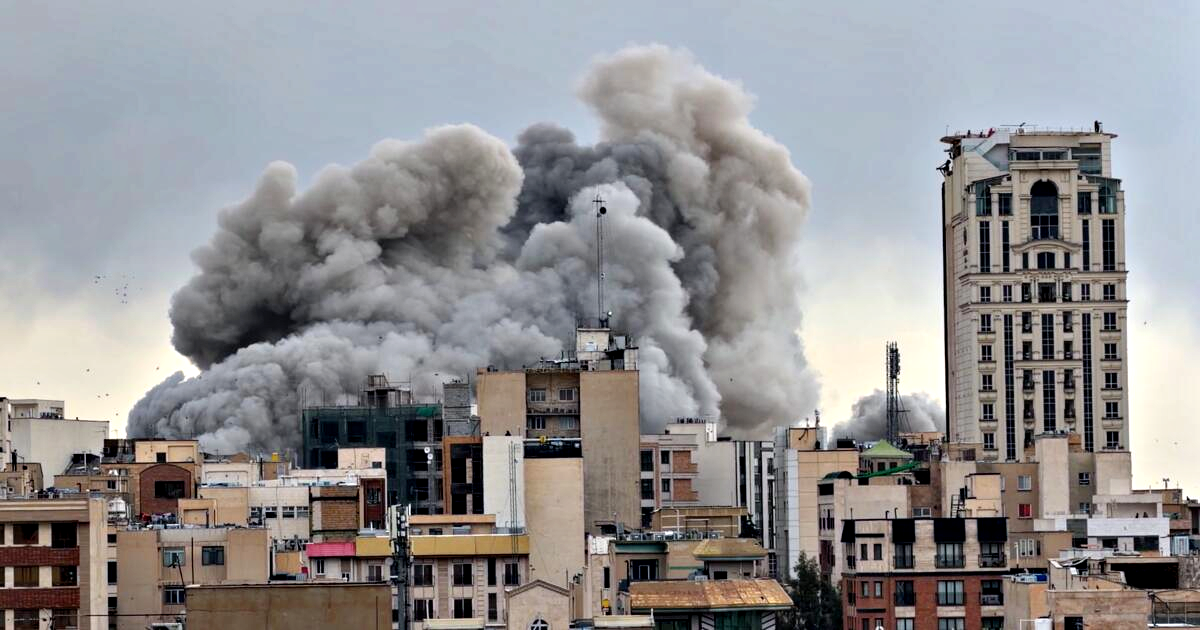
A fragile two-week ceasefire, brokered by Pakistan, was announced on 7 April. Its terms included an Iranian commitment to reopen the Strait of Hormuz in exchange for a halt to strikes. It has since been violated by both sides. Israel immediately launched Operation Eternal Darkness against Hezbollah in Lebanon, killing at least 357 people and injuring over 1,200. Iran paused Hormuz traffic in response. Talks in Islamabad between US Vice President JD Vance and Iranian Foreign Minister Abbas Araghchi, conducted over 21 hours under Pakistani mediation, collapsed without agreement on 12 April. Trump subsequently threatened a full naval blockade. The ceasefire expires on 21 April with no permanent framework in place.
Analytical conclusions
The assessments emerging from think tanks, legal scholars, and strategic analysts present a picture of a war whose ambitions have consistently outrun its results. Military analysts, including those at the UK House of Commons Library, have described Iran as more resilient than anticipated. US intelligence assessed roughly half of Iran's missile launchers remained intact after a month of fighting. Satellite imagery taken during the ceasefire showed Iran actively clearing debris from underground missile bases. The Stimson Center's conclusion was measured but pointed: "No matter how precise or devastating, air strikes alone cannot topple a government, and Iran in 2026 is likely to emerge battered but not broken."
The Trump administration offered shifting justifications for the war at various points: forestalling Iranian retaliation after an expected Israeli strike, destroying missile capabilities, preventing nuclear weapons development, seizing Iranian oil resources, and achieving regime change. The IAEA found no evidence of an ongoing weapons programme at the time the strikes began. The Law Society Journal noted that striking a country during active negotiations violated the principle of good faith codified in Article 2(2) of the UN Charter. Over 100 international law experts signed a letter stating that the US strikes violated the UN Charter and may constitute war crimes. The founding chief prosecutor of the International Criminal Court, Luis Moreno Ocampo, compared the action to Russia's war in Ukraine, warning that the world was moving from a rules-based system to "the rule of the man."
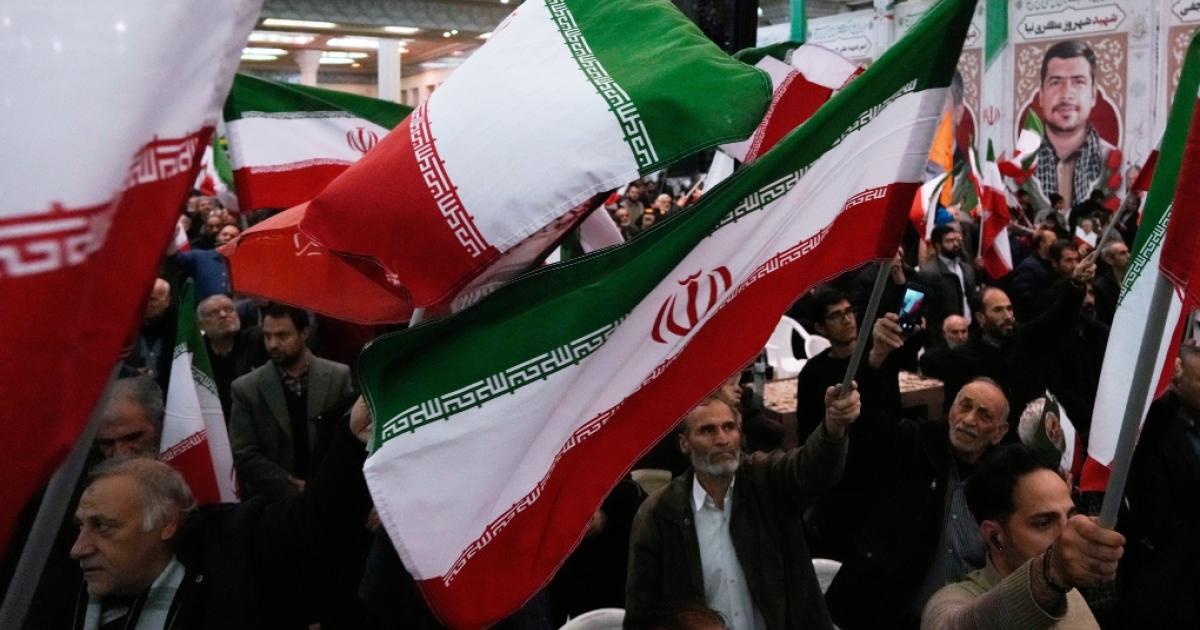
The broader geopolitical consequences are already being mapped. The Bulletin of the Atomic Scientists warned that the war had gravely damaged the Nuclear Non-Proliferation Treaty, potentially incentivising other states to seek nuclear weapons as a deterrent. Analysts at Eagle Intelligence Reports argued that North Korea in particular would interpret the attack on a non-nuclear Iran as strategic validation of its own arsenal, making denuclearisation talks "almost unimaginable in the foreseeable future." The Washington Institute assessed the war as a setback for Russian influence in the region, while warning it could simultaneously distract the US from Ukraine. China's position was characterised as ambivalent: disruption to Gulf oil supplies damages Chinese energy security, but the fracturing of US credibility and the post-1945 international order may serve Beijing's longer-term strategic calculations.
What the war has not produced is the outcome the US stated as its goal. Iran's government, though decapitated at the level of supreme leader, has not collapsed. The Assembly of Experts appointed a new supreme leader, Ayatollah Seyed Mojtaba Khamenei. The nuclear programme's status cannot be verified, because Iran has denied IAEA inspectors access to bombed facilities. The Strait of Hormuz remains the central lever of Iranian power in this conflict, and Iran retains it. A war launched during negotiations, without authorisation, without a demonstrated imminent threat, and without a defined end state, is now searching for an exit that its architects have yet to identify.