War should not find supporters. Destruction and death should not have followers. There is always the path of diplomacy for addressing disputes. But what happens when diplomacy cannot resolve a problem, as in the case of Nazi Germany? This is an extremely difficult question that will likely accompany humanity throughout its existence on Earth.
Of course, Iran is not Nazi Germany, conquering one country after another. Yet neither is Iran a peaceful state. It has developed and supported insurgent groups in many countries across the Middle East and has caused serious instability. For example, it managed to destabilise Lebanon through Hezbollah and has crippled Yemen through the Houthis. Iran carries many sins, not only in its foreign policy but also in the authoritarian nature of its regime. Just as war cannot have supporters, neither can the regime in Tehran.
Consequently, there are two anti-war positions. One opposes war by emphasising international law and insisting that diplomatic tools exist, while rejecting the values and practices of Iran. The other views the Iranian regime as a counterweight to Western imperialism and therefore seeks to keep the regime alive. I consider the latter position problematic because it normalises and legitimises authoritarianism while ignoring the most basic human principles.
However, this latter position does highlight certain issues that those who support the attack by the United States and Israel against Tehran tend to overlook. The current war is not idealistic in nature but serves specific interests. It serves the national interests of the two main actors conducting the military operation.
Israel is attempting to rid itself of its enemies and increase its power and influence in the region. The moves of Benjamin Netanyahu serve the national and state interests of his country as understood by the current prime minister and the people surrounding him.
The United States is trying to prevent the expansion of China’s influence and power in the Middle East and globally. The American president is waging this war to topple the regime and bring a new ruling class to power, one that will owe its dominance to the United States and therefore will not align itself with China. It is an objective that serves the national and state interests of the United States as it attempts to maintain its global hegemony.
Throughout human history, one conflict or many conflicts of interests have always been underway. In the modern era of nation states, national and state interests reflect the interests of the ruling class in each country. Within every country there is a composition of interests that manifests itself through state policy across all sectors.
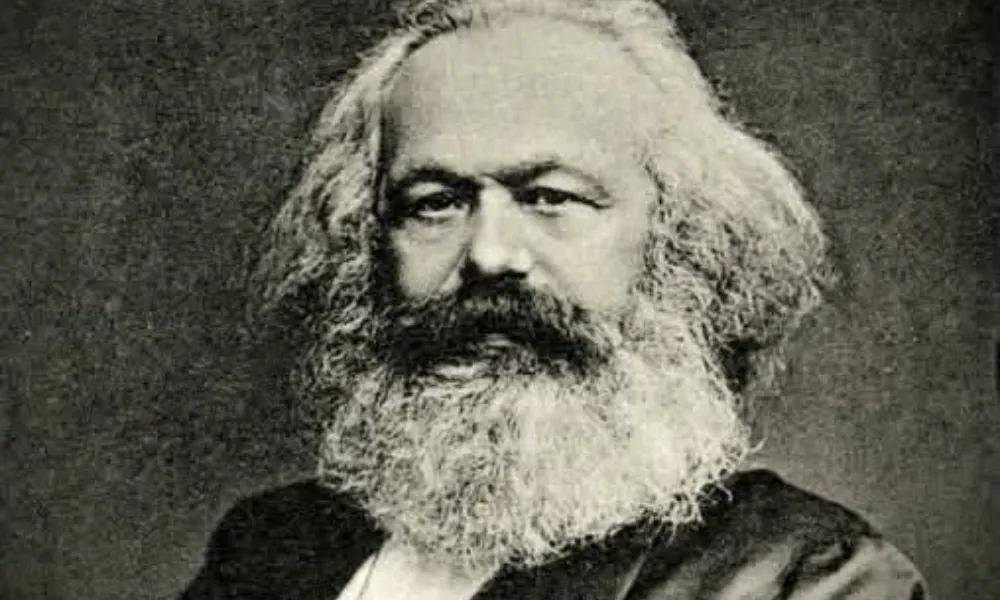
The interests that clash do not all have the same form of legitimacy. This is where the citizens of states enter the picture. Historically, and through the lens of Karl Marx’s historical materialism, we have seen that interests produce an ideological cover. The material and economic base produces a superstructure which includes worldviews, values, institutions and legal systems.
Each superstructure therefore justifies and legitimises the material interests and economic base. The Western economic system known as capitalism produced liberal values and ultimately international law. Is the superstructure of the West more humane? I do not believe this is a particularly difficult question. Comparison and conclusions are possible. Citizens in the West enjoy far greater comparative advantages. The rule of law, regardless of how one might rank it, provides citizens in Western societies with a protective network that citizens in Eastern states often do not have.
Nevertheless, there are many objections to this view. Schools of thought across various academic fields examine the situation critically and emphasise that colonialism and the accumulation of wealth provided Western societies with their current advantages. From this perspective, the Western system was built and continues to be built on injustice and the exploitation of other peoples.
This criticism and reflection must be taken into account. Fortunately, in the West there are thinkers and intellectual traditions that cultivate criticism and self-criticism. Even in this respect Western systems hold certain advantages, and the principle of humanism tends to be better served. Yet brutality has not disappeared from the West. It merely changes its face and remains a constant tendency.
I do not know whether this discussion reaches a conclusion, or whether it should.