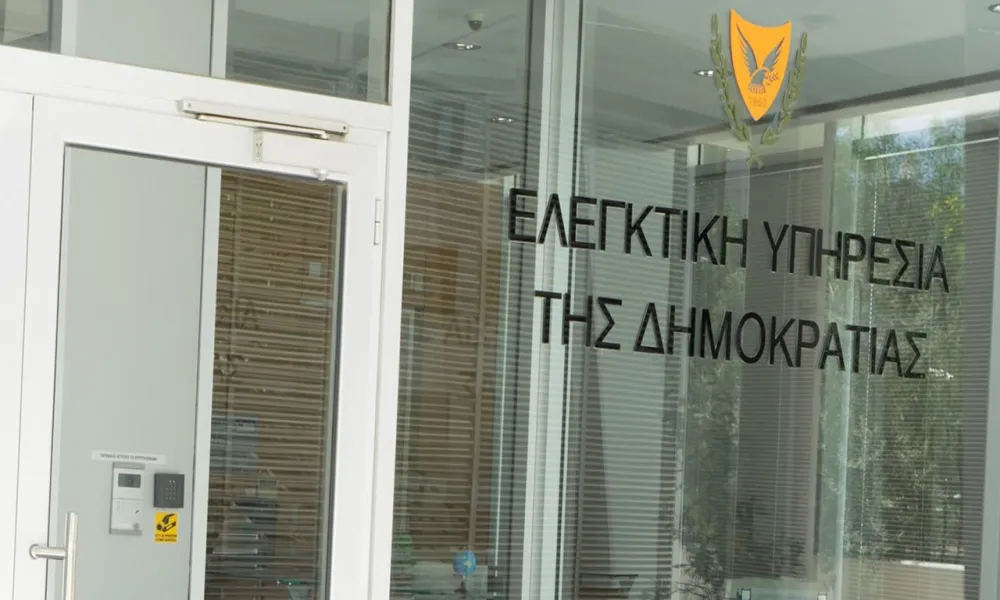

A special report by the Audit Office identifies complex transactions, “missing” profits, and serious lapses in oversight by the Tax Department in connection with a property sale.
An investigation into a multi-million-euro property sale, which began as an anonymous complaint, appears to reveal a dense network of transactions involving connected parties, sudden price changes, disputed costs, and potential tax losses for the state. In its special report, the Audit Office highlights numerous “red flags” and directly questions the adequacy of checks by the Tax Department. Tax Commissioner Sotiris Markidis, in a letter to the Audit Office, stated that an examination of the report’s findings has begun.
Sale of an unfinished property
At the centre of the case is the sale of an unfinished property during the period 2015–2017, linked to a well-known businessman. According to the findings, the initial sale agreement in 2015 set the price at approximately €19.35 million. Six months later, the agreement was cancelled and replaced with a new one, reducing the price by €8.5 million (a 44% drop).
This change transformed a profitable transaction into a loss-making one, creating an accounting loss of €7.7 million, which was then used to offset taxable profits. The Audit Office notes that there was insufficient documentation for such a drastic reduction, and no substantial tax audit appears to have been carried out.
Inconsistencies in costs
Significant inconsistencies were also found in construction costs. While tax records from 2013 recorded land and construction costs at around €9.3 million, the financial statements reported €15.8 million, and the final sale indicated a total cost of €18.6 million. This figure included significant capitalisation of interest, even during periods when construction was effectively halted, a practice which the Audit Office notes may deviate from International Accounting Standards.
The situation becomes even more concerning when comparing this project with another similar property in the same area, also linked to the same business circle. The larger, later-built property shows lower total costs, raising questions about whether the costs of the first property were artificially inflated.
Transactions between connected parties
A key feature of the case is that most transactions occurred between connected parties, companies with common shareholders, directors, or family ties. The property was sold to a foreign-owned company and, through complex corporate structures and financing from related entities, eventually ended up again with individuals from the immediate family of the original owner. The Audit Office emphasises that such ownership paths are classic indicators of increased tax risk and should have triggered thorough checks.
Cyprus Investment Programme
Approximately €62 million were raised through the issuance of preference shares under the Cyprus Investment Programme. The valuation from these investments appears inconsistent with the “loss-making” sale price of the property, raising reasonable questions about the true financial position of the transactions.
Capital gains tax exemption
The report also draws attention to the non-payment of capital gains tax due to utilisation of the 2015–2016 tax exemption. The Audit Office notes that the transactions may have been commercial in nature and therefore may not have qualified for the exemption.
Auditor General’s Commentary
Auditor General Andreas Papaconstantinou, in the report’s foreword, criticises the way the Tax Department monitors the market.
“We believe that there were sufficient indications of the increased risk associated with all transactions concerning this property. The Tax Department must consider how such an extensive web of warning signs involving multi-million-euro transactions went undetected or was not adequately examined, potentially resulting in a significant loss for public finances,” he stated.
The report does not assign criminal responsibility but clearly raises concerns about potential significant public revenue losses and the need to strengthen mechanisms for identifying complex, high-risk transactions.